
1 min read
Your tax return holds the keys to next year's financial success. Here's how to use them
Ryan Page of Backpocket CPA on financial signals in your filed tax return for solos who want next year to be a breeze. Welcome back to The Wedge,...

Welcome back to The Wedge, the newsletter for strategic solo business owners.
In her work with freelancers, Samantha Anderl, marketing consultant and co-founder of Harlow, noticed something surprising. Even high-earning solopreneurs making $15,000 to $20,000 a month were asking themselves, what if it all goes away?
Without a steady paycheck, with health insurance to secure, business costs to manage, and administrative tasks multiplying, solopreneurs face pressures that go far beyond client work. Some are emotional: scarcity mindset, isolation, lack of feedback. Others are operational: untracked expenses, missing legal protections, hidden costs that erode profit. Together, these drains shape how solopreneurs price their work, manage risk, and plan for growth.
In this issue, Samantha breaks down these common challenges of solopreneurship and offers a practical four-point blueprint that solopreneurs can use this year to build stronger systems and create a sustainable business.
After nearly a decade climbing the corporate ladder, Samantha realized that being a marketing executive was no longer her dream. Long days filled with mergers and acquisitions meetings left little room for the creative building she loved. In 2016 she and her CMO left to start a consulting firm helping early‑stage startups build marketing from the ground up. Within a few years, the firm grew to over $1 million in annual revenue. In the process, Samantha and her co-founder regularly subcontracted work to independent freelancers, giving her a close, practical view into the operational and emotional challenges solo professionals face.
Listening to their struggles inspired Samantha to co‑found Harlow, a “home for freelancers” that combines an all-in-one business platform, a weekly newsletter, and a job board. Today, Harlow reaches more than 11,500 newsletter subscribers, draws roughly 20,000 freelancers to its job board each month, and supports freelancers directly through one-on-one coaching and focused strategy sessions to unlock growth. Alongside building Harlow, Samantha continues to work with a small number of consulting clients.
Many solopreneurs carry a persistent fear that work could disappear overnight. Samantha saw this firsthand when she stepped back into consulting after taking a break from it while building Harlow. The market had changed, and the playbook that once worked no longer delivered results.
She refined her positioning through a one-page website that made her role clear: a go-to-market partner for early-stage startups, with scoped offerings and outcomes aligned with her LinkedIn narrative. Within weeks, she secured a $12,500-per-month client.
Her lesson is direct. Market conditions will always shift. Scarcity comes from assuming your current offer is fixed. Confidence comes from knowing you can adapt.
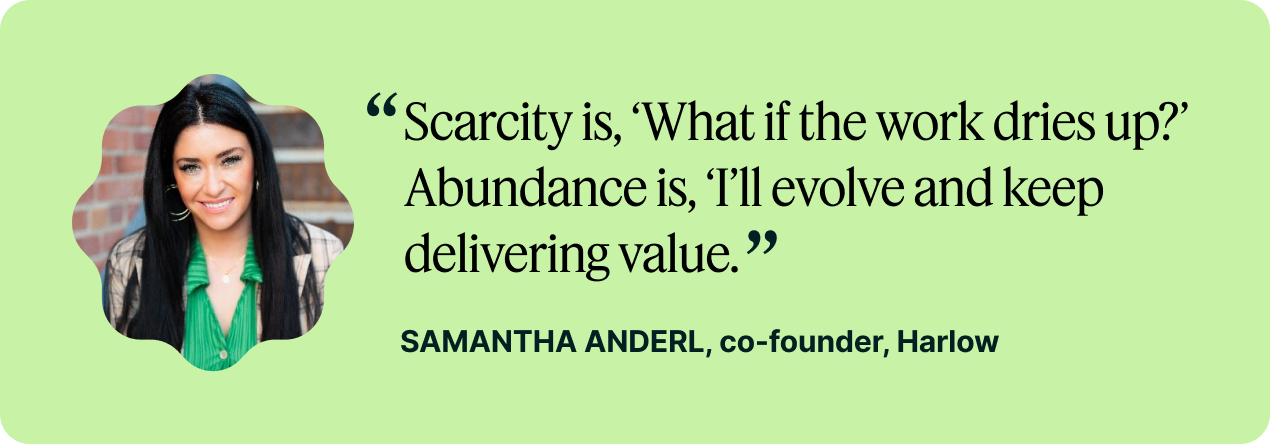
“Scarcity mindset" is saying, ‘What if no one buys this anymore and the work dries up?’,” she said. “When you step into abundance, you’re saying, ‘That’s not going to happen, because I’m always going to evolve and deliver work that’s valuable.’”
Research on career adaptability backs this approach. A study published by the Journal of Vocational Behavior, found that professionals with high career adaptability were substantially more confident navigating market shifts and consistently reported better performance and income stability than those who relied on fixed roles or static skill sets.
Creative professionals often leap into freelancing without realizing that they’ve become their own IT, finance and HR department. They must choose a legal structure, handle bookkeeping, draft contracts, send invoices and pay estimated taxes.
Samantha sees this as one of the most common and costly blind spots.
Ignoring these foundations can carry real risk. For example, sole proprietors are personally liable for business debts, whereas an LLC shields personal assets from most business liabilities.
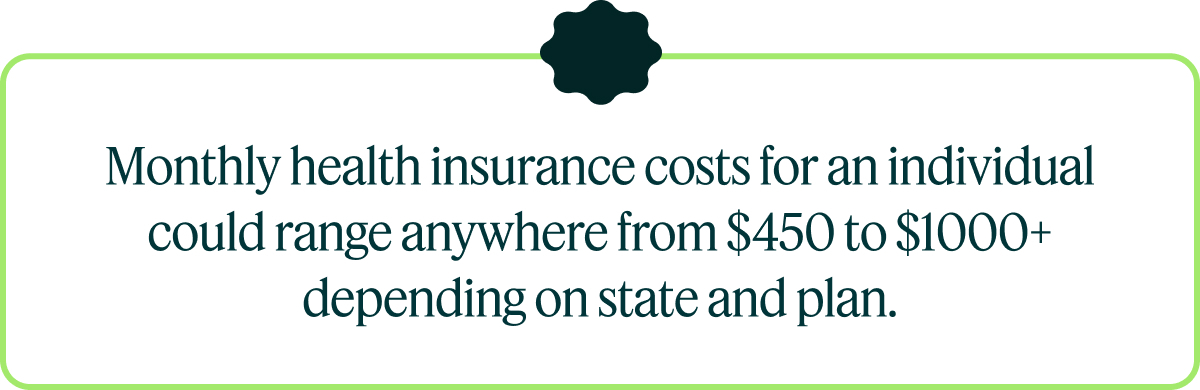
Health insurance costs can also be a significant and often underestimated expense. Depending on the state, individual coverage can range from roughly $450 per month at the low end to $1,000 or more, with higher costs common in states like California. Lower monthly premiums are often driven by subsidies, many of which are set to expire, pushing expected costs higher in 2026.
(To make healthcare insurance more accessible and streamlined for solopreneurs, Lettuce is planning to launch a dedicated healthcare offering in early 2026. Sign up here to join the waitlist)
When left untracked, these costs erode profitability and amplify stress. Samantha’s approach is to treat them as core business expenses. Once they are visible and planned for, solopreneurs can make clearer decisions about pricing, workload, and long term sustainability.
Solopreneurship can be isolating in ways many people do not anticipate.
Samantha experienced this shift immediately after leaving her corporate role. She went from leading teams and receiving constant feedback to working largely alone.
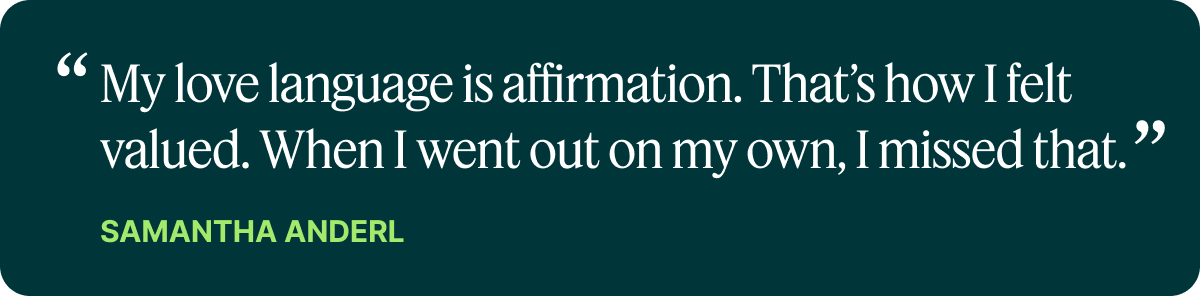
“I went from a job where I was constantly getting affirmation, surrounded by people, launching projects and talking in front of the company. My love language is affirmation. That’s how I felt valued.” she said. “When I went out on my own, I missed that.”
Without colleagues or managers to reflect progress back to her, Samantha had to redefine how she measured success or how she found fulfilment at work. Instead of relying on external validation, she began valuing flexibility, control over her schedule, and the ability to choose her work. Today, she coaches solopreneurs to intentionally counter isolation by building community, and celebrating their own wins rather than waiting for external validation. When coaching companies who work with freelancers, she’s always reminding them to rethink how they give feedback.
“A lot of freelancers only get negative feedback,” she said. “When they’re doing a good job, you need to tell them that and reward them. They deserve the same kind of experience that internal employees have.”
Taken together, these interconnected emotional and operational pressures shape how solopreneurs price their work, manage risk, and plan ahead. These pain points are not solved through hustle or sheer motivation alone, but through structure. Below, she outlines a four-part blueprint and shares downloadable resources to help solopreneurs put these systems into place.
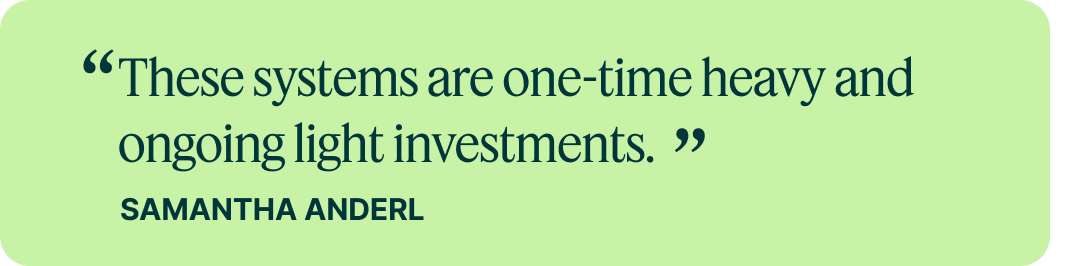
Once the legal and financial foundation is in place, the next step is operational discipline. Samantha’s second pillar asks solopreneurs to start thinking like a CEO. This shift focuses on eliminating friction and investing in support.
Download Samantha's Sustainable Systems Audit & Income Tracker

With infrastructure established and systems running, solopreneurs can address the mindset that shapes every business decision.
“As a freelancer, you’re in control of your business,” Samantha said. “One of the things that comes with that is the ability to pivot and change to meet market needs.”
Rather than assuming an offer is fixed, she encourages solopreneurs to stay on top of their field, reskill and upskill as needed, and adjust how they package and present their work. Nothing becomes obsolete overnight. It evolves. Scarcity shows up when people stop adapting. Confidence comes from knowing you can continue to create value, even as conditions change.
The final pillar turns individual work outward, leveraging relationships as a growth engine.
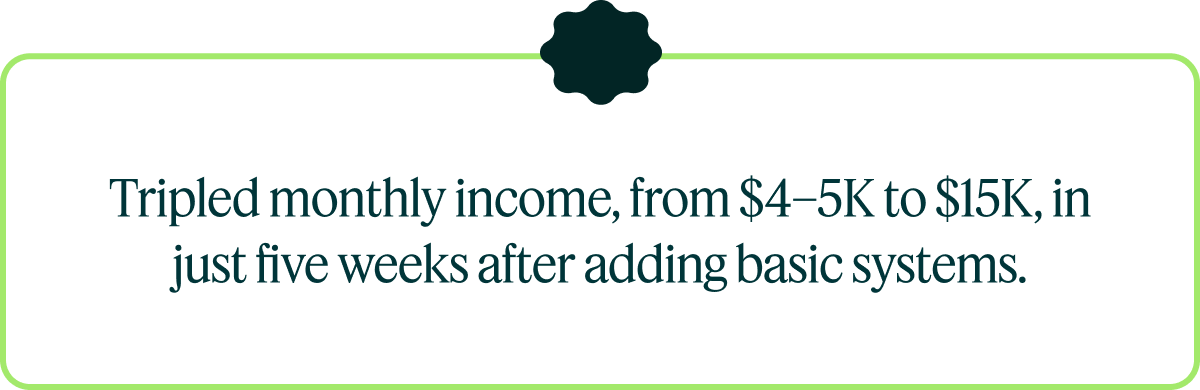
Higher revenue and confidence. Clarifying offers and pricing allowed Samantha to raise consulting rates and maintain a small, high‑impact client roster. One freelancer she coached moved from making $4‑5 k per month to $15k in just five weeks after putting basic systems in place, using a proper invoicing system and activating her network.
Samantha’s experience shows that uncertainty is part of solo work, but so is flexibility. Solopreneurship offers real control over how you shape your career, if you choose to use it. Setting up systems make that control usable. Clear positioning allows you to adapt as markets change. Tracking expenses turns guesswork into decisions. Building community replaces isolation with feedback and momentum. When solopreneurs treat their work like a business, they move from reacting to uncertainty to actively shaping what comes next.
Samantha’s Sustainable Systems Audit & Income Tracker includes
