
1 min read

Welcome back to The Wedge, the newsletter for solopreneurs who build with structure and purpose.
This issue, we’re diving into our second-ever Lettuce Solo Summit, which brought together more than 1,100 ambitious solopreneurs to learn fresh strategies and perspectives from successful fellow-solo experts. The Summit, which took place virtually over a full day last month, featured 10 expert-led sessions on topics ranging from advanced tax strategy and business structure optimization to change management and operational efficiency.
Top experts who've scaled multiple solo businesses shared firsthand wisdom, generous learnings, and actionable steps on common solopreneur planning challenges including meaningful professional transformation, rethinking your relationship to your business, and impactful scaling solutions.
Watch all 10 expert-led sessions, including:
- “AI That Actually Works: Technology Investment for Solos” with Ben Angel, author, online course creator, Becoming Unstoppable LLC
- “Leaf No Lead Behind: Master Multi-Channel Marketing & Lead Generation” with writer, editor, and consultant Elaine Pofeldt, Comms Consultants founder Ashley Dennison, MyLance founder Bradley Jacobs, and Entreprenista founder Courtney Spritzer
- “Referrals Without Asking: Building a Sustainable Pipeline That Feels Natural” with Stacey Brown Randall, author of The Referable Client Experience
While Summit sessions covered diverse topics, from tax optimization to workflow design to psychological resilience, three core themes emerged as essential building blocks for ambitious solopreneurs: establishing business legitimacy, creating operational excellence, and building long-term sustainability.
The consistent message across expert speakers: serious solopreneurs must treat their business like their best client. This means investing in proper business structure, prioritizing operations over constant client delivery, and consistently working on your business, not just in it.
Optimizing Your Business Foundation
For solos building their legitimacy as a business owner, the message was clear: The first person who needs to take your business seriously is you, from taking control of the narrative of what you do (and solidifying its value) to showing the banks you mean business.
Reframe Your Identity So It’s Unshakeable
Jason Feifer, editor-in-chief of Entrepreneur magazine, observed in his keynote, “Think Like a CEO: Thrive Through Change as a Solo,” that the most successful people are the most adaptable. They develop a unique personal relationship with change, allowing them to feel grounded rather than panicking while everything swirls around them.
The first step to achieving this, he said, is rooting into an identity that is transferable and not easily shaken by changes around you.
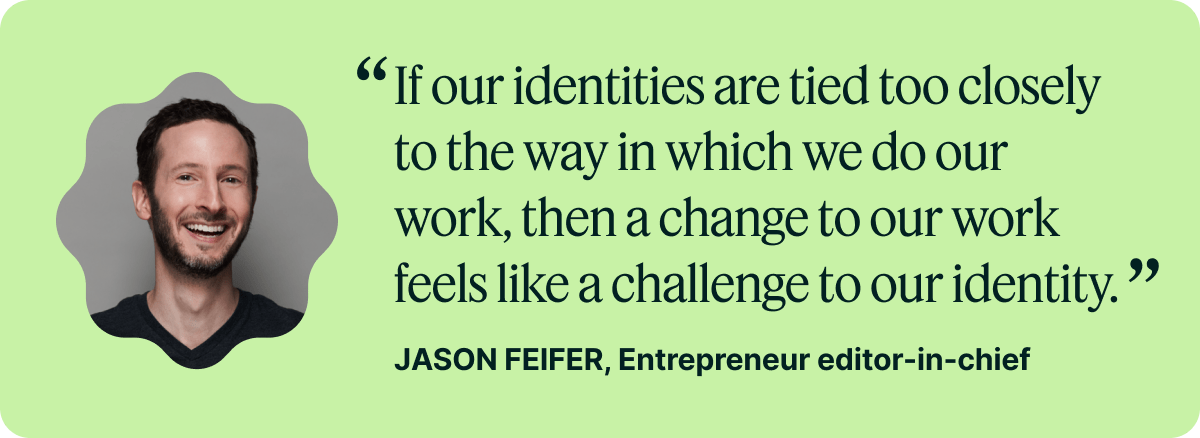
So in his own career, Jason focused on articulating “the thing that does not change in times of change”; in other words, pinpointing your transferable value, the thing you have that other people always need, no matter what changes.
Rather than calling himself a magazine editor (i.e. tying himself to a role that makes him “one phone call away from losing my identity”), Jason came up with: I tell stories in my own voice. Notably, he can tell stories anywhere, as in during this keynote, on advisory boards, when he writes books or makes podcasts.
“This is me setting the terms for how I want to operate at this stage of my career,” he said.
Craft your personal mission statement:
- Imagine someone asks you at a party, “What do you do?”
- Think about how you would communicate your value without talking about specific tasks or roles you hold.
- Aim for a short sentence, carefully choosing words not anchored to something that's easily changeable.
- Test whether your mission statement is one you can really grow with by asking, “Do people always need this?”
Consider How Your Business Structure Affects Credibility
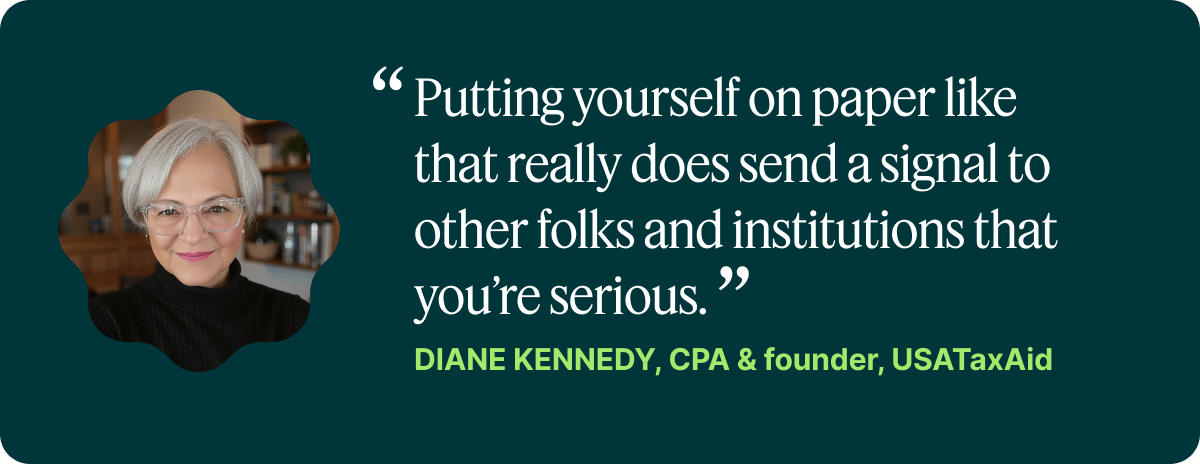
As your solo business grows, the structure that worked at launch may no longer serve your goals. During the "Financial Planning: Lettuce Talk Money" session, CPA Diane Kennedy explained how business entity choices affect everything from overpaying on taxes to financing access.
The credibility gap is real: "With a sole proprietorship, bankers think it doesn't feel like they're serious," Kennedy noted. For solos earning $60K+ net income, S Corp election often provides the biggest impact. When you elect for your business to become an S Corporation, "they're like, we have a different form, different kinds of bank accounts, we can offer you credit cards."
This structural shift delivers measurable benefits:
- Banks are more likely to perceive you as a real business.
- It's easier to get loans and build business credit (think, credit lines up to 10 times more).
- Significant tax savings on self-employment taxes.
Once you've established business legitimacy through strategic structure decisions, the next layer is building an operating system that sustains growth without burning you out.
Your Solo-CEO Operating System
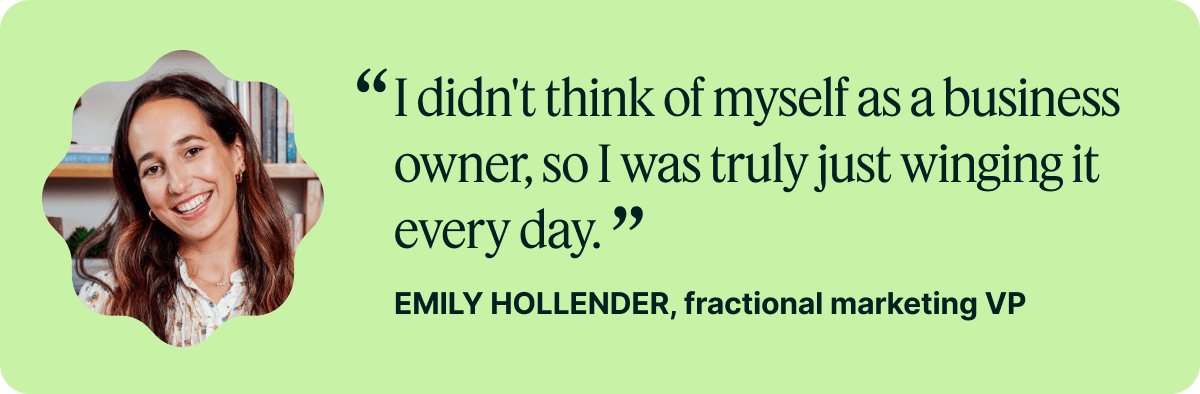
In her session, “Streamline to Scale: Operational Efficiency Planning”, fractional marketing VP Emily Hollender shared how she reached a point in her first year as a solopreneur where she had $0 in revenue lined up and was approaching burnout. With zero systems in place, she realized she needed to uplevel how she operated.
Design Your Workflow and Protect It
While breaking down how she achieved her operational glow-up, Emily celebrated that, as solos, we get to design our own ways of working. But if we don't define these upfront, she warned, our clients and calendar will take control.
Critical step: Intentionally define what work looks like to you.
Four key factors to reflect on:
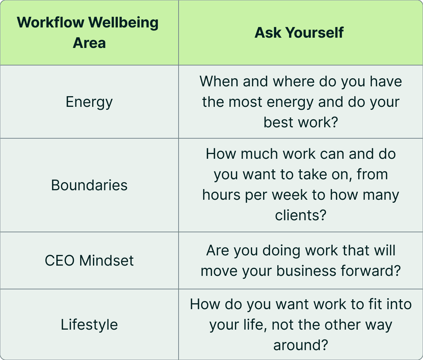
Develop your ideal work day:
- Reflect on what you want your ideal schedule to look like.
- Ask yourself questions around your non-negotiables.
- What's something from the corporate world you want to leave behind?
- Map it out and add it to your calendar to hold yourself accountable.
Implement Systems That Pay Off Repeatedly
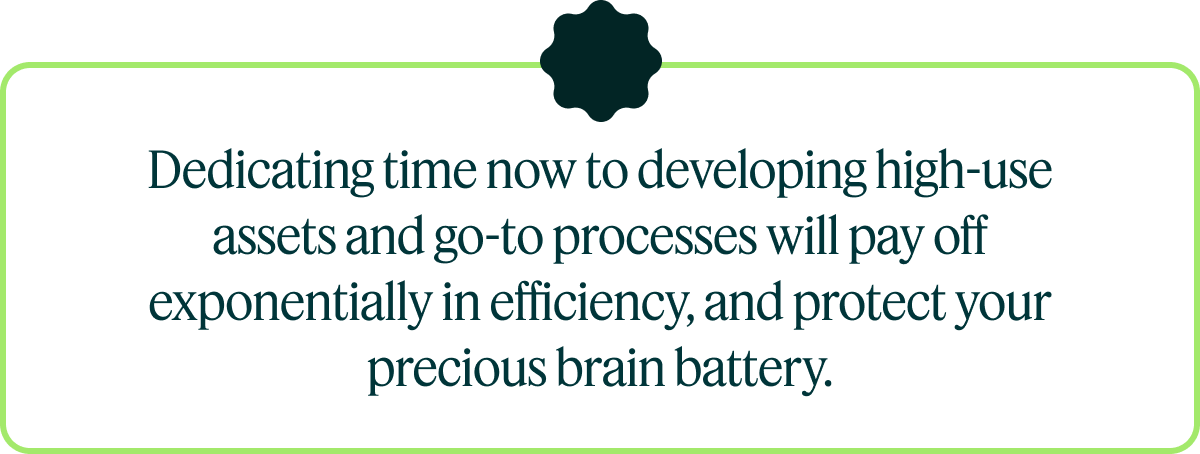
Emily used sales as a common example where instead of starting from scratch every time you have a new potential client, solos can save significant time and energy by setting up “copy-paste” starting points. Some examples: vetting criteria, a sales pipeline, discovery-call questions, email and sales scripts, kickoff agendas, and templates for proposals, work plans, and contract templates.
Key insight: Think about how you can streamline and document repeatable actions in your business.
Implementation approach:
- Think about one or two repetitive areas where you're getting stuck spending a lot of time.
- Write out a workflow or standard operating procedure for these elements of your process.
Create Your Financial Command Center
As several Summit experts advocated for, a crucial part of your solo operating system is bringing infrastructure and tools into your business that allow you to easily see what's happening in your business. During the financial planning session, the panel advised on the importance of approaching bookkeeping as an always-on strategic tool (not just a tax-time necessity) and of locking in time to work on financial infrastructure.
Schedule a weekly financial session.
Hello Alice co-founder Elizabeth Gore promised that once you start setting up and (stick to) using your accounting software effectively, “then you can in a much more passive way in the future dig into the data that will tell you how you're doing.”
Strategic next steps:
- Block off two hours at the same time every week “to live and die by.”
- Use the tools you’re already paying for, like PayPal, QuickBooks, or Lettuce.
- Dive in and actually do the tutorials (and it will start to feel a lot a lot easier).
Clean up your books, the sooner the better.
Diane Kennedy and Ryan Page, founder of Backpocket CPA, stressed that getting up to date with your financial records is key to saving money come tax time (which creeps up faster than you think). As Diane noted, waiting until the last minute can seriously narrow your options:
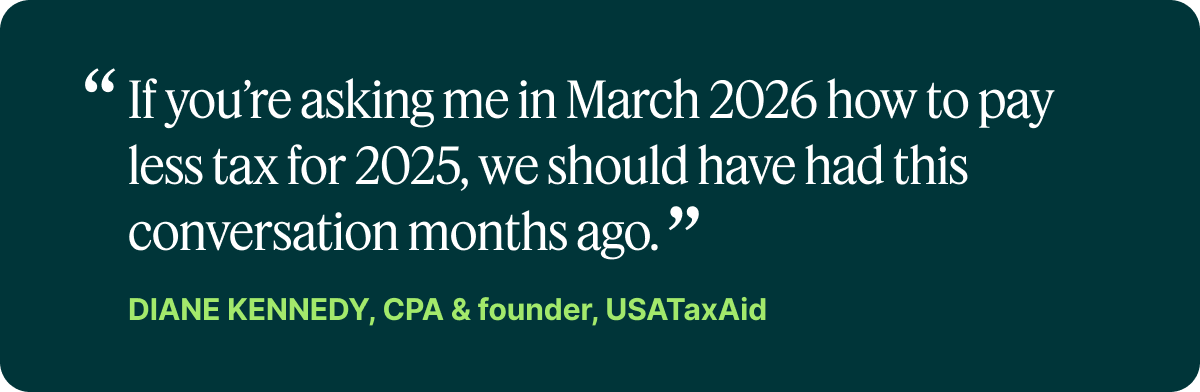
Strategic priorities:
- Aim to get your records current by the end of this year.
- Without up-to-date books, there’s no tax strategy.
- Having someone to provide timely, accurate financial statements is a necessity.
With your identity anchored and operational systems in place, the final piece is future-proofing your business against inevitable change.
Building for Long-term Sustainability
To help solos reinforce their businesses for the future, speakers shared how to strategically shift from being reactive to proactive when it comes to what’s next.
Productize Your Offering, Transform Your Business
Sam Lee, the founder and CEO of IndeCollective, spoke about designing high value, scalable offerings during his presentation on ”Breaking Free of the Time for Money Trap”. Productization has the potential to free up more of your time while growing your income, impact, and flexibility, he added.
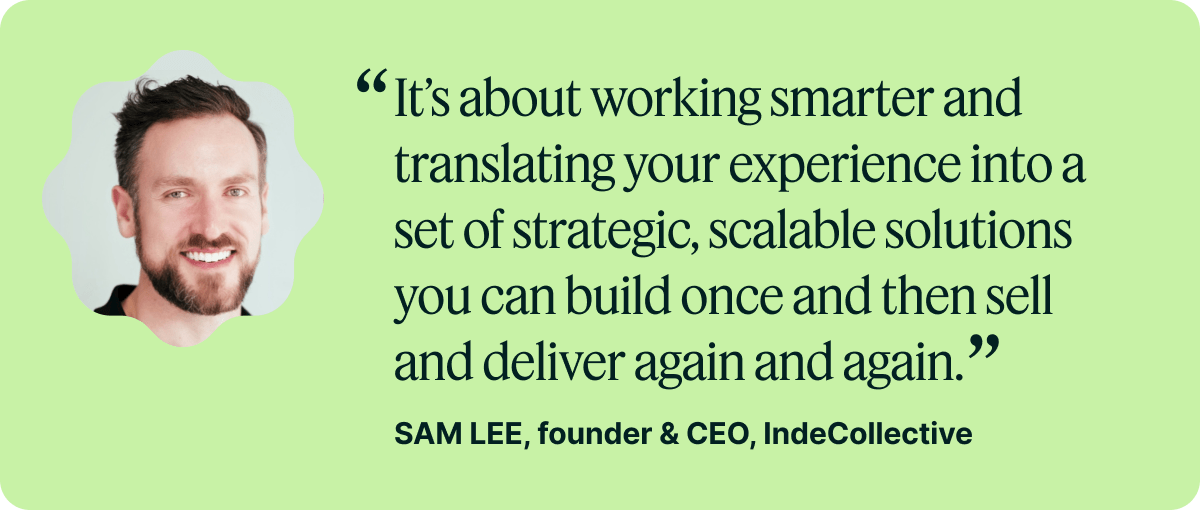
“Productization is about putting just enough structure around your brilliance so that you can consistently and confidently be able to do the best work for your best clients, sell engagements that optimize for income impact and freedom, and build process systems that will free you up to be more strategic and creative,” Sam explained.
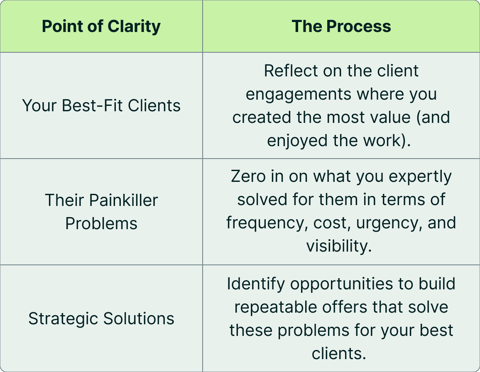
First, define your ideal clients and their needs:
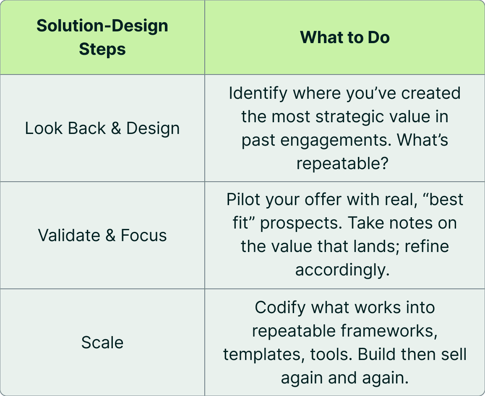
Then follow this three-step productization process:
Optimize for Your Psychological Needs
Jason Feifer referenced self-determination theory, which holds that all humans have the same three basic psychological needs that provide the foundation for motivation and happiness. But when change comes to your solo business, it disrupts your access to these basic needs.
By understanding what they are, you give yourself a grounding foundation, a self-diagnostic tool, and a compass, Jason argued.
“ARC” stands for our three basic psychological needs:
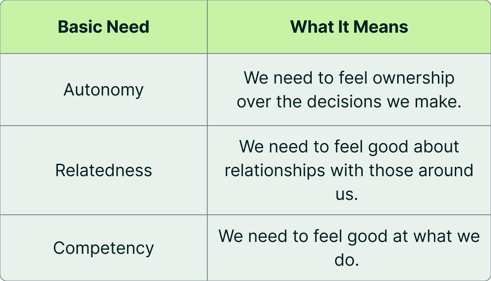
Why this matters: Big changes will happen in your solo business. Going forward (and always), this framework gives you a checklist to figure out what you need when you most need it.
Closing Note: Start Building Now
If all of the inspiring speakers and overflow of insights shared at the Lettuce Solo Summit 2025 taught us anything, it’s that now is the time to take the reins to advance your solo business in 2026.
A few other takeaways that echoed loudly throughout:
- Progress over perfection: What matters is if your work is moving your business forward.
- Planning and committing time to your own business priorities (operations, finances, sales strategy, learning software) isn’t impossible, it’s imperative.
- Get good at being bad (at first): In any of these business-critical areas, you will learn and get faster.
Emily Hollender wisely told attendees, “You are never going to have everything perfectly figured out. And once you feel like you do, things always change. So just focus on experimentation and prioritizing your business always.”
Additional Resources for Strategic Growth
Watch Solo Summit Sessions
Stream expert-led sessions on topics like:
- Referrals Without Asking
- AI: Technology Investment for Solos
- Building Your Dream Team
- Multi-Channel Marketing & Lead Generation
Stream every session on demand.
Explore Deep-Dive Recaps of Select Sessions
- Jason Feifer's Advice on How Solos Can Thrive In Change
- Financial Strategies Every Solopreneur Should Know
- How to Get More Referrals for Your Solo Business
Download the Free Annual Solo Planning Playbook
Jason Feifer is also offering The Solopreneur’s Annual Planning Playbook, a short, actionable guide to help you reflect, plan, and strengthen your foundation for the year ahead.
