

1 min read
Your tax return holds the keys to next year's financial success. Here's how to use them
Ryan Page of Backpocket CPA on financial signals in your filed tax return for solos who want next year to be a breeze. Welcome back to The Wedge,...

Welcome back to The Wedge, the newsletter for strategic solo business owners.
It’s one of the most uncomfortable moments in solo business.
A project wraps. The client is happy. The results are real.
And then there’s that awkward pause when you think: Should I ask for a referral?
You’ve been told that’s what professionals do. Ask. Incentivize. Add a line to your email signature. “I’m never too busy for your referrals.” Network harder. Push through the discomfort.
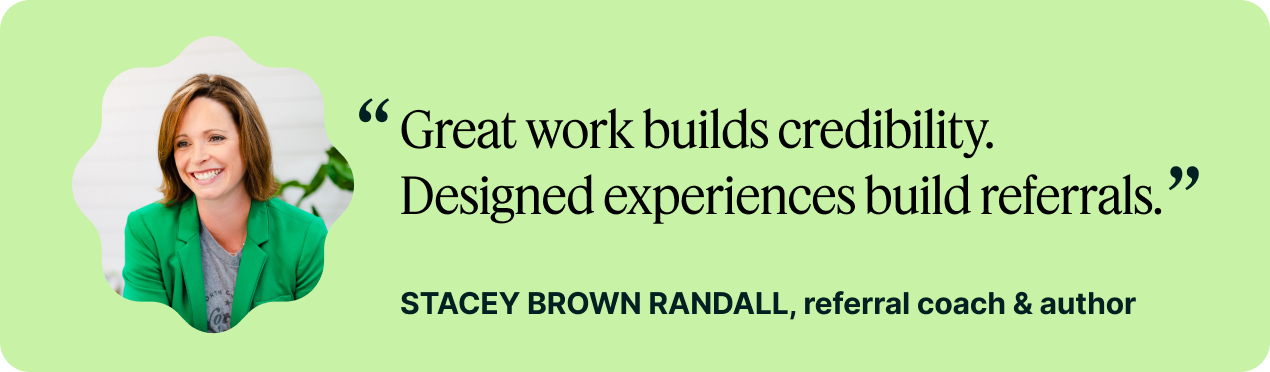
Stacey Brown Randall, referral coach and author of Generating Business Referrals Without Asking, says the traditional advice around referrals has been broken from the start. Asking, incentivizing, being gimmicky, or turning every conversation into a sales opportunity can put you in direct conflict with the very thing referrals depend on: trust.
Referrals aren’t something you extract at the end of a project.They are formed in the small moments of trust and reinforcement that happen throughout the engagement.
Most solos assume that if they deliver exceptional work, referrals will naturally follow. Great work matters, but referrals are often a result of intentionally designed experiences.
And when those experiences are woven into the relationship from the beginning, they tend to compound over time.
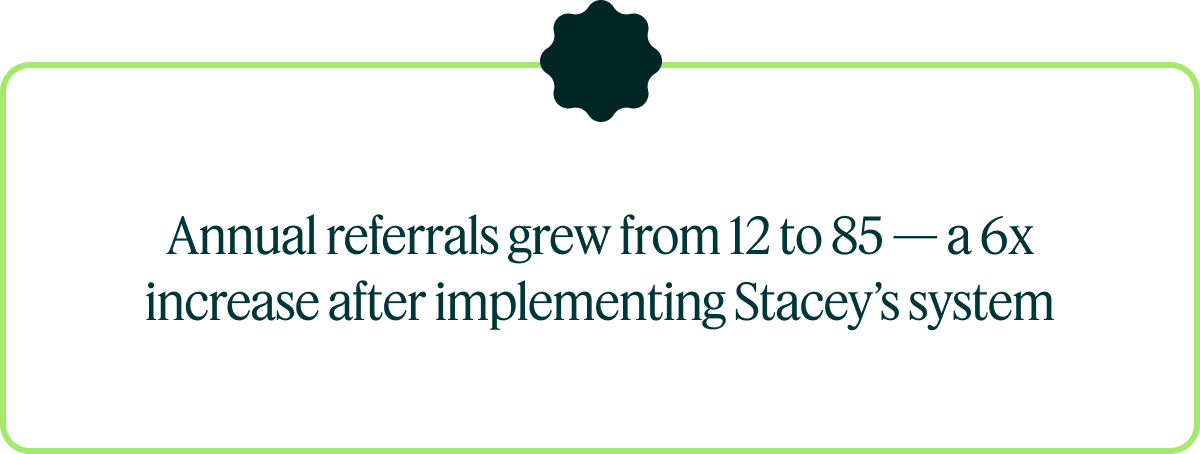
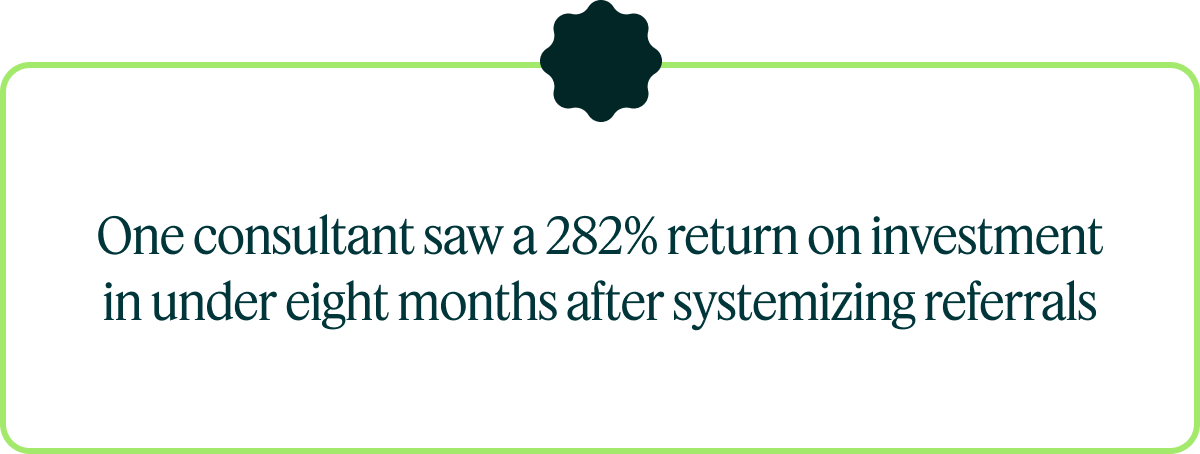
After implementing Stacey’s referral system, an attorney increased her referrals from 12 to 40 in her first year. Today, she averages 75 to 85 annually. Another professional jumped from 10 referrals to over 60 in year one after systemizing her process. A consultant saw 88 percent income growth from referrals alone.
In today’s issue, Stacey shares how to shift from hoping for referrals to intentionally baking it into your process, so they become a natural outcome of your work.
Before she became known for referrals, Stacey was a productivity consultant. In her first year in business, she received 114 referrals without asking.
She began reverse-engineering what was happening: why were people consistently talking about her business and sending others her way?
Her core insight: referrals are governed by science. They are driven by trust, social psychology, and how humans help one another. Once you understand the science behind them, you can build your business in ways that support them.
Most solos get the definition of a referral wrong.
Testimonials, online reviews, LinkedIn recommendations are word-of-mouth signals, but they’re often termed as referrals.
A true referral has two parts:
As Stacey puts it: it’s when “I’m sending someone to you who may spend money with you.”
If referrals are going to be a growth channel, they must be defined clearly and tracked intentionally.
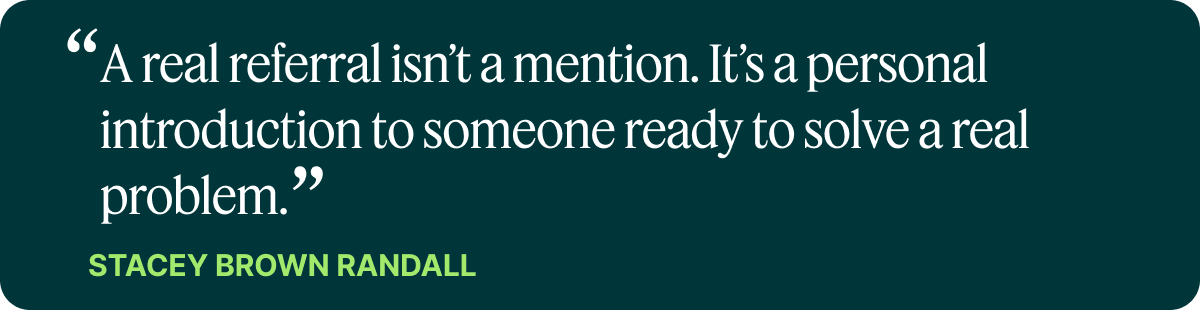
Referrals require two things: desire and opportunity.
Opportunity is when someone in your network encounters a person with a problem you solve. You don’t control when that happens.
Desire is whether your name comes to mind to a referee at the right moment.
Most solos try to increase opportunity by networking more or making awkward asks.
But Stacey’s approach focuses on strengthening desire. Because when someone already wants to refer you, the moment an opportunity appears, they think of you and act.
Desire is built through how you show up, how you maintain the relationship, and whether you’ve stayed present enough to be remembered.
.png?width=542&height=387&name=Newsletter_Graphic%20(1).png)
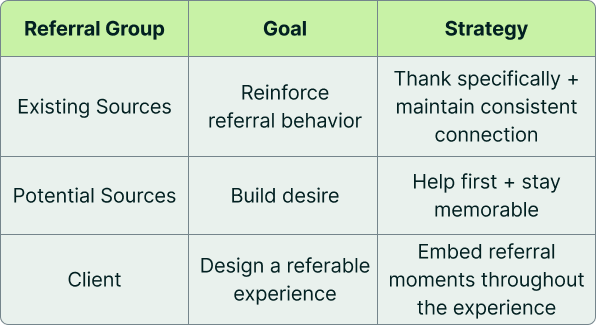
Stacey recommends dividing your network into three buckets and naming them:
A. Existing referral sources:
A. Potential referral sources:
She calls many of these centers of influence.
C. Client experience:
Segmentation matters because each group has different needs and requires a different cadence and form of communication.
Referral seeds are small, intentional moments built into how you communicate and behave inside relationships. The goal is to make your work easier to remember and easier to describe.
Here’s what sowing referral seeds can look like in practice:
With clients, that can be as simple as:
“I’m so glad Lisa referred you to me.”
This sentence using the name of the person who referred them reminds the client that they came through a trusted connection and reinforces the idea that referrals are normal here.
With existing referral sources, she teaches a specific shift in thank-you notes:
She asks people to not just say “thanks for the referral,” but “thank you for referring Lisa.”
Naming the person in the thank you note reminds them that they helped Lisa and you by making the referral happen. It makes them feel happy about helping someone.
With potential referral sources, the seed starts with helping.
In early conversations, you listen, look for ways to support them, and remove the pressure of business development. People remember those who help. Showing up authentically and being a resource for people can play a big role in the long term.
Cultivating relationships is about staying meaningfully connected over time so that the relationship deepens over time.
Stacey connects with people with intentionality using a technique that she calls as:
Running Five, Keeping Warm.
Here’s how it works:
Keeping warm is intentionally simple:
These small touchpoints signal attention and care beyond business. Over time, that steady presence makes the relationship easier to sustain and easier to act on when the need for your work surfaces.
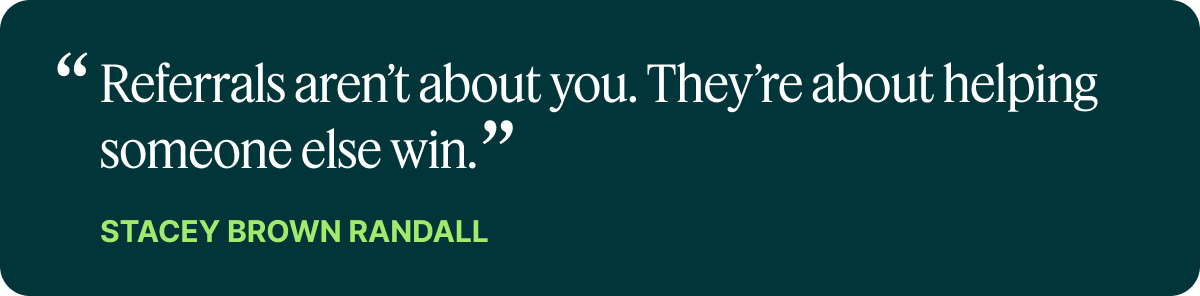
The mechanics of referral generation are rooted in science and built on predictable patterns of human behavior. First, referrals are not about you. They are about helping someone in need. When someone refers you, they become the hero, and studies show helping behavior activates reward pathways in the brain associated with dopamine and social bonding. In other words, when someone refers you, they experience a neurological reward.
Second, relationships run on trust. Referring someone puts reputation at risk, so we only do it for people we trust. Research on social capital and relational psychology shows that trust grows through repeated, consistent interaction.
For solos used to feast-and-famine cycles, a consistent referral pipeline makes new business more predictable and stable. When clients shifted from treating referrals as unpredictable luck to intentionally designing a repeatable system, the results followed quickly.
Ready to stop leaving referrals to chance? Get the 3-step blueprint to build a repeatable system that drives them.
