
1 min read
5 min read
How to File taxes on 1099 income: A Step-by-Step Guide for Solopreneurs
 Natalia Budyldina
Published on: February 6, 2026 |
Updated on September 1, 2026

Table of Contents
How to File 1099 Taxes: Step-by-Step Guide for Solopreneurs
10:30
Reviewed by: Mark Rose
Filing taxes on 1099 income boils down to three straightforward steps: reporting your income, calculating what you owe in self-employment tax, and staying on top of quarterly payments. With smart record-keeping and the right deductions, you can simplify tax season while keeping more money in your pocket.
Filing 1099 taxes feels complicated until you understand one critical truth: as a solopreneur, you're responsible for paying the IRS four times a year — not just once in April. Most self-employed people don't realize they owe quarterly estimated taxes on April 15, June 15, September 15, and January 15.
This guide covers the exact forms you need, smart deductions that save money, and how Lettuce automates everything from calculating what you owe to paying your quarterly taxes on time.
Steps at a Glance
Filing 1099 taxes as a solopreneur follows a clear, repeatable process. Here's what you'll do:
- Report Business Income on Schedule C
- Calculate Self-Employment Tax with Schedule SE
- Pay Quarterly Estimated Taxes
- Track Your Income and Forms Throughout the Year
- Claim Every Deduction You're Entitled To
- Automate Your Tax Process
Each step builds on the last. Follow them in order and you'll never scramble at tax time again.
What You'll Need Before You Start
Before you begin, gather these forms and documents. Having everything on hand before you sit down saves time and prevents mistakes.
- Form 1099-NEC - sent by clients for services of $600 or more
- Form 1099-K - issued by payment platforms for card transactions
- Schedule C - reports your business income and expenses
- Schedule SE - calculates your self-employment tax
- Form 1040-ES - used to calculate and submit quarterly estimated payments
- Form 1040 - your main annual tax return; Schedule C and SE attach here
- Business bank statements - to reconcile income and document expenses
- Receipts organized by month and category - required to substantiate all deductions
Once you have these ready, you're set to work through the steps below.
How to File 1099 Taxes: 6 Steps
As a solopreneur, you already handle complex creative projects. Filing 1099 taxes follows the same logical approach. Learning how to file 1099 taxes step by step means mastering a predictable pattern: report your business income, calculate what you owe, stay ahead with quarterly payments, and automate the process for next year.
Step 1: Report Business Income on Schedule C
Gather all your 1099 forms and bank records to report total business income on Schedule C. Schedule C captures your revenue minus business expenses to determine net profit. Include all income sources — client payments, platform earnings, and cash transactions — even if you didn't receive a 1099 form. Track income and expenses monthly so your Schedule C ties cleanly to bank activity without year-end detective work.
Step 2: Calculate Self-Employment Tax with Schedule SE
Transfer your Schedule C net profit to Schedule SE to calculate self-employment tax—Social Security and Medicare taxes totaling 15.3% on earnings over $400. The self-employment tax calculation multiplies your net earnings by 0.9235, then applies the 15.3% rate. Both Schedule C and Schedule SE attach to your main Form 1040 for filing.
Step 3: Pay Quarterly Estimated Taxes to Avoid Penalties
Here's where most solopreneurs get tripped up. Estimated tax payments are due four times yearly: April 15, June 15, September 15, and January 15. You'll owe penalties if you don't pay at least 90% of this year's tax or 100%(110% for higher income filers) of last year's tax through quarterly payments. Use Form 1040-ES to calculate each payment based on projected annual income. Missing deadlines triggers penalties and interest charges, even if you get a refund when filing.
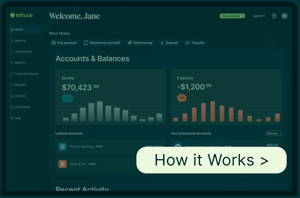
This is exactly what Lettuce handles for you. Instead of manually calculating quarterly taxes and remembering four separate deadlines, Lettuce automatically calculates what you owe, sets that money aside each time income hits your account, and pays your quarterly taxes on time. Your dashboard shows how much has been withheld, paid, and what's coming up next, so you're never caught off guard.
Step 4: Track Your Income and Forms Throughout the Year
Report all self-employment income, whether you received a form or not. Clients send 1099-NEC forms for services over $600, but cash payments and amounts under that threshold are still taxable. Reconcile bank deposits monthly rather than scrambling at year-end, matching each deposit to specific clients and projects. Use one dedicated business bank account to keep personal and business transactions cleanly separated, and organize receipts by month and expense type so your records are always audit-ready.
Lettuce makes income tracking effortless. Every transaction is automatically monitored, categorized, and reconciled in real time. Your business bank account connects directly to the platform, eliminating manual data entry and ensuring nothing slips through the cracks.
Step 5: Track Your Income and Forms Throughout the Year
The home office deduction lets you deduct $5 per square foot up to 300 square feet using the simplified method, or more using Form 8829 if your actual home expenses are significant. Deduct equipment, software, marketing costs, and professional development directly. These reduce both your income tax and self-employment tax. For vehicle use, choose between the standard mileage rate (70 cents per mile for 2025) or actual expenses. For shared items like your phone, internet, or utilities, document the business-use percentage carefully to maximize deductions without triggering audit flags.
Lettuce partners with Carry to offer Solo 401(k) plans at 90% off, automatically calculating maximum allowable contributions based on your salary and business income, so you're not leaving retirement savings on the table either.
Step 6: Automate Your Tax Process
Manual tracking creates stress and mistakes. Lettuce turns tax compliance into a proactive system: handling real-time tax projections, categorizing expenses, and managing quarterly payments without your constant attention. No more scrambling in April or missing payment deadlines.
Lettuce syncs with your business bank account, tracks deductible expenses, and calculates what you owe as income flows in. You focus on your work while Lettuce handles compliance and optimization behind the scenes, including filing your year-end business return (Form 1120-S).
Your 1099 Tax Questions, Answered
Filing 1099 taxes doesn't have to feel overwhelming when you know the basics. These common filing questions give you the exact steps, deadlines, and deduction strategies to file confidently and keep more of what you earn.
How do I file 1099 taxes as a self-employed solopreneur?
Report your 1099 income on Schedule C (Form 1040) to show business profit and loss. Complete Schedule SE to calculate your self-employment tax on net earnings of $400 or more. Make quarterly payments using Form 1040-ES or consider professional tax preparation to maximize deductions.
Should I form an LLC or elect S-Corp status as a solopreneur?
An LLC provides liability protection while keeping tax filing simple with Schedule C. S Corp election can reduce self-employment taxes by splitting income into salary and distributions, but requires payroll compliance. The savings typically justify the complexity when you earn $80,000+ annually.
What expenses can I deduct when filing 1099 taxes?
Common deductions include home office space, equipment and software, professional development, marketing costs, and health insurance premiums. Vehicle expenses use either actual costs or the standard mileage rate. The IRS business expense guide covers detailed rules for each category.
When are 1099 taxes due in 2025 for independent contractors?
Your annual tax return (Form 1040 with Schedule C) is due April 15, 2025. Quarterly estimated payments are due April 15, June 15, September 15 and January 15 (of the following year). Clients must send you 1099-NEC forms by January 31 for payments of $600 or more.
Do I need to pay estimated taxes if this is my first year freelancing?
Yes, if you expect to owe $1,000 or more in taxes after withholding and credits. Calculate estimated payments using your projected annual income minus deductions.
Can I deduct my home office if I rent my apartment?
Yes. Both renters and homeowners can claim the home office deduction using either the simplified method ($5 per square foot, up to 300 square feet) or actual expense method. Your space must be used regularly and exclusively for business to qualify under IRS rules.
Make Taxes Less Taxing With Lettuce
Filing 1099 taxes comes down to a clear workflow: collect your income sources, track deductible expenses, complete Schedule C and Schedule SE, then stay current with quarterly payments. Smart record-keeping and automated systems eliminate the scrambling and guesswork that trip up most solopreneurs.
But here's what changes everything: moving beyond manual spreadsheets to automated tax filing for solopreneurs. Automation boosts accuracy while reducing time spent on routine tasks. When your bookkeeping, projections, and compliance run on autopilot, you focus on what actually grows your business.
Ready to run your business like the pros? Transform into a tax-optimized business-of-one and save thousands annually while reclaiming 10+ hours each month—with audit defense included.
About the Author

Natalia Budyldina
Founder & Tax Advisor, BBusiness International
Natalia Budyldina is the founder and owner of BBusiness International, where she provides accounting and tax consulting services for small businesses, including bookkeeping, tax preparation, tax resolution, and advisory support. An Enrolled Agent (EA), she helps clients make sense of complex tax issues with a practical, plain-language approach so business owners can make confident decisions and stay focused on growth. She holds an MBA and a master’s degree in Accounting and Finance, and brings 8+ years of public accounting experience across both small CPA and national public accounting firms. In addition to client work, she publishes educational content for entrepreneurs through the BBusiness International, sharing actionable guidance on small-business tax and accounting topics.