 Natalia Budyldina
1 min read

As a self-employed caregiver, you carry more than the weight of your work—you have the financial and administrative load too. If you offer in-home care, disability support, or elder services, you can reduce your taxable income by tracking and deducting qualified business expenses like supplies, mileage, and continuing education costs.
When you understand self-employed caregiver tax deductions, you’re empowered to run your caregiving business with structure, clarity, and long-term savings. Whether you’re new to self-employment or scaling your work as an independent professional, learning what qualifies and how to document it gives you more control over your income and greater peace of mind at tax time.
Curious if an S Corp is right for you?
Try the Lettuce Tax Calculator to see how much more you can take home each year.
See your savings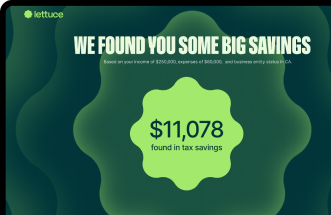
What is considered a self-employed caregiver?
Not all caregiving work qualifies for self-employed tax deductions. To claim them, you must meet the IRS definition of self-employment and show that you’re running a legitimate business, not just providing occasional help.
IRS definition
The IRS considers you self-employed if you run a trade or business as a sole proprietor, independent contractor, or through a single-member LLC. You likely qualify if you offer care services directly to clients and receive payment (not wages through an employer). You’re also responsible for reporting your income, paying self-employment tax, and tracking deductible expenses.
Common examples: elder care, disability, home health
Many caregiving roles qualify as self-employment. You may be working part-time or full-time, through an agency or independently. What matters is that you control your schedule, payments, and work conditions.
Examples of qualifying caregiver work:
-
Assisting elderly clients with daily tasks in their homes
-
Supporting individuals with disabilities through transportation, hygiene, or meal prep
-
Providing in-home nursing or companionship care
-
Contracting with families or organizations to offer non-medical caregiving
-
Running a small caregiving agency as a solo business
If you fit one of these categories, you likely qualify for self-employed caregiver tax deductions and can begin tracking eligible expenses with confidence.
What expenses can you deduct?
As a self-employed caregiver, you’re responsible for covering the costs that keep your services running smoothly. The good news: many of those expenses are tax-deductible. The IRS allows you to write off expenses that are ordinary and necessary for your caregiving business, helping you reduce your taxable income and keep more of what you earn.
Training and education
Staying certified and expanding your skills is part of running a professional caregiving service. Deductible education and training costs may include:
-
CPR and first aid certification
-
Continuing education in elder care or disability support
-
Tuition for home health aide courses
-
Licensing or renewal fees
These expenses qualify if they maintain or improve your skills, not if they train you for a completely new profession.
Health insurance
If you’re self-employed and pay for health insurance, you may qualify to deduct premiums for medical, dental, and long-term care coverage. This applies if you’re insuring yourself, your spouse, or your dependents, as long as you’re not eligible for an employer-sponsored plan.
Mileage
Caregiving often involves travel between client homes, appointments, or training locations. The IRS standard mileage rate allows you to deduct costs based on business-related driving, even if you use your personal vehicle.
Examples of deductible trips:
-
Driving to and from a client’s home
-
Picking up prescriptions or medical supplies
-
Attending a required training or certification course
Stay compliant by using a logbook or app to track dates, mileage, and trip purpose.
Tools, equipment, and protective gear
You can deduct physical items that are necessary for performing your caregiving duties. This might include:
-
Protective gloves, face masks, and hand sanitizer
-
Lifting belts, mobility aids, or ergonomic gear
-
First aid kits or health-monitoring devices
-
A business-only phone or a second mobile line
Keep receipts and note whether each item is used exclusively for work. If you partially use items for personal reasons, only deduct the percentage related to your business.
How to simplify your tracking
Managing caregiving responsibilities is already demanding. Tracking expenses for tax deductions shouldn’t add more stress. Building an organized system early on helps you maximize your deductions, protects you in the event of an audit, and makes tax season more manageable.
Systematize receipts
Create a reliable routine for organizing receipts and related records. Whether digital or paper-based, consistency is key to maintaining accuracy throughout the year.
-
Use labeled folders or cloud storage organized by month or category
-
Digitize physical receipts with your phone or scanner
-
Record details on each expense: date, vendor, item, and business use
-
Back up your files regularly to avoid loss or damage
You can also consult a local Small Business Development Center for personalized help setting up your recordkeeping system.
How to track these expenses and stay compliant year-round
Lettuce makes tracking expenses easier for caregivers who are serious about self-employment. With built-in tools to manage tax categories, upload receipts, and monitor recurring costs, the platform replaces spreadsheets and guesswork with clarity and automation.
Lettuce’s tax tools calculate and categorize deductions throughout the year, so you’re not scrambling when it’s time to file. And with Lettuce’s admin features, you can tag caregiver-specific purchases, log mileage, and maintain a paper trail with minimal effort—all while enjoying access to a complete benefits package tailored for independent professionals.
Professional caregiving deserves a professional tax strategy
Caregiving is emotionally and financially demanding, so when you’re self-employed, thoughtful tax planning lightens the load and makes a measurable difference. Tracking deductions like mileage, training, tools, and insurance gives you more control over your income and helps reduce what you owe at tax time.
Lettuce’s Self-Employment OS helps caregivers organize deductions, automate compliance, and run their businesses confidently. Whether you’re logging expenses, paying quarterly taxes, or preparing for year-end filings, Lettuce supports solopreneurs like you.
If your caregiving income is growing and you’re ready to treat it like a real business, switching from sole proprietor to S-Corp can unlock even more tax advantages. Lettuce makes that transition simple, so you can save more and stress less. Explore how Lettuce simplifies back-office work so you can focus on providing care and building a business that supports your future.