
 Natalia Budyldina
1 min read

Smart self-employment tax deductions can save solopreneurs thousands each year. From home office expenses and health insurance to retirement contributions and mileage, these write-offs reduce your taxable income and boost your bottom line. Automated expense tracking makes it even easier by categorizing transactions in real-time, so you never miss a valuable deduction.
Self-employment tax deductions can be the difference between overpaying the IRS and keeping more of your hard-earned money. If you’re self-employed, you’re on the hook for the full 15.3% self-employment tax that covers Social Security and Medicare. That adds up quickly, but the good news is you have tools to cut it down.
From home office expenses and health insurance premiums to retirement contributions and overlooked costs like mileage or software, deductions directly lower your taxable income. Claim them wisely, and you’ll save thousands each year. The challenge isn’t knowing they exist; it’s tracking them consistently and keeping audit-ready records.
And with automated systems like Lettuce categorizing expenses in real time, you can capture every eligible deduction without the stress of spreadsheets or shoebox receipts.
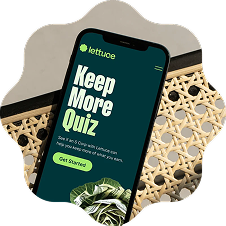
Is Lettuce right for you?
See if Lettuce can help you keep more of what you earn with our short quiz.
Take QuizWhat Is Self-Employment Tax and Why Do Deductions Matter?
If you work for yourself, you’re responsible for paying self-employment tax, which covers Social Security and Medicare. The rate is 15.3% of your net earnings—12.4% for Social Security and 2.9% for Medicare. If your income is high enough, you may also owe an extra 0.9% Medicare tax.
Unlike traditional employees who split this cost with their employers, solopreneurs pay the full amount. That’s why self-employment tax deductions are essential. Each deduction reduces your taxable income and lowers the total tax you owe.
These deductions won’t eliminate your tax bill, but they can take a serious bite out of it. The more organized you are, the more likely you’ll capture every dollar of savings.
Once your business income starts exceeding about $80,000, deductions alone may not be enough to offset your tax burden. That's when many solopreneurs consider pairing their deduction strategy with an S Corp election — a move that can save thousands by reducing the income subject to self-employment tax. We'll explore how deductions and S Corps work together later in this guide.
The Truth About Tax Deductions
Tax deductions (or write-offs) save you money, but they’re not pure profit. To claim them, you need to spend money first. Here’s what that looks like in practice:
- Imagine you spend $1,000 on business expenses like software, supplies, or marketing. That $1,000 comes off your net business income reported on Schedule C.
- If you’re in a 25% tax bracket, that deduction reduces your taxable income by $1,000, saving you about $250 in taxes — plus an additional $153 in self-employment tax (15.3% of $1,000).
- The result? Your tax bill drops by roughly $400, but you’ve still spent $600 out of pocket.
For solopreneurs, deductions work best when tied to expenses you’d make anyway to grow your business, like health insurance, retirement contributions, or maintaining a home office. These write-offs reduce your taxable profit and help you keep more of what you earn.
The Big Three Self-Employment Tax Deductions
When it comes to reducing your self-employment tax bill, three tax deductions are often missed. These are the ones that can deliver the biggest savings for freelancers and solopreneurs.
1. Home Office Deduction
If you use part of your home exclusively for business, you can deduct the related costs. This includes a portion of rent or mortgage interest, utilities, repairs, and even insurance. The IRS lets you calculate this in two ways:
- Simplified method: Deduct $5 per square foot of office space (up to 300 sq. ft).
- Regular method: Deduct the percentage of your home used for business, applied to actual expenses.
For S Corp, the process works differently. You can’t claim the home office deduction directly on your personal tax return, but you can still benefit through an accountable plan.
An accountable plan lets your S Corp reimburse you (and any employees) for legitimate business expenses — like part of your home used for work, mileage, or internet — without treating it as taxable income.
The IRS has clear rules for accountable plans. You don’t have to draft a formal document, but your reimbursement process should consistently follow a clear, written policy. When done properly, your S Corp can deduct these reimbursements as business expenses, and you won’t owe taxes on them.
2. Health Insurance Premiums
Self-employed professionals can deduct 100% of their health insurance premiums for themselves, their spouse, and dependents. This is especially valuable since most freelancers pay these costs out of pocket. On average, it saves thousands each year. For S Corp owners with more than 2% of company shares, the premiums must be reported on the W-2 but can still be deducted on your personal return (Form 1040).
3. Retirement Contributions
Investing in retirement reduces your tax bill now while building security for the future. Popular options include:
- SEP IRA: Contribute up to 25% of net earnings, with a cap of $70,000 in 2025.
- Solo 401(k): Contribute both as employee and employer, often allowing higher contributions if your income is strong.
These plans lower taxable income and can cut self-employment taxes significantly, especially when paired with an S Corp election.
Surprising Deductions Most Freelancers Overlook
Beyond the big three, there are smaller tax deductions that add up quickly. Many freelancers miss these, but together they can make a real difference.
- Creative software and tools: Subscriptions like Adobe Creative Suite, Canva Pro, or coding platforms qualify as ordinary and necessary business expenses.
- Phone and internet: If you use them for work, you can deduct the business percentage of your monthly bills. Keep records to back up your estimate.
- Client gifts and meals: Gifts under $25 per client per year are deductible, along with 50% of meals tied to business meetings.
- Travel and mileage: Business trips, airfare, lodging, and mileage driven for client work are deductible when properly logged.
- Marketing and advertising: Website costs, ads, business cards, and promotional materials all count as deductible expenses.
- Membership dues: Fees for professional associations, trade groups, or coworking spaces can qualify as deductions.
- Office supplies and equipment: From laptops and monitors to pens and printer paper, everyday business tools are deductible.
- Professional services: Payments to accountants, lawyers, or consultants for business purposes are fully deductible.
- Training and professional development: Courses, webinars, and certifications tied to your business can all reduce taxable income.
- Half of your self-employment tax: The IRS allows you to deduct the employer-equivalent portion (50%) of self-employment (SE) tax when calculating adjusted gross income on Form 1040. This doesn’t reduce your SE tax directly but lowers your income tax.
Together, these deductions may not save as much as the big three, but when tracked consistently they can put thousands back in your pocket each year. And yes — even your Lettuce subscription qualifies as a deductible business expense, so be sure to include it in your records.
When Deductions Aren't Enough: Enter the S Corp
Tracking deductions helps, but for many freelancers earning over $80,000, deductions alone won't solve the self-employment tax problem. That's where an S Corp election becomes a game-changer — not by replacing deductions, but by amplifying them.
Here's the difference: as a sole proprietor, your net business profit is subject to the 15.3% self-employment tax. With an S Corp, only your salary is subject to payroll tax. The rest flows through as distributions — completely avoiding that extra 15.3%.
And here's the bonus: you can still claim all the same deductions (home office, health insurance, retirement contributions) on top of the payroll tax savings. It's a one-two punch that keeps significantly more money in your pocket."
From Deductions to Bigger Savings with an S Corp
Once you've elected S Corp status, your tax strategy expands beyond basic deductions. Here's how the advantages stack:
- Payroll tax savings: Only your reasonable salary is subject to the 15.3% payroll tax. Distributions avoid it entirely, often saving solopreneurs thousands annually.
- Retirement contributions: With an S Corp, your retirement plan options expand. A Solo 401(k) lets you contribute as both employer and employee, often pushing contribution limits higher than you could as a sole proprietor.
- Health insurance deductions: Premiums for you and your family can be deducted through your S Corp, reducing your taxable income even further.
Many freelancers hesitate because the S Corp setup sounds intimidating — filing IRS Form 2553, running payroll, managing quarterly taxes, and staying compliant with year-end forms. But this is exactly where Lettuce shines.
With Lettuce, you can:
- Form your LLC and elect S Corp status in minutes (Form 2553 filed automatically).
- Get AI-driven salary recommendations that match IRS standards.
- Run payroll on autopilot with taxes withheld, paid, and documented.
- Automate quarterly tax payments so deadlines never sneak up on you.
- Track deductions in real time, all while Lettuce prepares your 1120-S, W-2, and K-1 at year-end.
- Stay fully compliant with continuous monitoring and built-in audit defense.
The result? What used to feel overwhelming becomes a simple, automated system that saves you thousands every year. Pair your everyday deductions with the S Corp advantage, and Lettuce makes sure every dollar of savings finds its way back into your pocket.
FAQ: Your Self-Employment Tax Deduction Questions, Answered
You're already earning the money—now let's make sure you keep more of it with these answers to the most common self-employment tax deduction questions creative professionals ask.
What self-employment tax deductions save the most money?
Think of deductions like your starting lineup. The big three — home office, health insurance, and retirement contributions — do the heavy lifting. If 20% of your home is set aside just for business, you can take 20% of your rent, utilities, and more off the tax bill. And with a SEP IRA in 2024, you can stash up to $69,000 away for the future while cutting your taxable income today.
How do I track and organize expenses without the stress?
You don’t need to be a magician — just consistent. Snap a picture of receipts, sort them into simple categories, and tag them to projects while it’s fresh in your head. Or better yet, let a tool like Lettuce run the playbook for you. It catches expenses in real time, organizes them, and keeps everything tidy for tax season.
Which deductions do freelancers often miss?
It’s the small stuff that sneaks past. Miles you drive to client meetings, software subscriptions, ads for your business, and even professional development courses all count. Don’t forget: part of your phone and internet bills, office supplies, and client gifts under $25 are fair game too.
Can I deduct my home office and health insurance?
Absolutely — two of your strongest players. A space used only for work qualifies your home office expenses, and health insurance premiums for you, your spouse, and dependents are 100% deductible. If you run an S Corp, premiums show up on your W-2, but you can still claim them on your personal return.
What if the IRS questions one of my deductions?
No need to panic. As long as you’ve got organized records and comprehensive tax planning strategies, you’re playing by the rules. The IRS might ask for proof — it’s routine, not personal. Tools like Lettuce keep everything documented, audit-ready, and even back you up with defense coverage, so you can step onto the field with confidence.
The smarter way to save with Lettuce
Deductions will always matter, but they’re just the starting point. The real wins come when you pair them with the tax advantages of an S Corp and let automation handle the heavy lifting. Lettuce does it all: tracks expenses, files your S Corp election, runs payroll, calculates quarterly taxes, and keeps every record audit-ready.
What used to feel overwhelming — shoebox receipts, IRS forms, late-night stress—turns into a steady system that works in the background. Instead of guessing or overpaying for help, you get clear numbers, real compliance, and savings that stack up year after year. Switch once, and every season forward puts more money back in your pocket.
Don’t just deduct — win back your time and your taxes with Lettuce.