 Diane Kennedy, CPA
1 min read

A solid solopreneur action plan starts with structure, not just income. Many solopreneurs watch their tax bills climb as they grow, not because they're earning more, but because foundational decisions were never revisited. Smart tax savings come from choosing the right business structure, paying yourself strategically, and timing decisions before the year ends; simple moves that can save thousands.
The Problem Usually Isn’t Income. It’s Structure.
I see this pattern often with solopreneurs. Income goes up, the business feels busier than ever, and yet the tax bill keeps climbing.
Nothing dramatic changed. The issue isn’t income or deductions. It’s structure.
Many solopreneurs assume higher taxes are simply the price of success. In reality, they are often the result of a few foundational decisions that were never revisited as the business grew.
This article isn’t about aggressive tax strategies or obscure loopholes. It’s about simple, intentional moves that can make a meaningful difference when they’re planned and implemented at the right time.
At Lettuce, we focus on exactly these moves like these. Using S Corps, smarter compensation, and better timing, then automating the hard parts like formation, payroll, bookkeeping, and tax filings so they actually get done. This is how it works.
Curious if an S Corp is right for you?
Try the Lettuce Tax Calculator to see how much more you can take home each year.
See your savings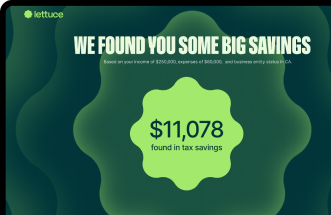
Why Tax Planning Looks Different For Solopreneurs
Solopreneurs sit in a unique spot in the tax code. You don’t have the scale of a large company, but you do have something many larger businesses lack: flexibility.
That flexibility can work in your favor or against you. When it isn’t used intentionally, it can show up as higher taxes, locked-in decisions, and fewer options later.
Tax savings for solopreneurs come from:
-
Choosing the right business structure,
-
Paying yourself correctly, and
-
Making decisions before the year ends, not after.
Miss one of those, and a profitable business can feel like it’s leaking cash.
Get The Business Structure Right
Your business structure affects far more than the paperwork you need to file. It determines how income is taxed, how payroll taxes apply, and what planning options are available as the business grows.
Many solopreneurs start as sole proprietors or single-member LLCs (limited liability companies) because it’s simple and inexpensive. That may work in the early stages. But, you may have problems later when income increases. That is when you need to take a hard look at your structure again.
As your income increases, it becomes more important how the profit actually flows through your business. If you stay too long in a beginning structure (or lack of one), you can quietly cost more than most deductions will ever save.
The goal isn’t to rush into complexity. It’s to recognize when “good enough” is costing you real money.
Tools like Lettuce make that upgrade far less overwhelming by handling LLC formation, S Corp election, EIN setup, and even a free business checking account in one flow so you can change your structure with about 10 minutes of actual work. If your solo business is consistently profitable and your tax bill keeps growing, that’s your cue to have a structure conversation—and it may be time to let Lettuce set up and run the S Corp playbook for you.
Pay Yourself Correctly — And Use The Flexibility Wisely
Owner compensation is one of the most overlooked tax decisions for solopreneurs.
How you pay yourself affects:
-
Payroll taxes
-
Retirement contribution opportunities
-
Audit risk
-
Cash flow planning
Your owner salary should not be an afterthought. A strategy of income comes in, expenses go out, and whatever is left gets dealt with at year-end is a sure-fire way to a bad tax surprise come tax time.
One advantage solopreneurs often overlook is flexibility. In an S corporation, owner compensation isn’t just about payroll taxes. Within reasonable limits, salary decisions also affect how much income can flow into tax-deductible retirement plans and other benefits.
That means compensation can be adjusted intentionally as income changes. You’re not manipulating the system. Instead, you are thinking strategically with the goal of aligning taxes, cash flow, and long-term planning. A sole proprietorship simply doesn’t allow that flexibility.
When pay is planned and consistent, rather than reactive, the rest of the tax picture can improve.
Timing Matters More Than Most People Realize
One of the most frustrating surprises for solopreneurs is learning that a good idea came too late.
Many tax planning opportunities depend on timing. Some decisions must be made during the year. Others depend on when income is earned, expenses are incurred, or payroll is run.
Once the year closes, many doors close with it.
This is why tax planning isn’t just a year-end task. It’s an ongoing process of knowing which decisions need to happen now and which can wait.
A Real-Life Snapshot
Paul was in his third year as a solopreneur, but his first year operating as an LLC taxed as an S corporation. His income hadn’t suddenly doubled, but it had become more consistent.
Working with his CPA, Paul reviewed how much he was actually making in the business and what a reasonable salary looked like for his role. They landed on roughly one-third of the business’s net income as W-2 wages, with the remaining profits left in the company and available for distributions.
The S corporation election didn’t just change how his income was taxed. It also allowed Paul to cleanly implement business reimbursements and tax-free benefits that had previously been messy or underused, including an accountable plan for home office and technology costs, retirement contributions, and the proper deduction of health insurance.
That flexibility also allowed him to fine-tune his compensation to better support retirement contributions as his income stabilized.
By aligning structure, compensation, and benefits, Paul reduced his overall tax bill by just over $20,000 for the year. Nothing aggressive. No obscure loopholes. Just decisions made intentionally and executed correctly.
That kind of result is common when a growing business finally matches its tax structure to its reality.
For many solopreneurs earning $80,000 or more, the combination of an S Corp plus an automated system like Lettuce is what finally turns “I think I’m overpaying” into real, trackable savings.
Focus On Fewer, Better Decisions
Tax planning for solopreneurs doesn’t require chasing every possible deduction. In fact, that approach often creates more problems than it solves.
The biggest gains usually come from:
-
Fewer decisions,
-
Made earlier, and
-
With clearer intent.
When structure, compensation, and timing are aligned, everything else tends to work more smoothly.
Solopreneur Action Plan: Frequently Asked Questions (FAQs)
Do I need an LLC or S corp to save money on taxes?
Not always. The right structure depends on income level, consistency, and business activity. That said, an LLC taxed as an S corporation, when properly set up and maintained, can save solopreneurs thousands of dollars in taxes as income rises. The key is execution, timing, and follow-through, not simply forming an entity.
When should a solopreneur start tax planning?
Ideally, before income spikes. Tax planning works best when decisions are made proactively, not after the year is already over. Waiting limits options and often increases cost.
Can I fix tax mistakes after the year ends?
Rarely. Most meaningful tax planning decisions must happen before year-end. The good news is that once you understand where problems occurred, you can plan more intentionally for the year ahead.
Going forward, using a platform like Lettuce helps you stop repeating the same mistakes by building proactive planning, automation, and audit-ready records into the way your business runs every day. Get started today!