
 Diane Kennedy, CPA
1 min read
This article explains when the home office deduction is legitimate, how to weigh the simplified method against actual expenses, and why proper documentation — not the deduction itself — is what actually protects you if the IRS ever asks questions.
For years, business owners have been warned about the home office deduction. "Don't take it. It's an audit flag."
That advice has been repeated so often that plenty of perfectly legitimate business owners are afraid to claim a deduction they're entitled to.
But is it true? Not really.
Home offices have become so common and so necessary for many small business owners that the IRS even created a simplified method for calculating the deduction.
The home office itself isn't the problem.
The problem is claiming a deduction you don't qualify for, or claiming one you can't prove.

Curious if an S Corp is right for you?
Try the Lettuce Tax Calculator to see how much more you can take home each year.
See your savingsWhere People Actually Get in Trouble
Before we get to the simplified method, let's look at the basic rules.
1. You need to be self-employed. This is an important distinction. You may be an employee who works from home every day. You may even have a room your employer expects you to use as an office.But under current federal tax law, employees generally can't claim the home office deduction.
The deduction is primarily available to people who are self-employed or operating a business.
2. The space generally needs to be used regularly and exclusively for business.The rules sound more intimidating than they are.
"Regular use" means you actually use the space for your business on an ongoing basis.
"Exclusive use" means the area is devoted to the business.
That doesn't necessarily mean you need a separate room with a door and a brass plaque announcing ACME CONSULTING WORLD HEADQUARTERS.
But the dining room table where you work during the day, and the family eats dinner at night, isn't exclusively used for business.
There are some exceptions to the exclusive-use rule, including certain inventory storage and daycare situations, but for most business owners, regular and exclusive use is the basic test.
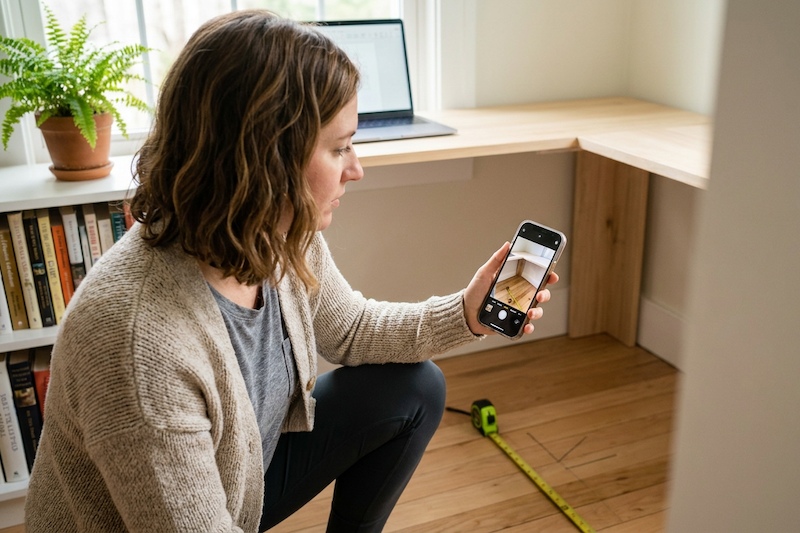
3. Document the space. If you're using the actual-expense method, you'll need the square footage of your office and the total square footage of your home.And here's another step I recommend to my clients: Take a picture.
If the IRS ever asks about your home office, it may be a year or two after you filed the return. You may have rearranged the room. You may not even live in the same house anymore.
A picture is worth a thousand words. Or maybe a few thousand dollars in write-offs.
Keep the picture with your tax records along with your calculation of the office square footage.
4. Track the expenses. With the regular method, home office expenses generally fall into two categories.Direct expenses relate specifically to the office itself. If you paint only the office, for example, that may be a direct home office expense.
Indirect expenses relate to the entire home. Those might include rent, mortgage interest, property taxes, utilities, insurance and certain repairs and maintenance. The deductible business portion is generally determined based on the percentage of the home used for business.
And yes, that means recordkeeping.
Which brings us to the IRS's easier alternative.
The IRS Offers a Shortcut
Instead of tracking and allocating actual expenses, you can elect to use the simplified home office method.
The calculation really is simple: $5 per square foot of qualifying office space, up to 300 square feet.
That means the maximum simplified deduction is $1,500. No allocating the electric bill. No tracking homeowners insurance. No calculating what percentage of the plumbing repair belongs to the office.
It sounds like a gift from the IRS.
But like many gift horses the IRS offers, you might want to take a closer look before you accept it.
The Simplified Method May Cost You
First, I've often found that the simplified method produces a substantially smaller deduction than the actual-expense method.
Think about what $1,500 represents.
If you have a legitimate home office and you're paying substantial rent or mortgage interest, utilities, insurance and other household costs, your business share of those expenses can easily exceed $1,500.
The only way to know which method is better for you is to run the numbers.
There's another difference that's easy to overlook.
If the business-income limitation prevents you from taking your entire home office deduction under the regular method, the unused allowable expenses may be carried forward, subject to the home office rules.
With the simplified method, there's no carry-forward of the unused simplified deduction.
Use it or lose it. That's an awfully important piece of fine print for something that's supposed to make your taxes easier.
What if You Have an S Corporation?
There's one additional wrinkle if your business operates as an S corporation.
An S corporation owner generally doesn't simply claim the home office deduction personally the way a sole proprietor does. Instead, the corporation may be able to reimburse the owner for qualifying home-office expenses through a properly established accountable plan. That's a subject worthy of its own article.
But the recordkeeping lesson doesn't change.
You still need to establish that you qualify. You still need to know how much of the home is being used for business. And you still need records supporting the expenses being reimbursed.
The Kernel of Truth – Home Office Deduction
Is It True?
Yes. The home office deduction is real, and qualifying business owners shouldn't automatically avoid it because they've heard it's an "audit flag."
Does It Work for Me?
Maybe. First, determine whether you meet the regular and exclusive use requirements. Then compare the simplified method with your actual expenses rather than automatically choosing the easier calculation.
Can I Prove It?
That's the big one.
Document the size and business use of the space. Take a picture. Keep records of the expenses associated with your home. And make sure your bookkeeping gives you the information you'll need when it's time to prepare the return.
The best tax deduction isn't necessarily the easiest one to calculate. It's the one you legitimately qualify for and can prove.
Frequently Asked Questions About the Home Office Deduction
Does Claiming a Home Office Deduction Trigger an IRS Audit?
Claiming a legitimate home office deduction does not automatically trigger an IRS audit. The important issue is whether you meet the requirements for the deduction and have records supporting what you claimed.
Who Qualifies for the Home Office Deduction?
The federal home office deduction is generally available to self-employed taxpayers who use part of their home regularly and exclusively for qualifying business purposes and meet the other requirements for business use of a home.
Employees generally cannot claim a federal home office deduction for unreimbursed expenses under current law.
Does a Home Office Have to Be a Separate Room?
No. A home office doesn't necessarily have to be a separate room.
An identifiable portion of a larger room may qualify if that particular area is used regularly and exclusively for business and the other home-office requirements are satisfied.
Can I Deduct My Home Office if I Use the Room for Personal Purposes Too?
Generally, the area must be used exclusively for business. A dining room table that is used for business during the day and family meals at night generally wouldn't meet the exclusive-use requirement.
There are exceptions to the exclusive-use rule for certain uses, including qualifying inventory storage and daycare facilities.
What Expenses Can I Deduct for a Home Office?
Under the actual-expense method, deductible home-office expenses can include both direct and indirect expenses.
Direct expenses relate specifically to the office itself. Indirect expenses can include the business portion of costs such as rent, mortgage interest, property taxes, utilities, insurance and certain repairs and maintenance.
The particular expenses that are deductible depend on your circumstances and the applicable tax rules.
What Is the Simplified Home Office Deduction?
The simplified method allows qualifying taxpayers to calculate the home office deduction using $5 per square foot of qualifying business space, up to 300 square feet.
That produces a maximum simplified home office deduction of $1,500.
Is the Simplified Home Office Deduction Better Than Using Actual Expenses?
Not necessarily. The simplified method requires less recordkeeping and calculation, but the deduction may be smaller than the deduction available under the actual-expense method.
The only way to determine which method produces the better result is to compare the calculations.
Can an Unused Home Office Deduction Be Carried Forward?
Under the actual-expense method, certain home-office expenses that cannot be deducted because of the business-income limitation may be carried forward, subject to the applicable home-office rules.
There is no carryforward of an unused deduction calculated under the simplified method.
Can an S Corporation Owner Take a Home Office Deduction?
An S corporation shareholder-employee generally doesn't claim a home office deduction personally in the same way a sole proprietor does.
Instead, an S corporation may be able to reimburse an owner-employee for qualifying home-office expenses under a properly established accountable plan.
What Records Should I Keep for a Home Office Deduction?
Keep records showing the size of the home and the area used for business, along with documentation establishing how the space is used.
If you're using the actual-expense method, retain records supporting the relevant household expenses as well. A photograph of the home-office space can also help document how the area was configured and used.
Should I Take a Picture of My Home Office for Tax Records?
It's a good recordkeeping practice. An IRS examination may occur years after the tax return was filed, when the room has been rearranged or you may no longer live in the same home.
A dated photograph kept with your tax records can help establish what the business space looked like during the year the deduction was claimed.
Is the Home Office Deduction Worth Taking?
It can be. The answer depends on whether you qualify and how large the deduction is under the simplified and actual-expense methods.
Rather than automatically avoiding the deduction because of audit fears or automatically choosing the simplest calculation, determine which method works best based on your actual circumstances and records.
The Bottom Line: Should You Take the Home Office Deduction?
If you legitimately qualify for the home office deduction, fear of an audit shouldn't be the reason you leave it off your tax return. The important questions are whether your home office meets the tax requirements, which calculation method produces the better result and whether you have the records to support what you claimed.
The simplified method may be easier, but easier doesn't necessarily mean better. The actual-expense method may produce a larger deduction, particularly when housing and other household costs are substantial.
Run the numbers. Document the space. Keep the records.
A legitimate home office can produce a legitimate tax deduction. You don't need to be afraid of it. You just need to be able to prove it.
Proving your home office deduction shouldn't come down to a shoebox of receipts and a fuzzy memory of your square footage. Lettuce automates the recordkeeping side of this equation — tracking home-office-related expenses, and for S-Corp owners, structuring accountable-plan reimbursements so your home office costs are reimbursed correctly and documented the way the IRS expects. Instead of scrambling to reconstruct your records if a question ever comes up, you have them ready from day one. Try Lettuce and get started today!
This article is part of the Tax Strategy Series, featuring in-depth, practical guidance from Diane Kennedy, CPA—bestselling author, strategic tax consultant, and founder of USTaxAid and KennedyTax.tax. Explore the full series and catch every installment here.
Related Articles: