 Diane Kennedy, CPA
1 min read
Content creators can reduce their tax burden by taking advantage of restored 100% bonus depreciation, properly tracking business expenses, and understanding when research and development costs may qualify for immediate deductions under current tax law.
Content creation may begin with an idea and the equipment you already have. But it can quickly become a real business - one that requires better technology, recurring software subscriptions and, eventually, entirely new products and platforms.
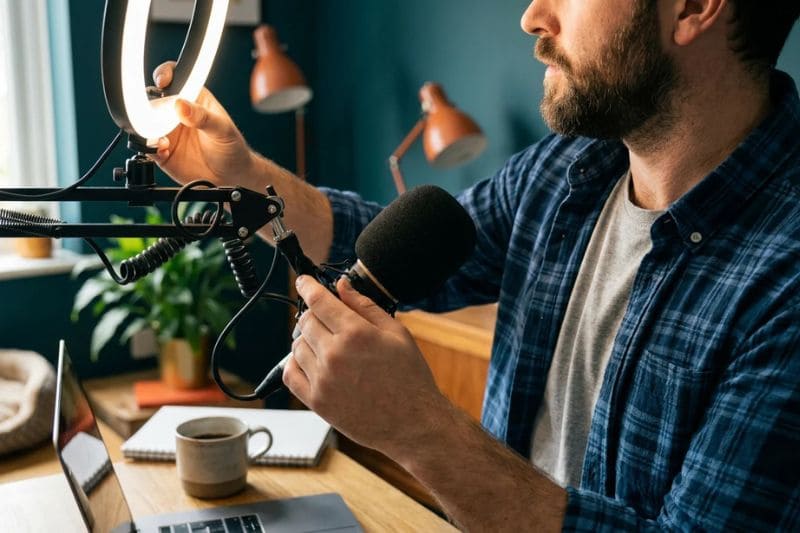
That was the subject of a conversation I had with a client recently. He had started a YouTube channel focused on travel for a specific niche audience. He already owned a computer and a phone, but as he began producing more videos, he realized he needed an updated phone with more storage, a ring light and a better microphone.
The One Big Beautiful Bill, or OBBB, restored several tax provisions that may make investments like these more affordable. It also brought back an important research and development deduction that could benefit creators who are expanding beyond videos, podcasts or social media posts and beginning to develop their own technology.
For my client, the 100% bonus depreciation meant he now got an immediate full write-off for the new equipment he bought for his business.
New legislation is only part of the story. Some of the most frequently missed deductions are expenses that were already deductible. This includes equipment you owned before starting the business and the small monthly subscriptions that quietly add up over time.
As your content business grows, staying on top of deductions, bookkeeping, payroll, and tax compliance becomes just as important as creating great content. Platforms like Lettuce help creators streamline the financial side of their business, making it easier to manage taxes, maximize available deductions, and focus on building their audience.

Is Lettuce right for you?
See if Lettuce can help you keep more of what you earn with our short quiz.
Take QuizNew Equipment and the Return of 100% Bonus Depreciation
For content creators, equipment is more than a collection of gadgets. It is often the infrastructure of the business.
Depending on the type of content you produce, qualifying business equipment might include:
- Smartphones used to record and edit content
- Cameras and lenses
- Microphones and other audio equipment
- Ring lights and studio lighting
- Computers and monitors
- External drives and storage equipment
- Studio furniture
- Other production equipment
The OBBB permanently restored 100% bonus depreciation for qualifying property generally acquired and placed in service after January 19, 2025.
That means a business may be able to deduct the full cost of qualifying equipment in the year it is placed in service rather than recovering the cost over several years.
Why Bonus Depreciation Can Matter to a Startup
Business owners sometimes ask why bonus depreciation matters when another method for deducting 100% of equipment purchases, Section 179, already allows businesses to deduct equipment purchases.
The difference can be especially important for a startup business.
The Section 179 deduction is generally limited by the taxable income produced by the business. It cannot be used to create or increase a business loss. Any deduction that cannot be used because of that limitation may have to be carried forward.
Bonus depreciation does not have the same taxable income limitation.
In the case of my client’s new YouTube channel, the business was still in its startup stage and expected to report a loss. The Section 179 deduction therefore might not have produced an immediate benefit. The restored 100% bonus depreciation rules may allow qualifying equipment costs to be deducted currently, even though the new business has not yet become profitable.
Of course, an immediate deduction does not automatically mean that buying more equipment is a good idea. The phone, lighting or microphone should first make sense for the business.
A tax deduction should make a good business investment better. It should not turn an unnecessary purchase into a good investment.
Don’t Forget What You Already Own
New content creators often begin with equipment they already own.
You may already have:
- A computer
- A smartphone
- A camera
- Lighting equipment
- A microphone
- A desk or other studio furniture
Just because you purchased something before starting the business does not necessarily mean the business receives no tax benefit from it.
Property converted from personal use to business use, or properly contributed to a business entity, may become a depreciable business asset. The amount that may be depreciated depends on factors such as the property’s adjusted basis, its fair market value when converted or contributed, the percentage of business use and the type of entity involved.
That makes documentation important. Create an inventory of the property you are placing into business use, including:
- A description of the item
- The original purchase date
- The original cost, when available
- Its approximate value when placed into business use
- The percentage used for business
- The date the business began using it
This is an often-overlooked deduction. Before assuming you must buy an entirely new production setup, look around. You may already own a meaningful part of your studio, and a valuable potential tax deduction.
Don’t Lose the Little Deductions
During that same client conversation, we also discussed his subscriptions for video editing and graphic design.
The OBBB did not change the general deductibility of ordinary and necessary business subscriptions. But the new law provides a good reason to step back and make sure you are already claiming all the deductions available to you.
Content creators may pay for:
- Video and audio editing software
- Graphic design platforms
- AI writing, editing or image tools
- Cloud storage
- Stock photographs, video clips or music
- Music licensing
- Website hosting and domain names
- Email marketing platforms
- Social media scheduling software
- Livestreaming tools
- Membership or course-hosting platforms
- Business use of internet and cellular service
These expenses are easy to overlook because many are automatically charged to a credit card each month. A $15 or $30 subscription may not seem significant by itself, but recurring expenses can add up to hundreds or thousands of dollars over the course of a year.
The biggest tax savings do not always come from new legislation.
Sometimes they come from claiming deductions you were entitled to take all along.
Is Your Content Business Becoming a Technology Business?
For some creators, content is the product.
For others, content becomes the marketing engine for a much larger business.
A creator may build an audience by sharing educational, entertaining or highly specialized content. As that audience grows, the creator begins looking for new ways to solve problems for followers, deliver personalized services or generate recurring revenue.
That may lead to the development of:
- A mobile app
- An online platform
- A membership site
- A custom course or coaching platform
- An AI-powered tool
- Proprietary software
- A custom website with specialized features
For example, imagine a creator who uses videos to promote an online product. To make that product more useful, the business begins developing an AI application that gives users customized recommendations.
The creator may work with outside developers, perform some of the work personally, or use a combination of both. During development, the business tests different approaches, encounters technical problems, changes the design and discards features that do not work.
That is no longer simply a content business. It may also be a business conducting research and development.
The OBBB Restored Immediate Domestic R & D Deductions
Before the OBBB, businesses were generally required to capitalize domestic research and development (R & D) expenditures and deduct them over five years.
Beginning with tax years after 2024, the OBBB allows qualifying domestic research and experimental expenditures to be currently deducted. A business may instead elect to capitalize and amortize those costs over at least 60 months.
That can make a substantial difference to cash flow.
A creator who spends $100,000 developing proprietary software may no longer have to wait five years to tale the full deduction for qualifying domestic development costs. The business may be able to deduct those costs right away.
The word domestic matters when it comes to R & D. The immediate deduction applies to qualifying research or experimental work performed in the United States. The treatment of foreign research costs is different.
Simply buying an AI subscription is not R & D. The subscription may still be an ordinary business expense, but using an existing tool is not the same as conducting qualified research.
Developing your own AI-enabled product, testing alternative technical solutions or paying developers to perform qualifying development work in the United States may be a different story.
R\&D Is Broader Than Many Business Owners Think
When people hear “research and development,” they often picture scientists in white lab coats or teams of engineers developing technology that has never existed before.
That image causes many smaller businesses to dismiss a tax opportunity that may apply to them.
It Does Not Have to Be New to the World
A product or process does not necessarily have to be the first of its kind. A similar app, platform or piece of software may already exist in the marketplace. Your work may still qualify if you are creating something new or substantially improved for your own business and the project otherwise meets the applicable requirements.
Simply copying an existing product is not enough. The work must still involve technical uncertainty and a process of experimentation.
But “someone else has already built something similar” does not automatically disqualify your project.
You Do Not Necessarily Need Engineers
Another common misconception is that R\&D requires a large team of engineers or highly
sophisticated scientific work.
A solo business owner may conduct qualifying research.
You might write code yourself, test different integrations, develop a prototype, attempt to improve performance or work through uncertainty about how to achieve a particular technical result.
Hiring developers or engineers does not automatically make a project R\&D.
Conversely, doing the work yourself does not prevent it from qualifying.
The nature of the work matters more than the person’s job title.
The Project Does Not Have to Be Finished
A project does not have to reach its final stage, launch successfully or generate revenue before the related costs can qualify.
Research expenses are often incurred while the business is still testing possibilities and working through problems. Some projects are delayed.
Others change direction. Some never become commercially viable at all.
Failure does not necessarily disqualify the research. In fact, unsuccessful tests and abandoned approaches may help demonstrate that the business was engaged in a genuine process of experimentation.
The important question is not whether the finished app became a commercial success.
The question is whether the activities performed and expenses incurred met the requirements for qualified research.
Does Your Project Look Like R\&D?
Not every new idea or software project qualifies. In plain English, qualifying research activities generally include the following elements:
- You are developing or improving a business component. This might be a product, process, software application, technique, formula or invention used in your business or offered to customers.
- There is technical uncertainty. At the beginning of the project, you do not know exactly how to achieve the desired result, whether the design will work or which method will be successful.
- You use a process of experimentation. You evaluate alternatives by developing prototypes, testing different approaches, running trials, revising the design or eliminating solutions that fail.
- The work relies on technical principles. The experimentation is grounded primarily in fields such as computer science, engineering, physical science or biological science. It is not simply related to marketing preferences, style or taste.
- The goal is a new or improved function, performance, reliability or quality. Changes that are merely cosmetic or stylistic generally are not enough.
The project may still involve creativity and design, but calling a change “innovative” does not automatically make it qualified research. There must be genuine technical uncertainty and experimentation.
Think of it this way: If you already knew exactly how to build it before you started, it is probably not R\&D. If there was uncertainty - if you had to test ideas, solve technical problems and learn as you went - you may have qualifying research activities.
Documentation Matters
The deduction is only as strong as the records supporting it.
Businesses conducting potential R\&D should document the work while it is taking place rather than attempting to reconstruct everything at tax time.
Useful records may include:
- A description of the technical problem
- The uncertainty that existed at the beginning
- Alternatives considered
- Tests performed
- Problems encountered
- Changes made during development
- Unsuccessful prototypes or abandoned approaches
- Employee or owner time spent on qualifying activities
- Developer invoices and contracts
- Payroll and contractor costs
- Supplies used during testing
- The location where the development work was performed
This does not require turning every development meeting into a tax seminar. But the records should show more than an invoice labeled “app development.”
They should tell the story of what the business was trying to accomplish, what it did not know and how it experimented to find a solution.
Frequently Asked Questions
Can content creators deduct cameras, microphones and other recording equipment?
Yes. Equipment used in your content creation business may qualify as a business asset. Under the One Big Beautiful Bill, many qualifying purchases may also be eligible for 100% bonus depreciation, allowing the full cost to be deducted in the year the equipment is placed in service.
Can I deduct equipment I already owned before starting my business?
Possibly. If you begin using personal equipment in your business, it may become a business asset. The amount that may be depreciated depends on factors such as your adjusted basis, fair market value when converted, business-use percentage and the type of business entity.
Are software subscriptions tax deductible for content creators?
Generally, yes. Ordinary and necessary business expenses such as video editing software, graphic design subscriptions, cloud storage, AI tools, website hosting and social media management platforms are typically deductible business expenses.
What is 100% bonus depreciation?
Bonus depreciation allows businesses to immediately deduct the cost of qualifying property instead of recovering that cost over several years through depreciation. The One Big Beautiful Bill permanently restored 100% bonus depreciation for qualifying property generally acquired and placed in service after January 19, 2025.
Does research and development only apply to technology companies?
No. Businesses in many industries may have qualifying research activities. Content creators who develop software, online platforms, AI applications or proprietary digital tools may have research and development expenses that qualify under the tax rules.
Does my app have to be completely finished before I can deduct R\&D costs?
No. Qualified research expenses are often incurred while a product is still being developed. A project does not have to be commercially successful—or even completed—for qualifying expenses to be deductible.
Do I need engineers to qualify for R\&D?
Not necessarily. While many qualifying projects involve software developers or engineers, business owners may also perform qualifying research themselves if the work involves technical uncertainty and a process of experimentation.
Is using an AI subscription considered research and development?
Usually not. Paying for an AI subscription is generally an ordinary business expense. Developing your own AI-powered software, application or platform may qualify as research and development if it otherwise meets the applicable requirements.
How do I know if my project may qualify as R\&D?
A good rule of thumb is to ask whether there was technical uncertainty when you started. If you already knew exactly how to build it, it probably isn't R\&D. If you had to experiment, solve technical problems and test different approaches, it's worth discussing the project with your tax advisor.
Want to Keep More of What You Earn?
While deductions and depreciation can reduce your taxable income, many successful solopreneurs unlock even greater savings by combining smart tax planning with the right business structure. Lettuce helps freelancers, creators, and businesses-of-one automate bookkeeping, payroll, tax compliance, and S Corp management: all in one platform. If your content business is growing, Lettuce can help you spend less time worrying about taxes and more time creating. Try Lettuce and get started today!
The Bottom Line for Content Creators
The One Big Beautiful Bill restored several valuable tax incentives for business owners, including 100% bonus depreciation and the immediate deduction of many domestic research and development costs.
Whether you're creating videos, building an online course, developing an app or investing in AI-powered tools, understanding these provisions can help you keep more cash in your business.
This article is part of the Tax Strategy Series, featuring in-depth, practical guidance from Diane Kennedy, CPA—bestselling author, strategic tax consultant, and founder of USTaxAid and KennedyTax.tax. Explore the full series and catch every installment here.
Related Articles:
- Most Overlooked Tax Deductions for Creators
- Can You Do Your Own Bookkeeping as a Small Business?
- Multiple Platforms, One Tax Return for Creators
- Affiliate Income, Sponsorships, And Direct Sales: How Creators Should Report Multiple Revenue Streams
- OBBB Tax Guide for Solopreneurs: What You Need to Know