 Natalia Budyldina
1 min read

Learn how to launch a profitable consulting business in days using the right structure, pricing, and tax strategies from the start.
Two solo consultants with identical skills and client rosters can end up with very different take-home pay. The difference is in the structure. A consultant running everything as a sole proprietorship pays self-employment tax on all of their profit, while another who formed an LLC, made an S Corp election, and set up automated payroll can often keep thousands more each year.
Your business structure and tax strategy quietly decide how much of your revenue actually shows up in your personal bank account. Get this part right from day one, and you’ll launch faster, feel more confident about your numbers, and keep more of every dollar you earn.
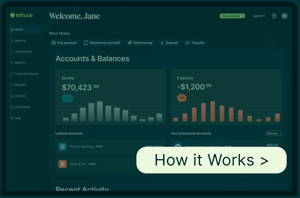
Lettuce automates this entire financial stack so you can focus on what you do best. Ready to launch smart?

Curious if an S Corp is right for you?
Try the Lettuce Tax Calculator to see how much more you can take home each year.
See your savingsWhat Is a Consulting Business?
A consulting business is a business where you get paid to solve problems using your expertise, not just your time. Instead of delivering a physical product, you deliver insight, strategy, and implementation that help your clients reach a specific outcome.
You might work on short, high-impact projects or ongoing retainers. Either way, you are the business. That’s why clarity around your niche, your offer, and your structure matters so much. It all has a direct line to your personal income and risk.
How to Start a Consulting Business as a Solopreneur
This is where you turn the idea of “being a consultant” into an actual plan. The steps below walk you from initial idea to fully structured business, covering your niche, offers, legal setup, finances, and back office.
Step 1: Decide What Kind of Consultant You Are (and Who You Help)
Before you think about logos or legal paperwork, get clear on who you serve and what you solve.Start with three questions:
-
Who do you help? (e.g., bootstrapped SaaS founders, clinic owners, agencies, course creators)
-
What problem do you solve that keeps them up at night?
-
What outcome do you deliver that they’d gladly pay for?
Turn this into a one-line positioning statement:
“I help [specific client] go from [painful situation] to [specific result] in [clear time frame or process].”
This becomes your filter for everything else — your offers, your pricing, your marketing, and eventually the structure you choose.
Step 2: Turn Your Expertise into One Productized Offer
As a solopreneur, complexity is your enemy. You don’t need a giant menu of services. You need one flagship offer that’s easy to explain and easy to buy.
Instead of billing by the hour (for example, “consulting at $150/hr”), wrap your expertise into a repeatable package, like “90-Day Growth Audit + Action Plan for B2B SaaS.”
Each productized offer should answer:
-
What’s included (scope, deliverables, key milestones)?
-
How long it takes?
-
What success looks like from the client’s point of view?
Start with one offer. Your first $5,000-$10,000 usually comes from solving one problem extremely well, not ten problems halfway.
Step 3: Choose a Structure That Protects You and Your Paycheck
Now, the part most solopreneurs avoid: structure.
The business structure you choose shapes:
-
How you’re taxed
-
How much of your personal assets are on the line
-
Which strategies you can use later to save on taxes
If you start taking payments under your own name and do nothing else, you’re a sole proprietor by default. The IRS defines a sole proprietor as someone who owns an unincorporated business by themselves.
It’s simple. But there’s a catch: there is no legal separation between you and your business. Your personal assets can be exposed to business debts or lawsuits.
That’s why many consultants form an LLC (limited liability company) early. An LLC:
-
Separates business and personal assets when properly maintained
-
Keeps admin relatively simple for a business-of-one
-
Leaves you flexible on how your income is taxed
By default, a single-member LLC is still taxed like a sole proprietorship, but it gives you a legal shell and more options later.
Explore our article on Freelance vs Contract Work for more details.
Why “S Corp vs. LLC” is the Wrong Question
An LLC is a legal structure created at the state level. An S corporation (S Corp) is a federal tax status, not a separate business entity. You elect it with the IRS using Form 2553 after you’ve formed an eligible LLC or corporation.
So the real question usually isn’t “Should I be an LLC or an S Corp?” For many solopreneurs, the smarter move is:
- Start with an LLC, then elect S Corp status once your consulting profit reaches the right range.
Always confirm your situation with a tax pro, but know this: LLC + S Corp is often a combo move, not a competition.
Step 4: Set Up Your Financial Foundation Like a Real Business
Once your structure is decided, lock in the basics so your consulting business behaves like…a business.
Get an EIN and Open a Business Bank Account
-
Apply for an EIN (Employer Identification Number) with the IRS—it’s free and often required for LLCs, bank accounts, and payroll.
-
Open a separate business checking account and run all consulting income and expenses through it.
Good records and clean separation make it easier to prepare returns and support what you report.
Pick a Simple, Repeatable Recordkeeping System
You don’t need complex software, but you do need a system that:
-
Shows income and expenses in one place
-
Tracks which expenses are deductible
-
Makes it obvious what your monthly profit is
That profit number is what drives your S Corp decision, your quarterly tax plan, and your salary if you’re an S Corp owner.
Automation helps here. Lettuce is built for businesses-of-one and can handle your day-to-day bookkeeping—pulling in bank and card transactions, categorizing them, and giving you a clear view of profit without extra spreadsheets.
Step 5: Price Your Consulting Services for Profit (Not Just Survival)
Pricing isn’t just a marketing decision. It’s a tax decision and a lifestyle decision.
As a solopreneur, your rates need to:
-
Cover your time and expertise
-
Fund your tax bill
-
Leave enough margin to pay yourself well and reinvest
Price Outcomes, Not Hours
Hourly billing caps your earnings and punishes you for becoming more efficient. Instead, build fixed-fee packages tied to outcomes, not time.
For example:
-
“Messaging Sprint” with defined deliverables and a clear success metric
-
“90-Day Operations Clean-Up” with specified systems and checkpoints
Value-based and project-based models help you capture the real business impact of your work instead of just selling hours.
Bake Taxes Into Your Pricing
Self-employed people owe both income tax and self-employment tax on most net earnings. For many new consultants, a reasonable starting point is to set aside 20–30% of every payment for federal and state taxes combined.
You can refine that percentage later, but starting generous keeps you from scrambling at tax time.
See our article on How Consulting Taxes Really Work for more information.
Step 6: Build a Simple, Sustainable Client Pipeline
You don’t need a massive audience to start a consulting business. You need a small number of right-fit clients and a system for getting them.
Focus on three channels to start:
-
Your existing network
-
Past coworkers, bosses, clients, collaborators
-
Reach out with a short note on who you help and how you help them now
-
-
Client-adjacent communities
- Online groups where your ideal clients hang out (Slack communities, forums, industry-specific Facebook or LinkedIn groups)
-
Authority-building content
- Short posts, Loom walkthroughs, teardown threads that show how you think about your niche’s problems
Give yourself a weekly rhythm that fits into a 30–45 minute block:
-
10-15 warm or direct outreach messages
-
2-3 posts answering questions your ideal clients already ask
-
2-3 thoughtful follow-ups
Consistency beats complexity — especially when you’re a team of one.
Step 7: Protect Your Time and Cash Flow with Contracts and Payment Terms
Scope creep, vague expectations, and late payments will burn out a solo consultant faster than a full calendar ever will.
Put a simple service agreement in place for every project. At a minimum, cover:
-
Project scope and what’s not included
-
Timeline and key milestones
-
Payment schedule (for example, 50% upfront, 50% on a milestone)
-
Revision limits and change-order process
-
What happens if payments are late
Most consultants benefit from:
-
50% upfront, 50% at a clear milestone (like strategy delivery or final handoff)
-
Clear late-fee language and the ability to pause work if invoices go unpaid
-
Multiple payment options (ACH, card) through a modern invoicing tool
Step 8: Put Taxes, Bookkeeping, and Payroll on Autopilot
Once clients and cash are coming in, your biggest risk is falling behind on the back office, especially taxes.
Know What You Owe as a Solo Consultant
As a solopreneur, you’ll typically deal with:
-
Income tax on your net earnings
-
Self-employment tax if you’re a sole proprietor or default LLC
-
Employment taxes on your salary if you’re an S Corp owner-employee
The IRS provides a dedicated hub for self-employed individuals that covers when and how to file, and how estimated payments work.
S Corps are pass-through entities, so business income generally flows to your personal return instead of being taxed at the corporate level. But that flexibility comes with responsibilities: payroll, reasonable compensation, clean books, and timely filings.
As a solo consultant, you can’t afford to spend hours a week on spreadsheets, payroll runs, and tax calculations.
This is where Lettuce is designed to plug in:
-
Helping you form your LLC and elect S Corp status when it makes sense for your profit level
-
Automating bookkeeping so income and expenses are categorized as they happen
-
Running payroll for your reasonable salary and tracking owner distributions
-
Keeping you on track for estimated taxes and year-end filings
If you want your consulting business to feel like a real company without hiring a full finance team, Lettuce can act like a lightweight finance team in a single tool.
How to Start a Consulting Business: Frequently Asked Questions (FAQs)
Starting smart means getting answers to the right questions upfront. You'll make confident decisions about your business structure, taxes, and timing without getting overwhelmed by complexity.
Do I need an LLC to start, or can I operate as a sole proprietor first?
You can operate as a sole proprietor right away. Federally, there’s no separate formation step as long as you report your income correctly. You’ll still need to follow any state or local requirements for business licenses, permits, or a “doing business as” (DBA) registration if you’re not using your legal name.
An LLC adds a legal layer between your business and personal assets and opens the door to tax strategies like an S Corp election, which is why many consultants choose to form an LLC once they know their consulting business is sticking.
When should I elect S Corp status if I'm just getting started?
Most solo consultants find that S Corp status starts to make sense once annual profit consistently lands somewhere in the $80,000 range. You make the switch by filing Form 2553 with the IRS, generally no later than two months and 15 days after the start of the tax year when you want S Corp treatment to begin.
How much should I set aside for taxes each month as a new consultant?
A practical starting point is to set aside 20–30% of every client payment for federal and state taxes combined, then adjust as you learn your actual effective tax rate. That bucket is meant to cover both income tax and self-employment tax, so you’re not scrambling at quarterly deadlines. S Corp owners can often save significantly because only their W-2 salary is subject to Social Security and Medicare taxes, while properly structured distributions generally are not.
What's a reasonable salary for an S Corp owner in a service business?
Start by asking what you’d reasonably pay someone else to do your exact consulting role, given your experience, workload, and industry norms. Many advisors use something like a 50–60% salary and 40–50% distributions split as a rough starting point, but there’s no official percentage formula. Whatever you choose, document how you arrived at your salary so you can show it was based on real market data if you’re ever asked to justify it.
Can I change my business structure later if I start simple?
Absolutely. You can upgrade from sole proprietor to LLC anytime. S Corp election has strict deadlines but delivers the biggest tax savings once your income supports it. Plan your structure changes around your growth timeline for maximum benefit.
Launch Now and Keep More of What You Earn
Your consulting business launch doesn’t have to take months of planning and setup. Follow the 8-step framework: define your niche, set up your legal foundation, price for outcomes, and streamline your back office. The real gap between a consultant who thrives and one who works harder for less usually is structure, pricing, and tax strategy.
Smart consultants know that pairing the right entity choices (LLC now, S Corp election when the numbers support it) with outcome-based pricing and simple systems changes everything. When you combine solid structure with clean books and streamlined operations, every new client builds toward more take-home pay instead of more chaos. You can stop guessing on quarterly taxes and step away from the spreadsheet juggling.
Ready to stop leaving money on the table? Get started with Lettuce—your complete financial system for businesses-of-one. Form your LLC, elect S Corp status, and automate banking, bookkeeping, payroll, and taxes from day one. Save thousands in taxes each year and reclaim meaningful time every month with real-time projections, audit defense, and our savings guarantee.
Looking for more information? Also read How to Be a Consultant.