
4 min read

Vibe coding for solopreneurs. Build, automate, and scale your business with AI

Vibe coding for solopreneurs. Build, automate, and scale your business with AI
Garrett Kelly of Ember AI on the AI workflows that help solos deliver twice as much in half the time. 

Welcome back to The Wedge, the newsletter for strategic solo business owners.


Most solos are using AI by prompting: you open Claude or ChatGPT, write a prompt, get something back, maybe a first draft or a proposal, and edit it. But prompting doesn't compound over time. Every session starts fresh, context resets, and you end up repeating the same instructions over and over.

Solos are now building proposal tools, client portals, onboarding systems, and chief-of-staff dashboards tailored to how they specifically work, tools that improve efficiency that used to take teams of developers. This move to improve capacity using AI frees up time to take on more clients, go deeper with the ones you have, and invest in the work that moves your practice forward.

Last month, as part of the Lettuce Solo Summit, Garrett Kelly and Dan Sears of Ember AI hosted a session called "What Solos Can Build With AI Right Now."

This issue goes deeper on AI workflows for solos: repeatable, step-by-step sequences of tasks that AI runs for you, like turning a call transcript into a proposal. We cover the common builds, the AI tool stack, and effective prompting formulas.

We're still early on the AI adoption curve for independent professionals. The solos who build these workflows now will offer more value in less time and develop a real competitive edge.

Download the Lettuce AI for solopreneurs toolkit: a step-by-step guide to building a discovery-call-to-proposal tool, the AI tool stack, and the 4-part prompting formula.


AI-augmented solopreneurs are earning more. Here's what's driving it

newsletter 7 graphic 1

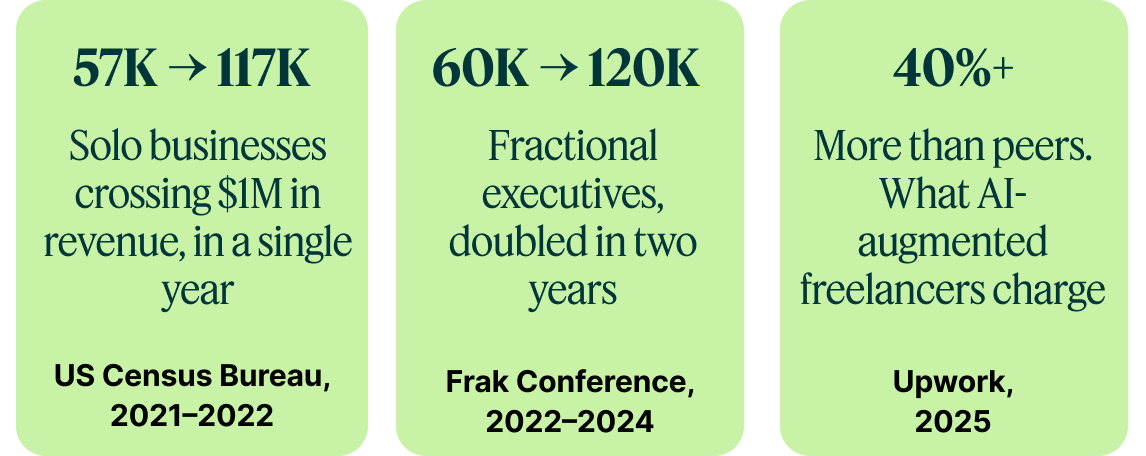
The technical barriers and cost of building have lowered significantly. A marketing website that used to cost $1,000 to $10,000 and took four to eight weeks to build now ships in an afternoon for $20 to $100. Custom internal tools that used to cost at $50 to $200 per month per subscription now cost around $100 a month total. As Garrett put it: "Code is nearly free."

The solos capturing that advantage are pricing accordingly. Garrett says that working a monthly retainer pricing model instead of an hourly rate is more beneficial for capturing the value of AI workflows.

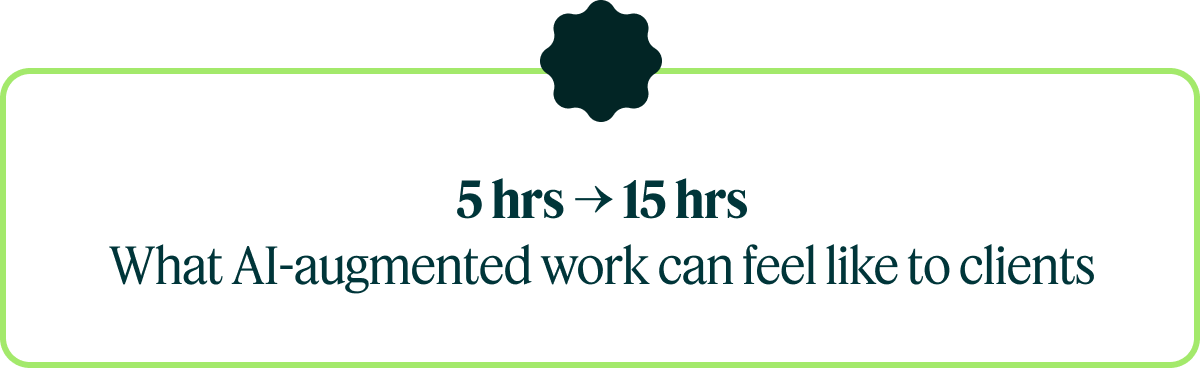
"I know that I can deliver twice as much twice as fast," he said. "I could give five hours and it feels like fifteen sometimes." The clients see the output. They don't see the engine, and they pay for the value they receive.

wedge issue 7 stat

Before you build: find the work you repeat every week


Before you start building anything, Garrett suggests to ask yourself two questions:

  • What's costing you the most money right now?

  • What's wasting the most time per week?

"Drill down into that," Garrett said, "figure out and scope out a build that will directly address that, and then be disciplined on how you go about building it."

Where you start also depends on where you are in your business.

If you don't have clients yet: Build around your intro-discovery-proposal workflow. Use an LLM to help you shape the right questions to ask on a first call, go deep on discovery, and then generate a proposal from the transcript. "Your process becomes very structured, disciplined and intentional," Garrett said.

If you already have a full client load: The build that will serve you most is a chief of staff tool. Garrett described his own situation: four calendars, one for each client, five Slack workstations, clients on different note-taking apps and communication platforms. He found tools that covered about 80% of what he needed, but built his own anyway.

If a tool exists that does most of what you need, use it. But building is so cheap and easy now that you could build something that you need for your specific workflow. Hyper-personalization and customization have never been easier.


Step-by-step walkthrough: build a proposal pipeline tool


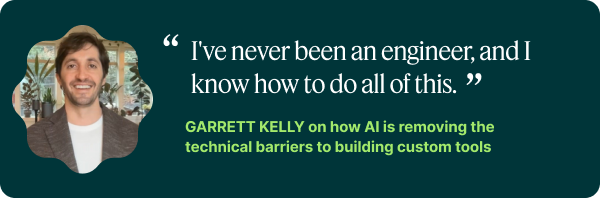
Before AI workflows, Garrett spent an hour or more after every discovery call manually analyzing the call transcript and turning it into a proposal. So he built a proposal pipeline tool. He described the problem to an LLM in plain language, took the brief it generated into a UI builder like Ember AI or Lovable, and had a working tool within minutes. Now his App takes in a client name, call transcript, and produces a proposal draft in his voice, ready to edit and send. "I've never been an engineer," Garrett said, "and I know how to do all of this."

What changed: 90 minutes of manual work became 15 minutes of editing.

Wedge 7 Garrett quote

Ready to build Garrett’s tool? Download the Lettuce AI for solopreneurs toolkit: a step-by-step guide to building a discovery-call-to-proposal tool, the AI tool stack, and the 4-part prompting formula. 


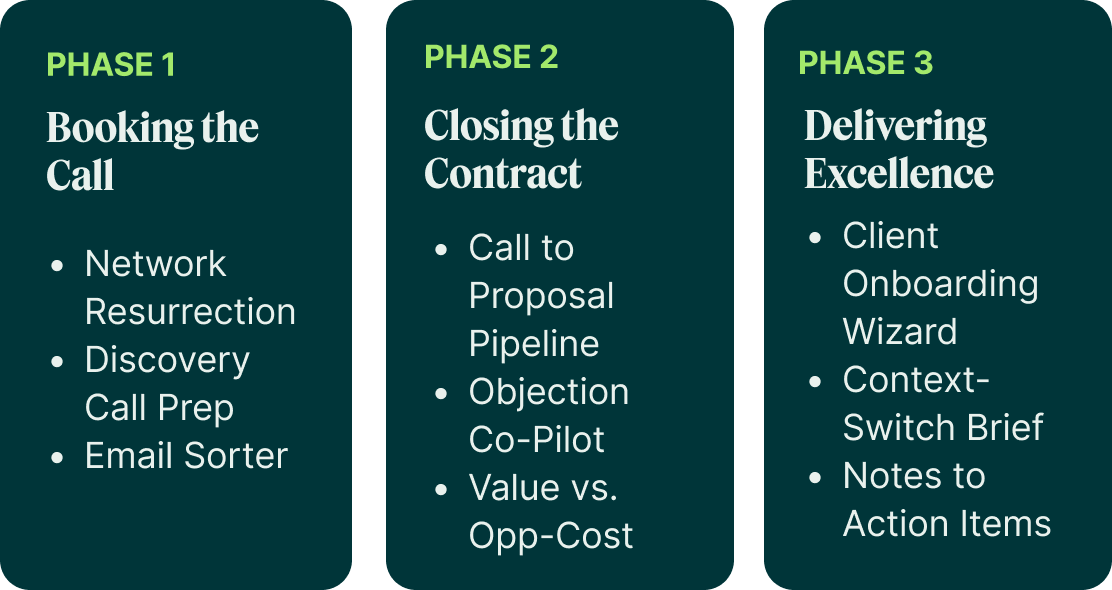
Here are 9 common solo workflows to start automating from booking the call to incorporating efficiencies with existing clients.

Wedge 7 graphic 2


The AI tool stack to start building

Building a workflow means assembling tools across four kinds of tasks. Plenty of options to choose from for every task.

  • Research and thinking: Claude, Perplexity, ChatGPT

  • Design and prototyping: Lovable, v0, Ember, Claude Design

  • Functional building: Claude Code with VS Code

  • Automation and integration: Zapier, n8n, Make

You don't need all of these. Pick a combination of one thinking-and-building platform and start there. Memory, saved context, and personalization settings compound over time.


Building with four powerful prompts

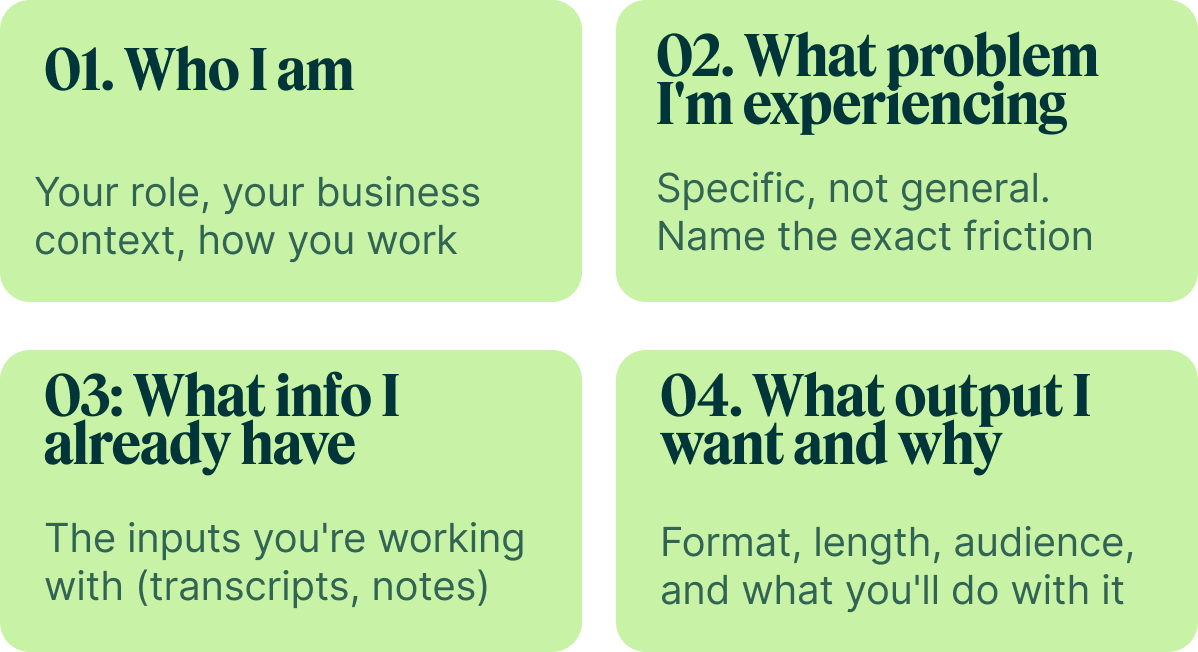
Once you're in the tool, the quality of what you get back depends on how clearly you've framed the problem. The 4-part prompting structure Garrett uses before building anything:

wedge 7 graphic 3

  1. Who I am (your role, your context)
  2. What problem I'm experiencing (specific, not general)
  3. What information I already have
  4. What output I want, and why

For solos who want to go from prompting to building with hands-on support, Garrett and the team at Ember AI run two bootcamps: SnapSprint, a two-day intensive where you leave with a deployed product, and SnapCamp, a four-week program with 1:1 engineer support. (Use LETTUCE100 for SnapSprint ($100 off) and LETTUCE500 for SnapCamp ($500 off). Both codes apply to standard pricing, not early bird rates.)


Focus on the parts that AI can’t automate: Networking and brand building

AI can help with the repeatable parts of brand building and networking: drafting LinkedIn posts in your voice, surfacing the contacts you should be reaching out to and scheduling the follow-ups you'd otherwise forget. What it can't replace is the work that builds the pipeline: community, relationships, showing up for others.

As Garrett put it: "It's never been easier to build something. It's never been harder to get distribution or attention on that thing." The workflow handles the repeatable parts so you have more time for the work that requires you.

Download the Lettuce AI for solopreneurs toolkit: a step-by-step guide to building a discovery-call-to-proposal tool, the AI tool stack, and the 4-part prompting formula.

Related Resources

1 min read

Jayde Powell Built a $250K Creator Business in Three Years. Then She Had to Learn to Run the Financial Side of It

Building a quarter-million-dollar solo business takes one kind of mastery. Financially structuring it the right way takes another, and it is saving...

1 min read

Your tax return holds the keys to next year's financial success. Here's how to use them

Ryan Page of Backpocket CPA on financial signals in your filed tax return for solos who want next year to be a breeze. Welcome back to The Wedge,...

1 min read

What 1,100 Solos Learned from Industry Experts

Welcome back to The Wedge, the newsletter for solopreneurs who build with structure and purpose.