

5 min read
Your tax return holds the keys to next year's financial success. Here's how to use them
Lettuce
:
May 6, 2026
Ryan Page of Backpocket CPA on financial signals in your filed tax return for solos who want next year to be a breeze.
Welcome back to The Wedge, the newsletter for strategic solo business owners.
After weeks of chasing receipts, wrangling figures, and double-checking forms, most solos breathed a sigh of relief on tax day, April 15. The first instinct is to close the tab and ignore anything tax-related until next year.
But that filed return is a high resolution picture of how your business runs: every dollar in, every dollar out, twelve months of patterns sitting on your screen in one place, and the clearest look at the shape of your business you're going to get until next April.
The weeks right after Tax Day are the most underused stretch on a solo's calendar. Ryan Page of Backpocket CPA mines his clients' returns in that window, running a six-question audit that turns last year's numbers into a plan for the next twelve months.
What your taxes tell you about your business
The weeks right after Tax Day are the most underused stretch on a solo's calendarYour tax return is a strategic roadmap for your business as a whole. Use this moment to step back and reflect on what's working and what needs to shift.
1. Which months carried the year?
A year of deposits can show you how your business breathes, month by month. Notice which months were heavy and which ones ran light.
Heavy months are where you make sure resources, subcontractors, and your own capacity are lined up ahead of the rush.
Light months are where business development and vacations belong: outreach, networking, relationship building, a conference, a week unplugged.
Ryan's baseline with every solo client: an approximate monthly forecast based on previous years so you can prepare for what to expect every month.
2. Is your pricing strategy working?
Top-line revenue can hide what's happening underneath. A writer billing $120K on a high-touch retainer can spend many hours that their net margin shrinks toward 20 percent. A writer billing $80K on tightly scoped, deliverable-based projects could keep a much bigger share of every dollar and land closer to a 40 percent net margin.
Ryan asks his clients to calculate these two numbers on every engagement:
-
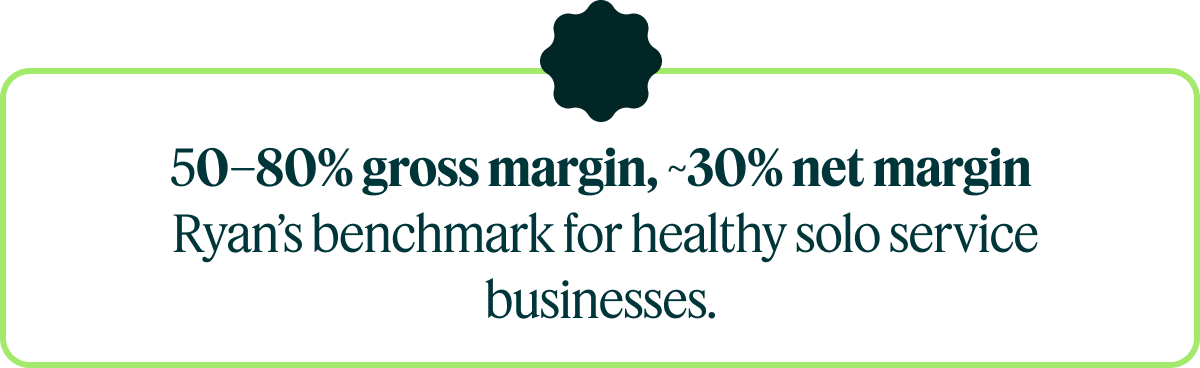
Gross margin is what you make from a client minus the direct cost of delivering their work (contractors, software, materials). Ryan's benchmark for many solo services such as consultants: 50 to 80 percent.
-
Net margin is what's left after all your costs, including overhead. Ryan's benchmark: around 30 percent.

If a client or engagement comes in under those numbers, the math is telling you one of two things. Either you're charging too little for the work (a price problem) or the work is eating more of your time than it should (a scope problem). The fix: raise the rate, tighten what's included in the package, or step back from the engagement.
The flip side is just as useful. Some clients and projects feel easy, take less time than you expect, and bring in the same money as your harder work. Those are the ones to double down on. Ask yourself:
-
Which engagements felt effortless last year and paid well?
-
What do those clients or projects have in common (industry, deliverable, scope)?
-
How do you line up more of that kind of work this year?
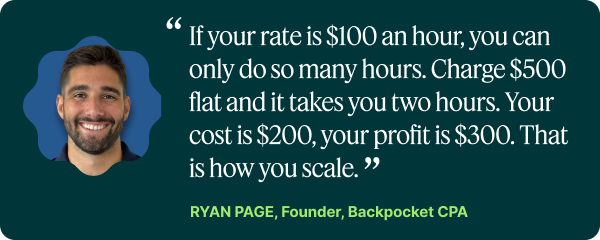
Ryan also pushes solos off hourly billing. His preference is project-based pricing, flat fees, or retainers.
3. Look for revenue concentration among clients
Pull a simple percentage for each client: how much of your year did they represent? If two clients account for most of what you made, the business is more fragile than it feels.
-
Which clients made up more than 20 percent of revenue?
-
Which made up less than 5 percent? Are those still worth the effort
-
This is a great time to ask yourself, if your top client disappeared in August, what's your runway?
Want to audit your own numbers? A step-by-step workbook with every question from Ryan's playbook for your business and finances.
Now let’s look at what your taxes say about your finances: how money came in and where it went
4. Where did your expenses creep up?
Expenses creep as revenue grows: one more software subscription, one more contractor, one more one-off fee. It hides in plain sight until you look at it as a percentage of what you made.
Ryan recommends a five-line filter. Group your expenses into:
-
Labor (contractors, virtual assistants)
-
G&A (software, admin, banking)
-
Marketing
-
Travel and entertainment
-
Professional services (CPA, legal, bookkeeping)
Now ask:
-
Run each line as a percentage of revenue. Is there an outlier?
-
Which line items have doubled since last April?
-
For each one that doubled: did it come with a clear return?
5. How did cash move through the business last year
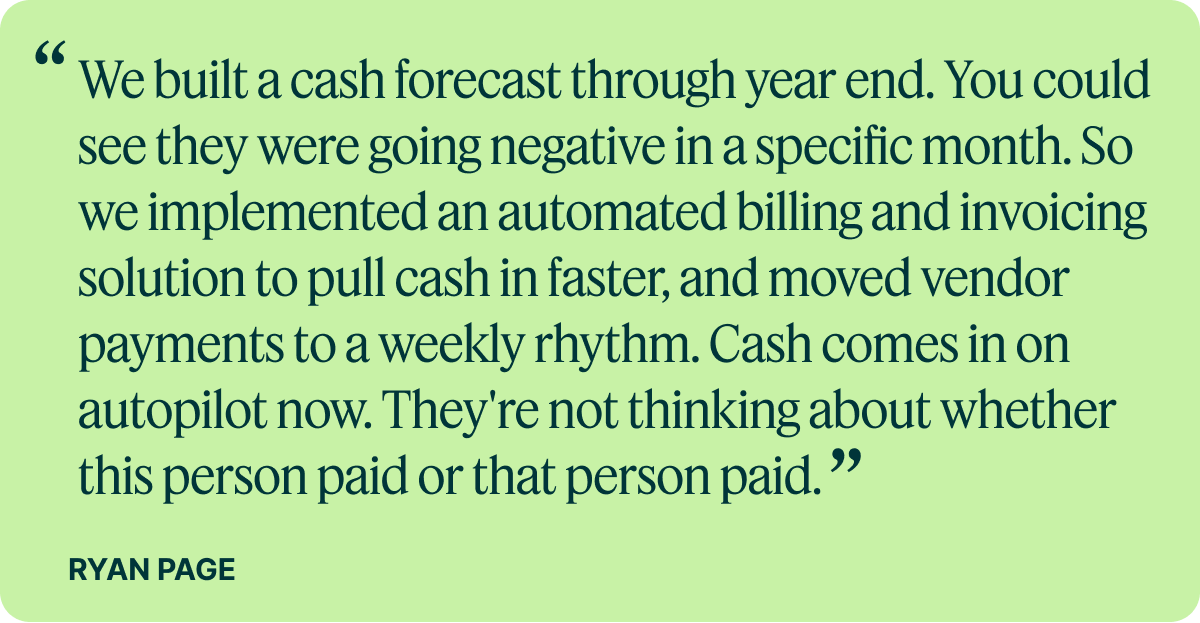
Profitable on paper and broke in the bank is a story Ryan sees often. One marketing consultant he works with had books that looked fine and a bank account close to negative. Invoices went out without follow-up, cash dropped in 30 and 45 days late, and paid vendors the moment they asked.

Pull the same read from your own year:
-
How long did clients take to pay the average invoice?
-
Anything over 45 days? That means you need a better follow-up system. Tools such as Lettuce, Anchor, Ramp or Maker’s Hub to automate and track bills and invoices.
6. Was this tax season a scramble, or was it predictable?
A surprise tax bill in April means your quarterly payments ran short, or your bookkeeping lagged enough that cash felt tight every month on the way there. A predictable tax season is a result of putting solutions and systems in place that organize your finances year round. Ryan has a few tips and strategies to make that happen:
-
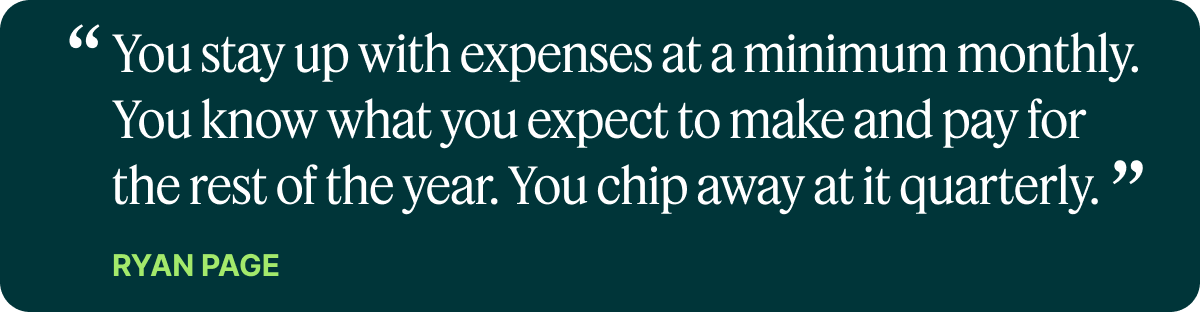
Calibrate this year's quarterly payments against last year's pace so the number matches the revenue your business is bringing.
-
Keep a monthly bookkeeping cadence so the numbers stay current and April never surprises you. An AI-based bookkeeping platform can run this automatically, so the numbers are always current whenever you need them.
-
Check your 2025 return for an IRS underpayment penalty. Ryan finds a penalty on 70 to 80 percent of the solo returns he reviews, for quarterlies paid late or light. "People are paying a fee for no reason," he says.
Ryan's bigger point: when your revenue climbs and the tax bill climbs with it, there's not much you can do about it once you're filing. Starting this year can save you thousands.
-
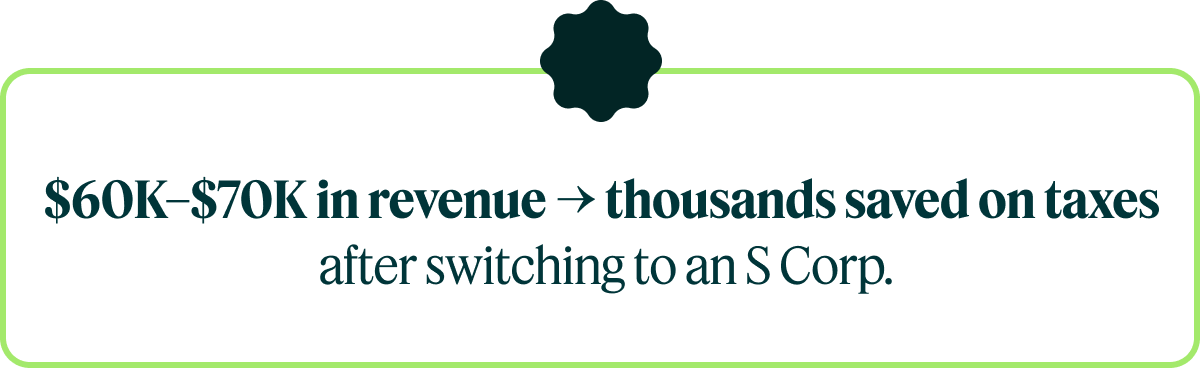
Entity structure. Once your revenue crosses 60 to 70 thousand dollars a year, electing to be taxed as an S Corp can save thousands in self-employment taxes.
-
Retirement contributions. A solo 401(k) or similar financial tools can reduce your tax bill and grow your savings at the same time. (Lettuce recently acquired a platform called Carry to offer solopreneurs a host of retirement plans.)

Use this tax season as an opportunity
It'll take a little bit of work. But looking back with intention is one of the highest-leverage moves you can make to scale your business.
The solos who grow and compound are the ones who treat the business like it has an operating system underneath: a rhythm of bookkeeping, forecasting, audits, and systems that move cash and information without needing constant attention.

The financial operating system used to be expensive and clunky to stitch together in the past, especially for solos. But now a new wave of AI-based platforms such as Lettuce SoloHQ pull banking, invoicing, taxes, bookkeeping, and payments into one place, so operations can run autopilot on a connected stack instead of inside your head.
Want to audit your own numbers? A step-by-step workbook with every question from Ryan's playbook for your business and finances.