
 Alex Zelaya
1 min read

Learn how to build a simple 8-13 week rolling cash flow forecast so you can make smarter growth decisions without relying on complicated spreadsheets.
Traditional cash flow forecasting often depends on manual tracking, spreadsheets, and a lot of guesswork about when money will actually arrive and where it needs to go. For solopreneurs, that guesswork shows up as stress: Will I be able to pay myself this month, cover expenses, and handle taxes without a surprise bill?
An 8-13 week rolling cash flow forecasting window lets you plan salary, taxes, and growth with more confidence. You’ll set up a flexible forecast that handles irregular income, then plug in your revenue streams while simple systems handle tax set-asides and next-step decisions. Smart forecasting turns income uncertainty into an advantage.
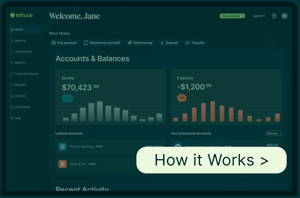
Ready to skip the spreadsheets? Lettuce gives you real-time visibility and automated income allocation so your cash flow forecast is always working in the background for you.

Is Lettuce right for you?
See if Lettuce can help you keep more of what you earn with our short quiz.
Take QuizWhat Is Cash Flow Forecasting?
Cash flow forecasting is a simple plan for your money over time. It estimates how much cash will come into your business and how much will go out, week by week, so you can see your future bank balance before it happens.
For solopreneurs, a cash flow forecast isn’t about complex models. It’s a living schedule of:
-
Cash in: client payments, retainers, platform payouts, affiliate income, product sales
-
Cash out: software, rent, contractors, owner pay, taxes, debt payments
Think of it as a Google Calendar for your money. You’re not just recording what already happened; you’re scheduling when cash will hit and when it will leave, so there are fewer surprises and more predictable profits.
How to Build a Cash Flow Forecast as a Solopreneur
Smart cash flow forecasting for solopreneurs means building a system that bends with your reality, not fighting against it.
You’ll create a rolling forecast that shows precisely when money hits your account and when bills come due, so you can make decisions from data instead of stress.
Here’s how to do it in three clear steps:
Step 1: Set Your Goals and Choose an 8-13 Week Window
Start by deciding what you want your forecast to do for you. Most solopreneurs care about three things:
-
Paying themselves consistently
-
Staying ahead of taxes
-
Knowing when they can safely invest in growth
Then, choose your time frame. An 8-13 week rolling forecast is usually the sweet spot for a business-of-one.
Brand partnerships, consulting retainers, and platform payouts often pay on Net-30 to Net-60 terms, so cash can land one to two months after the work is done, while rent, software, and other bills keep pulling money out every week. An 8-13 week view bridges that gap. It’s long enough to see trouble coming but short enough to stay accurate.
Each week, you update the numbers, drop the oldest week, and add one new week at the end. That simple habit gives you an always-fresh picture of what your bank balance will look like over the next two months.
That weekly update goes faster when your actual numbers are already current, and Lettuce’s financial reports refresh your P&L and cash flow statement every time a transaction hits your account.
Step 2: Identify Your Cash Drivers and Map Them by Week
Once you’ve set your goals and time window, the next step is to get specific: monthly averages hide your real cash flow story because payments land in chunky amounts on specific dates.
Start with your inflows. For each revenue stream, place the money in the week you expect it to hit, like a brand deal paying in week 3, affiliate commissions in week 6, or a retainer invoice paid on Net-30.
As you add these, use simple probabilities so your forecast reflects reality:
-
Booked (100%): contracts signed or invoices sent
-
Likely (~67%): late-stage deals
-
Possible (~30%): early conversations
Then map your outflows to the same weekly grid:
-
Your tax set-aside
-
Owner pay, contractor payments, and software/tool subscriptions
-
Quarterly tax estimates and debt payments
With Lettuce’s invoicing and payment tracking, that mapping becomes largely automatic. Each client payment flows into a central business account and is immediately split into salary, operating expenses, profit distributions, and tax reserves.
From there, keep an eye on payment terms (Net-30, Net-45, Net-60), any seasonal swings in your work, and your bank balance at least weekly during busy seasons and monthly when things are slower.
Step 3: Build and Maintain Your Rolling Forecast Each Week
Now turn your inputs into a working forecast, and use it to run the business.
Use it to guide three core decisions:
-
Salary: Use the forecast to set a baseline owner salary you can stick to. Treat anything above that as profit distributions only when you see surplus for several weeks in a row. Stronger cash flow forecasting is linked with better small-business sustainability because owners see issues earlier and can course-correct.
-
Taxes: Move about 25–30% of profit into a separate tax account, then adjust that percentage with a tax pro based on your entity type and state. In Lettuce, your tax withholding is calculated for you and routed into a dedicated sub-account you’re not using for day-to-day spending, so those dollars are protected. This turns tax bills from shocks into planned expenses.
-
Runway and growth: Use your forecast as a weekly runway view. Real-time cash flow projections and allocation tools, like Lettuce’s automated bank accounts and tax buckets, show whether you can afford a new contractor or purchase, or should wait.
Many finance teams use short-term rolling forecasts updated weekly to catch issues early without getting lost in long-term guesswork.
Lettuce can support these decisions by handling the mechanical pieces, from payroll setup to separating owner pay and profit, so you’re free to focus on the strategy.
Cash Flow Forecasting: Frequently Asked Questions (FAQs)
When your income swings from feast to famine, you need straight answers about managing cash flow. Smart solopreneurs ask these cash flow forecasting FAQs to stop worrying about money and start making confident decisions.
How can cash flow forecasting help me avoid unexpected expenses?
Forecasting shows you when cash will be tight before it happens, so you can delay nonessential purchases, follow up on unpaid invoices, or arrange a short-term buffer before you’re desperate. When you can see your next 8-13 weeks at a glance, surprise bills stop feeling like emergencies and start becoming choices.
What’s the easiest way to predict my business income as a solopreneur?
Keep it simple and probability-based. Use three buckets in your forecast: Booked (100%, contracts signed or invoices sent), Likely (around 67%, late-stage deals), and Possible (around 30%, early conversations), and place each payment in the week you expect to be paid based on your normal terms. As deals move between buckets, you update the numbers, which trains you to think in cash timing instead of just sales totals.
Can cash flow forecasting really help me plan for growth and stability?
Yes, because it ties every growth decision back to a real bank balance on a real date. With a rolling forecast, you can time purchases and hires for weeks with surplus cash and plan launches around periods when you’ll need extra cash in the business.
How far ahead should I forecast my cash flow?
For most solopreneurs, a nine-week rolling forecast is the sweet spot: long enough to see patterns and upcoming pain points, short enough to estimate accurately, and easy to update in 15–30 minutes each week. You can also keep a lighter 6–12 month view for big-picture planning, like major hires or a move into a new office, but your weekly rolling forecast is where most of your day-to-day decisions will come from.
What if my income is too unpredictable to forecast accurately?
No one’s income is perfectly predictable, especially not in a solo business, which is exactly why forecasting helps. Start with what you know, like retainers, ongoing client work, and baseline recurring expenses, then layer in conservative estimates for variable income based on your actual history over the last few months. Your goal isn’t perfection; it’s visibility.
Make Predictable Profits Your New Normal
Cash flow forecasting moves you from reacting to your bank balance to making intentional decisions about salary, taxes, and growth. With a simple 8-13 week rolling forecast, you can see what’s coming instead of hoping it works out.
By mapping cash in and cash out by week, using realistic probabilities for your pipeline, and updating your forecast regularly, you build a clear picture of what your next two months actually look like. Over time, that visibility makes it much easier to set a steady owner salary, stay ahead of taxes, and choose the right timing for bigger investments.
When you’re ready to take less of this on yourself, Lettuce can automate the heavy lifting, from cash flow tracking to tax set-asides, so your system keeps running even when you’re busy serving clients. Start with Lettuce and make predictable profits your default.
