 Diane Kennedy, CPA
1 min read
Many business owners want a simple percentage to save for taxes, but the reality is more complex. Your business structure, location, and actual profit all influence what you owe. Reliable bookkeeping and regular reviews make tax planning far more predictable.
This is one of the most common questions business owners ask. “How much should I be saving for taxes?”
It usually comes with the hope that there’s a simple percentage that works for everyone. There isn’t.
Two people can earn the same amount of money and have very different tax outcomes.

Is Lettuce right for you?
See if Lettuce can help you keep more of what you earn with our short quiz.
Take QuizWhy Rules Of Thumb Fail
Advice like “set aside 20 percent” sounds helpful, but it ignores the factors that actually drive tax liability.
Your business structure matters. Where you live matters. How your income flows through the business matters.
A quick example shows why.
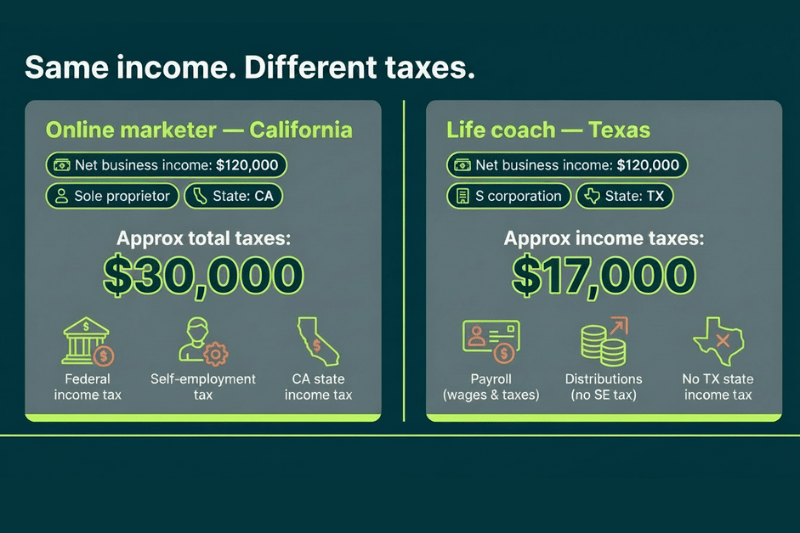
Same Income, Very Different Tax Picture
Example 1: Online marketer in California
Net business income: $120,000
Business type: Sole proprietorship
State: California
Approx Total Taxes: $30,000
This income is subject to federal income tax, self-employment tax, and California state income tax. Self-employment tax alone applies to most of that income before federal and state income taxes are added on top.
This business owner generally needs to set aside a higher percentage each month to stay ahead of taxes.
Example 2: Life coach in Texas
Net business income: $120,000
Business type: S corporation
State: Texas
Approx Income Taxes: $17,000
This income is typically split between payroll and owner distributions. Payroll is subject to payroll taxes, but distributions are not subject to self-employment tax. Texas also has no state income tax.
This business owner files a separate S corporation return on a different deadline and still files a personal return, but the overall tax footprint can look very different from that of the California sole proprietor.
Same income. Very different tax math.
Gross Revenue Is Not The Tax Base
One more thing matters just as much as structure and location.
Taxes are calculated on profit, not what you collected. Without knowing expenses, any percentage is a guess.
Two businesses can both collect $120,000, but if one has $30,000 in legitimate deductions and the other has $70,000, their tax bills will look nothing alike. Without current financials or historical reference, it’s impossible to estimate taxes accurately.
What Taxes You’re Actually Saving For
When people say they are “saving for taxes,” they are usually saving for more than one thing.
That often includes federal income tax, self-employment tax or payroll taxes, and state income tax if applicable. Knowing which taxes apply to your situation makes monthly planning much clearer.
A Practical Monthly Approach
Instead of chasing a perfect percentage, focus on a process you can repeat.
Review actual profit, not gross revenue. Set aside money conservatively based on what you are earning now, not what you hope to earn later. Revisit the numbers quarterly and adjust as income changes.
This approach adapts as your business evolves.
Why Bookkeeping Matters Here
This only works if your books are current.
When your numbers are delayed or incomplete, you are guessing. When your books are up to date, you can base tax set-asides on reality instead of estimates pulled from the air. Clean numbers reduce surprises and stress.
How Much To Set Aside For Taxes Each Month: Frequently Asked Questions (FAQs)
How much should a small business set aside for taxes?
It depends on your business structure, income level, state, and deductions. Two businesses with the same income can owe very different amounts in tax.
What percentage of income should I save for taxes?
There is no single percentage that fits everyone. Reviewing actual profit and adjusting based on your situation leads to better results than relying on rules of thumb.
How do I estimate quarterly taxes for my business?
Quarterly estimates are based on current income and expected tax liability. Accurate, up-to-date bookkeeping makes these estimates far more reliable.
Why is bookkeeping important for estimating taxes?
Accurate bookkeeping shows your real profit, which is the number taxes are based on. When your books are current, you can estimate taxes and set aside money with far more confidence.
The Bottom Line
There is no universal tax percentage that works for every business.
The goal is not perfection. The goal is predictability. When you understand your tax structure and have reliable numbers, setting aside money for taxes becomes manageable instead of mysterious.
How Lettuce Can Help
If you’re trying to figure out how much to set aside for taxes each month, the biggest advantage you can have is accurate, up-to-date financials. Lettuce helps business owners stay on top of their bookkeeping, understand their real profit, and make smarter tax planning decisions throughout the year.
Instead of guessing at tax percentages, you can rely on clear numbers and better financial visibility. Try Lettuce and start making tax planning simpler and more predictable today.
This article is part of the Tax Strategy Series, featuring in-depth, practical guidance from Diane Kennedy, CPA—bestselling author, strategic tax consultant, and founder of USTaxAid and KennedyTax.tax. Explore the full series and catch every installment here.
Related Articles: