
 Alex Zelaya
1 min read

AI for taxes works best when it keeps your bookkeeping organized year-round, so you can plan, pay, and file with less stress.
Taxes are expensive. They’re also weirdly time-consuming. If you’re a solopreneur, it’s rarely just taxes. It’s the receipts, the categories, the “I’ll do it later” bookkeeping, and the constant low-grade worry that you’re missing something.
This is where AI can actually help, by taking the repetitive finance busywork off your plate and keeping your numbers organized as you go. Not futuristic. Not complicated. Just a smarter way to stay on top of money and make tax decisions with less stress.
Lettuce brings that approach to solopreneurs. It’s not a tool you have to “keep up with.” It’s an AI-powered back office that handles day-to-day bookkeeping, tax withholding, payroll (for S Corps), and year-end filings so that you can focus on paid work.

Is Lettuce right for you?
See if Lettuce can help you keep more of what you earn with our short quiz.
Take QuizHow Does AI Work for Taxes?
AI doesn’t “do your taxes” by magic. It does the behind-the-scenes work that taxes depend on: keeping your income and expenses organized as you go, so you’re not piecing everything together at the last second.
With Lettuce, transactions can be categorized automatically, and taxes can be set aside as you get paid, so your estimates and filing preparation feel calmer and more predictable.
What AI for Taxes Looks Like
You don’t need another spreadsheet or a dashboard you forget to check. You need a system that keeps your money organized while you’re busy doing the work that actually pays you.
When Money Comes In
AI-assisted workflows can help separate what’s available now from what should be set aside for taxes. And if you’re an S Corp, it helps keep salary and owner distribution planning from turning into a monthly guessing game. (This is the part that makes tax season feel predictable instead of chaotic.)
When Money Goes Out
Most tax stress starts with messy expenses. AI bookkeeping can help by categorizing transactions as they happen and making it easier to spot inconsistencies early, so your books don’t become a month-end scavenger hunt.
Before Quarterly Deadlines
Quarterly taxes are where most solopreneurs get burned. When you don’t pay enough throughout the year, the IRS may assess an underpayment penalty. AI helps because it keeps your numbers current, so your estimates can be based on reality.
With Lettuce Pro, taxes can be set aside as you get paid and auto-paid (state and federal) throughout the year, so you’re not doing deadline math every quarter.
At Year-End
This is where the time savings really show up. Instead of hunting down documents and trying to remember what something was for, you’re handing off clean, consistent records.
Turn Everyday Expenses Into Confident Deductions With AI
Most solopreneurs don’t miss deductions because they don’t have them. They miss them because the proof is scattered.
The IRS generally requires business deductions to be ordinary and necessary for your trade or business. And you need records that support what you claim.
AI bookkeeping helps by keeping a clear trail of transactions and categories throughout the year, so you’re not rebuilding your books from scratch at filing time.
Examples of Deductions Solopreneurs Often Overlook
These are common categories that many businesses legitimately deduct (when they meet IRS rules):
-
Software subscriptions and tools
-
Professional services and contractor payments
-
Business travel and mileage (with documentation)
-
Home office (when requirements are met)
-
Education that maintains or improves skills for your current work
The S Corp Question: When Does It Actually Put Money Back in Your Pocket?
For many solopreneurs, the most significant lever is the right tax structure.
Here’s the simple version:
-
When you’re self-employed, you pay self-employment tax (Social Security + Medicare) on net earnings. The IRS explains how self-employment tax works and who owes it.
-
With an S Corp, you pay yourself a reasonable salary (subject to employment taxes), and after that, the remaining profit is typically taken as distributions, which is one reason S Corps can reduce exposure to self-employment tax.
The IRS requires S Corp officers/shareholders who provide services to the corporation to be treated as employees and receive reasonable compensation.
When Should You Consider It?
There’s no universal threshold. It depends on your profit, state, and situation.
That said, Lettuce generally positions S Corp savings as relevant once you’re earning a meaningful profit, often around $80,000 in annual business income.
Don’t Miss The Election Timing
If you’re filing IRS Form 2553 to elect S Corp status, there are timing rules.
-
The Form 2553 instructions explain the standard deadline (generally within 2 months and 15 days after the beginning of the tax year the election is to take effect).
-
In some cases, the IRS provides late election relief under specific conditions.
Where Lettuce Fits (And What Makes It Different)
Plenty of tools can show you your finances.
Lettuce is built to run the back office for your business-of-one:
-
Business setup + S Corp election (when it makes sense)
-
Bookkeeping + categorization
-
Payroll for S Corp owners
-
Tax withholding + payments
-
Year-end business filings
-
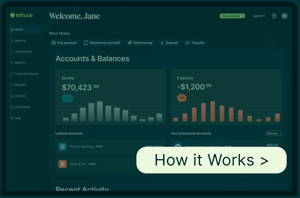
A dashboard that makes it obvious what’s yours to keep
AI for Taxes: Frequently Asked Questions (FAQs)
These FAQs cover the questions we hear most, so you can see what AI can (and can’t) do for your taxes before you commit.
How can AI help me save money on my taxes as a solopreneur?
AI helps you save money when it keeps your books clean all year, so you’re less likely to miss legitimate deductions, and your estimates are based on real numbers. Transactions are categorized automatically, and taxes can be set aside as you get paid, so you keep more without the last-minute scramble.
What are the benefits of using AI for taxes instead of traditional accountants?
AI tools are great at the repeatable stuff: keeping your books current, updating projections, and answering quick “what does this mean?” questions fast. A great accountant is still valuable for complex situations and strategy.
Is AI for taxes safe and accurate for freelancers and small business owners?
AI can be helpful, but it’s not perfect. Taxpayer Advocate Service specifically warns taxpayers not to rely on AI-generated answers for complex tax questions.
What happens if the AI makes a mistake on my taxes?
If Lettuce makes an error, we stand behind the work with the Lettuce-Back Guarantee, which includes an accuracy promise and audit support. We’ll support you through it and defend our work.
How much does AI tax software typically cost compared to an accountant?
It varies: many CPAs price work either by the hour or fixed packages, while AI-first platforms are usually subscription-based. Lettuce plans start at $99/month (and scale based on your business) and include bookkeeping plus ongoing tax management, so you’re comparing a full system, not just filing.
Keep More of What You Earn (And Get Your Nights Back)
You didn’t start your business to become a part-time bookkeeper. When your finances run in the background, categorized, organized, and tax-ready, you stop living in fear of “what am I forgetting?” and start making decisions with actual clarity.
That’s the real value of AI for taxes: it keeps your books current, helps you set money aside before it disappears, and makes tax season feel like a buttoned-up handoff, not a late-night rescue mission.
Want your finances to feel handled? See how Lettuce runs your bookkeeping, tax set-asides, and filings, so you can keep more and stress less.
