
 Alex Zelaya
1 min read

The best payroll software for solopreneurs should do more than send paychecks. It should help you stay compliant, protect cash flow, and make your S Corp strategy easier to manage.
Payroll feels simple when you have a regular job. You get paid. Taxes come out. A W-2 shows up at the end of the year.
When you work for yourself, it gets messier fast. You’re the owner, the worker, the finance team, and the person responsible for making sure the IRS gets paid correctly. If you elect S Corp status, payroll becomes even more important because you need to pay yourself a reasonable salary before taking owner distributions.
That’s why the best payroll software for solopreneurs is not just about running payroll. It’s about helping you pay yourself the right way, stay compliant, and keep more of what you earn without stitching together spreadsheets, tax reminders, bookkeeping tools, and payroll logins.
Ready to make payroll feel less like homework? Lettuce gives businesses-of-one a financial system built around S Corp tax savings, automated payroll, bookkeeping, banking, and tax compliance.
Is Lettuce right for you?
See if Lettuce can help you keep more of what you earn with our short quiz.
Take QuizWhat to Look for in the Best Payroll Software for Solopreneurs
For a business-of-one, payroll software should be judged by a different standard. A platform built for a 50-person team may technically run payroll, but that does not mean it helps a solopreneur make the most of an S Corp.
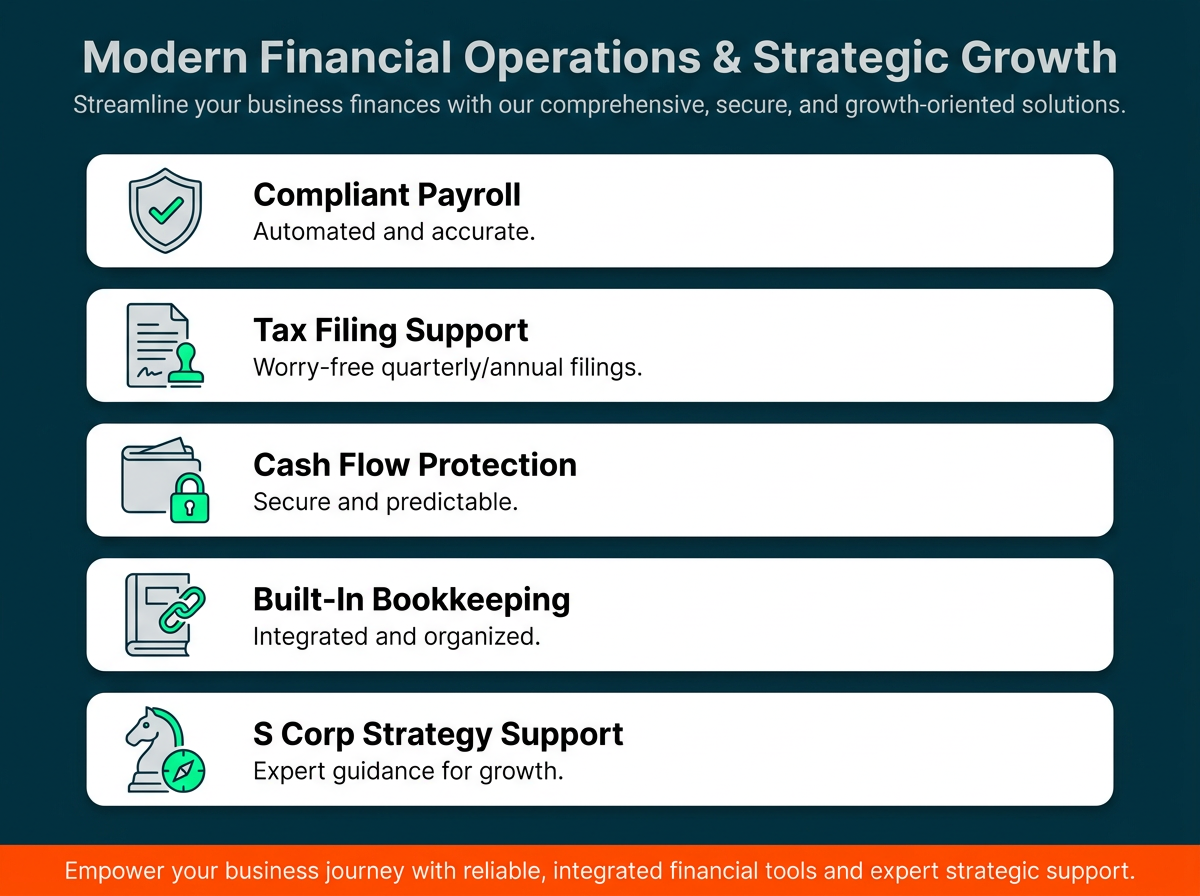
The strongest tools help you:
-
Run compliant payroll: S Corp owners who perform services for the business generally need reasonable compensation reported as wages. The IRS says S Corps must pay reasonable compensation to shareholder-employees before non-wage distributions are made.
-
Handle tax deposits and filings: Employers must report wages and related employment taxes, including income tax withholding, Social Security, and Medicare taxes. Payroll systems should help with deposits, Form 941, W-2s, and state payroll requirements where applicable. The IRS explains these obligations in its pages on employment tax due dates and depositing and reporting employment taxes.
-
Protect your cash flow: Payroll taxes and income taxes do not disappear just because you work alone. Your system should help you set aside enough money before you take distributions.
-
Connect to your books: Payroll affects taxes, cash flow, deductions, and year-end reporting. If payroll and bookkeeping live in separate places, you are the one stuck reconciling everything.
-
Support S Corp strategy: Generic payroll software executes the numbers you give it. A stronger system helps you decide what those numbers should be.
That last point matters most. Paying yourself too little can expose you to IRS risk. Paying yourself too much can shrink the tax benefit of your S Corp. The goal is not “lowest salary possible.” The goal is a reasonable, defensible salary that supports your business, your cash flow, and your tax strategy.
The Best Payroll Software For Solopreneurs
Not every payroll tool is built for the same kind of business. Here’s how the top options compare for solopreneurs who want less admin, cleaner compliance, and a smarter way to pay themselves.
1. Lettuce
Lettuce is the best payroll software for solopreneurs because it is not just payroll software. It is a full financial system built for businesses-of-one that want S Corp tax savings without the admin load.
Traditional payroll tools ask you to bring your own salary number. Lettuce helps calculate it. That difference matters because reasonable compensation is the piece that makes or breaks an S Corp strategy. Lettuce helps you analyze your income, occupation, region, expenses, equity distributions, and tax picture, so your salary isn't based on guesswork.
Once your system is running, Lettuce helps automate the work around payroll, tax payments, bookkeeping, and year-end reporting. It keeps your salary and distributions visible, helps you understand what is actually yours to take, and reduces the need to manage separate tools for payroll, accounting, banking, and tax prep.
Where it works well:
-
Built specifically for U.S. businesses-of-one, not traditional teams
-
Helps calculate reasonable S Corp salary using real business inputs
-
Automates payroll, tax workflows, bookkeeping, and S Corp compliance support
-
Helps protect the balance between W-2 salary and owner distributions
-
Reduces the need for separate payroll, bookkeeping, banking, and tax tools
-
Keeps the focus on take-home pay, not just payroll processing
Best for: Solopreneurs, consultants, creators, therapists, developers, and service-based business owners who want to make an S Corp easier to run.
2. Gusto
Gusto is one of the most popular payroll platforms for small businesses, and for good reason. It offers a clean interface, payroll tax filings, W-2s, 1099 support, benefits options, and accounting integrations.
For solopreneurs who want a familiar payroll tool, Gusto can be a solid fit. It can run payroll, file payroll tax forms, and help manage contractor payments. Gusto’s pricing page also notes support for forms such as W-2, 1099, Form 940, and Form 941.
Where it works well:
-
Easy payroll setup and user-friendly interface
-
Federal, state, and local payroll tax form filing support
-
W-2 and 1099 tools
-
Benefits and contractor management options
-
Integrations with common accounting platforms
Best for: Solopreneurs who want a reliable payroll tool and are comfortable managing S Corp tax strategy elsewhere.
Compare Lettuce vs. Gusto.
3. QuickBooks Payroll
QuickBooks Payroll makes sense if your books already live in QuickBooks. The biggest benefit is convenience: payroll and accounting can sit in one ecosystem, which reduces manual entry and reconciliation.
For a solopreneur, that can be helpful. Payroll transactions can flow into your books, taxes can be handled through the payroll plan you choose, and your financial records stay more centralized than they would with disconnected tools.
Where it works well:
-
Strong fit for existing QuickBooks users
-
Payroll and bookkeeping live in the same ecosystem
-
Payroll tax features available depending on plan
-
Good visibility into payroll expenses and cash flow
-
Helpful for owners who want accounting and payroll under one brand
Best for: Solopreneurs already committed to QuickBooks who want payroll inside the same accounting workflow.
Compare Lettuce vs. QuickBooks.
4. Square Payroll
Square Payroll is a practical option if you already use Square for payments, appointments, or point-of-sale transactions. Its official pricing page describes full-service payroll with automated tax filings and contractor payroll options.
For card-first freelancers or service providers, the appeal is simple: fewer systems to connect. If Square is already where money comes in, Square Payroll can make basic payroll easier to set up.
Where it works well:
-
Simple setup for existing Square users
-
Full-service payroll option with automated tax filings
-
Contractor-only payroll option available
-
Useful for appointment-based or payment-processing-heavy businesses
-
Straightforward interface for basic payroll needs
Best for: Solopreneurs already inside the Square ecosystem who want simple payroll.
5. OnPay
OnPay is a clean, full-service payroll option for small businesses. Its pricing page lists a base monthly cost plus a per-employee fee and positions the product around full-service payroll and customer support.
For solopreneurs, OnPay can be a good middle ground: less complex than enterprise HR platforms, but more capable than bare-bones payroll tools. It can handle employee payroll and contractor payments, which is helpful if you work with freelancers.
Where it works well:
-
Simple full-service payroll pricing
-
Employee and contractor payment support
-
Payroll tax filing and payment support
-
W-2 and 1099 handling
-
Good fit for small businesses that want payroll without enterprise extras
Best for: Solopreneurs who want a straightforward payroll provider and already have tax guidance.
6. Patriot Payroll
Patriot Payroll is a budget-friendly payroll option for small businesses. Its pricing page lists a lower-cost basic payroll plan and a full-service payroll plan with a monthly base fee plus a per-worker fee.
If your needs are simple and cost is the priority, Patriot can be appealing. It helps you run payroll without paying for a large HR suite you do not need.
Where it works well:
-
Low starting price compared with many payroll tools
-
Unlimited payrolls on the listed payroll plans
-
Direct deposit and employee portal features
-
Contractor payment support
-
Optional full-service payroll plan
Best for: Solopreneurs who want basic payroll at a lower monthly cost.
7. Deel
Deel is built for global hiring, contractor management, and international payroll. Deel says it helps companies hire, pay, and manage teams in 150+ countries.
That makes Deel useful if your solo business works with contractors outside the U.S. It can help with onboarding, payments, and country-specific contractor workflows that standard U.S. payroll tools may not support.
Where it works well:
-
Strong international contractor support
-
Global payroll and compliance tools
-
Contractor onboarding and payment workflows
-
Helpful for businesses working across countries
-
Better fit for global teams than standard U.S.-only payroll tools
Best for: Solopreneurs who pay global contractors and need international payment support.
8. Wave Payroll
Wave Payroll works best if you already use Wave for accounting and invoicing. Wave’s payroll page describes support for contractor, salaried, and hourly worker payments, direct deposit, and tax forms.
For a new solopreneur with simple needs, Wave can be approachable. It keeps the setup lighter than many payroll systems and pairs naturally with Wave’s accounting tools.
Where it works well:
-
Good fit for existing Wave Accounting users
-
Supports contractor, salaried, and hourly worker payments
-
Includes direct deposit and tax forms
-
Simple interface for basic payroll workflows
-
Practical starter option for very small businesses
Best for: Solopreneurs with simple payroll needs who already use Wave.
9. ADP Run
RUN Powered by ADP is ADP’s small-business payroll platform. ADP is a long-standing payroll provider, and RUN is designed for small businesses that want payroll and tax support from a familiar name.
For solopreneurs who want traditional payroll infrastructure, ADP can provide stability. It is especially relevant if you expect to add employees, benefits, workers’ compensation, or more traditional HR support later.
Where it works well:
-
Established payroll provider
-
Payroll tax and compliance support
-
Small-business payroll infrastructure
-
HR and benefits options available through the ADP ecosystem
-
Useful if you expect to grow into a traditional employer setup
Best for: Solopreneurs who want a traditional payroll provider and may grow into a larger team.
10. Rippling
Rippling combines HR, IT, finance, payroll, benefits, device management, and other workforce tools on one platform. Its pricing page describes an all-in-one workforce platform that includes payroll, benefits, device management, expenses, and more.
That is powerful if you are building a company with employees. It can help centralize onboarding, payroll, app access, IT, expenses, and HR operations.
Where it works well:
-
Broad HR, IT, finance, and payroll platform
-
Strong option for companies planning to hire
-
Benefits, device, app, and expense management capabilities
-
Useful for multi-state or more complex workforce operations
-
Built for scaling teams, not just solo owners
Best for: Solopreneurs planning to hire employees and build a more traditional team.
How to Choose the Right Payroll Software for Your Solo Business
The right choice depends on what problem you are trying to solve.
If you only need to send a paycheck, many tools can do that. If you need to run a compliant S Corp, protect cash flow, and make sure your salary and distributions support your tax strategy, you need more than a paycheck button.
Use this simple filter:
| If You Need... | Choose... |
|---|---|
| S Corp payroll, reasonable salary support, bookkeeping, banking, and tax workflows in one system | Lettuce |
| Easy payroll with a polished interface | Gusto |
| Payroll inside your existing QuickBooks workflow | QuickBooks Payroll |
| Payroll connected to Square payments | Square Payroll |
| Straightforward full-service payroll | OnPay |
| Lower-cost payroll basics | Patriot Payroll |
| Global contractor payments | Deel |
| Payroll connected to Wave Accounting | Wave Payroll |
| Traditional small-business payroll infrastructure | ADP Run |
| HR, IT, payroll, and finance tools for a growing team | Rippling |
For most solopreneurs with S Corp goals, the best choice is the one that removes the most risk and manual work. That is why Lettuce ranks first.
Want the full side-by-side? See how Lettuce compares with Gusto, QuickBooks, Wave, Paychex, and other platforms solopreneurs use.
Best Payroll Software For Solopreneurs: Frequently Asked Questions (FAQs)
Choosing payroll software as a solopreneur is really about choosing how you pay yourself, how you stay compliant, and how much admin you want to carry. These FAQs cover the S Corp payroll questions that matter most.
What is the best payroll software for solopreneurs?
The best payroll software for solopreneurs is the one that fits your tax structure, not just your paycheck schedule. For S Corp solopreneurs, Lettuce is the strongest choice because it helps calculate reasonable salary, automate payroll, manage tax workflows, and track the salary/distribution balance in one system.
Do I need payroll if I am the only employee in my S Corp?
Yes, if you are an S Corp shareholder-employee performing services for the business, you generally need to pay yourself a reasonable salary through payroll. The IRS says S Corps must pay reasonable compensation to shareholder-employees before non-wage distributions are made.
How is a reasonable salary calculated for an S Corp owner?
There is no single IRS-approved percentage that works for everyone. A reasonable salary should reflect factors like your role, industry, time spent working, experience, business income, location, and comparable market pay.
Does payroll software handle Form 941 and W-2s?
Many full-service payroll platforms help with Form 941, W-2s, payroll tax deposits, and related filings. Always confirm what is included in your plan and what state or local payroll obligations are supported.
Is payroll software enough to run an S Corp?
Usually, no. Payroll is only one part of S Corp compliance. You also need bookkeeping, tax filings, salary documentation, distribution tracking, and year-end reporting, which is why a dedicated system like Lettuce can be more useful than standalone payroll software.
Keep More Of What You Earn With Payroll That Works Smarter
Payroll should not be another tool you have to babysit. For solopreneurs, it should help you pay yourself correctly, stay ahead of tax obligations, and make the S Corp strategy easier to run.
That is the difference between generic payroll and a financial system built for a business-of-one. Generic payroll software can process wages. Lettuce helps you understand what to pay, when to pay it, how much to set aside, and what you can safely take as owner distributions.
Ready to stop guessing and start paying yourself right? Get started with Lettuce and build a payroll system that supports more take-home pay with less hassle.
