 Natalia Budyldina
1 min read

The best bookkeeping software for small businesses isn't just about tracking expenses—it's about keeping more of what you earn. Automation-first platforms like Lettuce handle payroll, deductions, and tax compliance in one place, so you spend less time on admin and more time growing your business.
Most solopreneurs lose $3,000 to $8,000 annually on missed deductions and inefficient tax strategies. The culprit isn't lack of income, it's manual bookkeeping that buries tax-saving opportunities under piles of uncategorized transactions. AI-powered automation changes that equation by turning every business expense into a properly tracked deduction that reduces your tax bill dollar for dollar.
The best bookkeeping software for small business does more than organize your numbers. It automatically categorizes transactions, sets aside tax payments, and aligns with payroll systems that maximize S-Corp benefits for businesses-of-one. Whether you're a consultant juggling client invoices, an S-Corp owner managing reasonable salary requirements, or a freelancer tracking mileage deductions, the right platform transforms messy financial records into strategic tax savings.
Ready to stop leaving money on the table? Lettuce combines automated bookkeeping, S-Corp payroll, and tax optimization in one platform built specifically for solopreneurs who want to save $8,000+ annually.

Is Lettuce right for you?
See if Lettuce can help you keep more of what you earn with our short quiz.
Take QuizWhat "Best" Looks Like for a Business-of-One
The best bookkeeping software for self-employed professionals automates the tedious stuff so you can focus on growing revenue. Look for bank feeds that import transactions automatically, AI categorization that learns your spending patterns, and receipt matching that connects photos to expenses without manual entry. Tax-aware workflows go further by identifying deductions and setting aside money for quarterly payments before you spend it, saving most solos 15+ hours monthly on data entry alone.
S-Corp owners need platforms that handle payroll complexity without the headaches. Your software should calculate a reasonable salary based on IRS guidelines, withhold taxes monthly, and generate W-2s automatically. Automated payroll workflows reduce self-employment taxes while keeping you compliant. Choose tools that deliver real-time profit-and-loss statements and cash flow projections, not just transaction lists that require spreadsheet gymnastics to understand your financial position.
Best Bookkeeping Software for Small Business Owners
Not every bookkeeping platform solves the same problem. Some tools focus on invoicing, others prioritize reporting, and a few are built specifically to automate taxes and payroll for solopreneurs. The best bookkeeping software for small business owners should reduce manual work, improve visibility into cash flow, and help you keep more of what you earn through smarter automation.
Below are five bookkeeping platforms that stand out for freelancers, consultants, and S-Corp owners looking to simplify finances and reduce administrative overhead.
Lettuce: AI Bookkeeping for Solopreneurs, Built for S-Corp Tax Savings
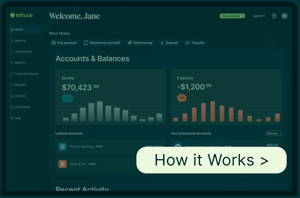
Lettuce is built specifically for solopreneurs who want bookkeeping, payroll, and tax optimization in one automated system, not three separate tools held together with integrations. When income hits your account, the platform automatically splits it between salary obligations and distributions, categorizes transactions instantly, and runs payroll on the 10th without any manual input. For S-Corp owners earning $80K+, that level of end-to-end automation translates directly into tax savings.
The strengths:
-
Automated income splitting aligns your finances from day one — when revenue lands, Lettuce automatically allocates 40% toward salary and taxes and 60% toward distributions, keeping your S-Corp structure compliant without manual math
-
S-Corp salary calculations remove the guesswork — the platform determines your reasonable salary based on IRS guidelines and maximizes tax-free distributions, reducing self-employment tax exposure automatically
-
Monthly payroll runs without reminders — payroll processes on the 10th with federal and state withholdings handled, W-2s generated automatically, and quarterly estimated payments eliminated entirely
-
Built-in deduction strategies surface savings you'd otherwise miss — home office use, vehicle mileage, health insurance premiums, and retirement contributions are tracked and applied without a separate tool or accountant prompt
-
Complete tax preparation and audit defense in one platform — 1099 filing, W-2 generation, and year-end tax prep are handled inside Lettuce, with audit support available if needed
The trade-offs:
-
Designed with solopreneurs in mind — Lettuce is purpose-built for businesses-of-one, so it's most powerful for independent operators rather than companies managing multiple employees or complex organizational structures
-
A curated ecosystem over an open one — integrations are intentionally streamlined rather than sprawling, which keeps the platform focused but may not suit solopreneurs with highly specialized inventory or industry-specific reporting needs
-
Built for S-Corp-ready businesses — the platform's full value unlocks at the $80K+ income level, where S-Corp election makes financial sense; if you're still in early-stage growth, you may not tap everything Lettuce has to offer yet
Lettuce works best for solopreneurs and consultants who are ready to stop managing financial admin and start maximizing what they keep. If you've elected S-Corp status or you're close to the threshold where it makes sense, an integrated platform that handles payroll, taxes, and bookkeeping in one place delivers more value than any combination of standalone tools.
QuickBooks Online: Automated Bookkeeping Software With a Massive App Ecosystem
QuickBooks Online dominates the small business market because it connects to virtually everything. Bank feeds import transactions seamlessly, and you can create categorization rules that handle recurring expenses without manual sorting.
The real power comes from the app marketplace, whether you need advanced inventory tracking, specialized invoicing, or industry-specific reporting, there's probably an add-on that handles it. This automated bookkeeping software becomes your central hub when you master bank feeds for hands-off transaction management.
-
Bank feed integration significantly reduces data entry — transactions import daily, smart rules handle recurring categorization, and receipt matching connects photos to expenses effortlessly
-
App ecosystem covers every niche workflow — from project management integration to advanced inventory systems, third-party apps extend functionality within one ecosystem
-
Invoicing and reporting scale with your business — customizable templates, intelligent payment reminders, and real-time P\&L statements keep clients and cash flow visible
-
Advanced tiers add AI-powered insights — predictive cash flow, hands-off expense categorization, and performance analytics help you spot trends before they become problems
-
Configuration complexity requires discipline — with hundreds of settings and integrations available, many solopreneurs prefer simpler platforms that streamline core workflows without decision fatigue
-
No built-in payroll or tax strategy — you'll need separate services for S-Corp salary calculations, monthly tax withholdings, and compliance management that integrated platforms handle seamlessly
Xero: Real-Time Financial Reporting for Freelancers Who Care About Clarity
Xero delivers real-time financial reporting for freelancers who want clean, visual dashboards without QuickBooks' configuration complexity. The platform excels at making your financial performance immediately obvious through customizable reports and cash flow projections that show exactly where your business stands today and next month.
The strengths:
-
Visual dashboards that show your performance — Clean P\&L summaries, expense breakdowns, and performance metrics display at a glance, making monthly reviews quick and actionable
-
Short-term cash flow forecasting — See your runway, upcoming bills, and expected payments in real time, so you know when to chase invoices or delay purchases
-
Direct accountant collaboration — Your CPA can access, review, and adjust entries remotely, making year-end prep and tax planning smoother for both of you
-
Mobile-first design — Check balances, approve expenses, and review reports from anywhere without losing functionality or clarity
The trade-offs:
-
Limited payroll automation — Xero handles basic payroll but lacks the S-Corp optimization and automated tax withholdings that reduce self-employment taxes for solopreneurs
-
Integration dependency — Advanced reporting often requires add-ons, which can push monthly costs higher than expected
-
Manual tax strategy — You'll need separate tools or professional help for deduction tracking, quarterly estimates, and tax planning
Xero works best if you value elegant reporting and work closely with an accountant who knows the platform. For businesses-of-one seeking automated tax optimization alongside clean reporting, platforms that integrate payroll and tax strategy deliver more comprehensive value.
FreshBooks: Bookkeeping Software for Consultants Who Live in Invoices
FreshBooks turns client work into clean books. When consultants need client-facing workflows baked into their bookkeeping system, FreshBooks connects proposals, time tracking, and invoicing seamlessly. When your revenue comes from projects, proposals, and billable hours, this platform eliminates the need to jump between multiple tools.
The strengths:
-
Professional invoices and proposals close deals faster — create branded estimates, convert them to invoices with one click, and track which clients opened or paid without leaving your accounting system
-
Time tracking flows seamlessly into billing — log hours by project or client, then generate invoices automatically with detailed breakdowns that justify your rates
-
Expense tracking with receipt attachments simplifies audits — snap photos of receipts, match them to transactions, and store everything digitally so you never scramble for documentation
-
Client portal keeps communication organized — clients can view invoices, make payments, and access project updates in one place, reducing email back-and-forth
-
Project profitability reports reveal your best work — see which clients and project types generate the highest margins so you can focus on profitable relationships
The trade-offs:
-
Limited automation depth compared to specialized platforms — while invoicing excels, tax optimization and payroll features require additional tools or manual processes
-
Pricing adds up for advanced features — plans start at $17/month but most consultants need higher tiers ($33-$60/month) for robust project management and reporting
-
Basic tax strategy support — expense categorization works well, but S-Corp payroll, reasonable salary calculations, and automated tax withholdings aren't built-in
FreshBooks works best if client interaction drives your revenue model and you want invoicing workflows that feel natural rather than administrative. For consultants earning $80K+ who want S-Corp tax benefits alongside streamlined client management, platforms designed for tax optimization handle payroll and compliance automatically while you focus on time tracking and client delivery.
Wave: Bookkeeping Software at a $0 Price Point
Wave gives early-stage solos bookkeeping software without monthly subscription costs. When you're watching every dollar, Wave's free Starter Plan handles the basic income and expense tracking needed to meet IRS recordkeeping requirements while you focus on growing revenue.
-
Receipt scanning eliminates shoebox anxiety completely — snap photos with your phone and Wave automatically suggests transaction matches, creating audit-ready documentation for business expenses without manual filing
-
Free accounting core covers all bookkeeping basics — track income and expenses, generate profit and loss reports, and manually upload CSV bank statements without subscription fees
-
Professional invoicing streamlines client payments — send branded invoices and accept credit card payments, though you'll pay processing fees when clients pay online
-
Smart expense categorization organizes tax deductions — assign transactions to categories like office supplies, travel, or cell phone costs for cleaner year-end reporting
-
Limited automation requires more manual work — fewer smart rules, no payroll features, and basic reporting compared to comprehensive platforms
-
Support restrictions slow problem resolution — free users access help articles and forums rather than direct support channels
Wave works best for solopreneurs, proving business viability before investing in automation. However, if you're ready for S-Corp tax optimization or want to eliminate receipt management busywork entirely, specialized platforms with integrated payroll and tax automation deliver better long-term value than managing multiple free tools.
Want a deeper look at how Lettuce stacks up against QuickBooks, Xero, FreshBooks, and Wave? Browse our side-by-side platform comparisons.
Why Solopreneurs Choose Lettuce Over Traditional Bookkeeping Tools
Most bookkeeping software helps you organize transactions. Lettuce goes further by automating the financial workflows that usually require separate payroll systems, accountants, and tax tools. Instead of stitching together multiple apps, solopreneurs get bookkeeping, S-Corp payroll, tax withholdings, deduction tracking, and compliance automation in one platform designed specifically for businesses-of-one.
For freelancers and consultants earning enough to benefit from an S-Corp election, that difference matters. Traditional bookkeeping platforms still leave you managing quarterly taxes, payroll deadlines, and reasonable salary calculations manually or through add-ons. Lettuce automates those processes behind the scenes so you can focus on client work and revenue growth instead of administrative tasks.
Because the platform combines AI bookkeeping with built-in tax strategy, users can reduce busywork while maximizing deductions and maintaining cleaner records year-round. That’s especially valuable for solopreneurs who want proactive automation rather than software that simply records transactions after the fact.
FAQs: Choosing the Best Bookkeeping Software for Small Business
Smart business owners optimize every system before committing. These answers help you choose bookkeeping software that actually accelerates your business growth.
What's different about bookkeeping for S corp owners versus sole proprietors?
S corp owners need payroll processing, reasonable salary calculations, and monthly tax withholdings. Sole proprietors track income and expenses for quarterly estimated payments. The complexity jumps significantly when you elect S corp status because you become both employer and employee.
How does automated bookkeeping reduce my tax bill in practice?
Automation captures every deductible expense through bank feeds and receipt matching. It calculates tax-optimized salary amounts and handles monthly withholdings instead of quarterly estimates. Most solos miss $3,000-$8,000 in annual deductions simply because manual tracking fails to catch everything.
Do I need separate software for receipts, mileage, and invoicing?
Depends on your workflow. Lettuce, QuickBooks, and FreshBooks handle receipts, invoicing, and expense tracking in one platform. Wave offers a paid add-on for basic receipt capture with free accounting. Separate apps create data silos and increase your monthly software spend without adding real value.
When should I upgrade from free bookkeeping to a paid platform?
Upgrade when you hit $70K+ in annual revenue, elect S corp status, or spend more than two hours monthly on bookkeeping tasks. Free tools work for simple sole proprietorships but lack the automation and tax optimization features that growing businesses need to stay competitive. Most solos save 15+ hours monthly after switching to automated platforms.
Make Automation Your Advantage And Keep More of What You Earn
The right bookkeeping software with tax automation transforms your financial operations from reactive to strategic. Platforms that integrate bookkeeping, payroll, and tax withholdings eliminate quarterly estimated payments and reduce compliance risk through monthly automation.
For S-Corp owners specifically, you need more than basic expense tracking:you need reasonable salary calculations, automated tax withholdings, and proper documentation. Generic bookkeeping tools require expensive payroll add-ons and time-consuming integrations, while purpose-built platforms handle everything in one place.
Stop juggling multiple tools and quarterly tax deadlines. Lettuce automates your entire financial back office so you can focus on growing your business.