 Natalia Budyldina
1 min read

There's no single Illinois business license that covers every business, so it helps to sort requirements into three buckets: tax registration, profession-specific licensing, and local permits. For most solo owners, city and zoning approvals come before state ones. Getting your entity, EIN, and tax accounts set up first makes every permit application go smoother.
If you've been searching for a single Illinois business license form, you won't find one because it doesn't exist. Illinois licensing is handled by multiple agencies depending on what your business does, where it operates, and whether your work falls under a regulated profession. That search sending you in circles isn't your fault. It's just how the system is built.
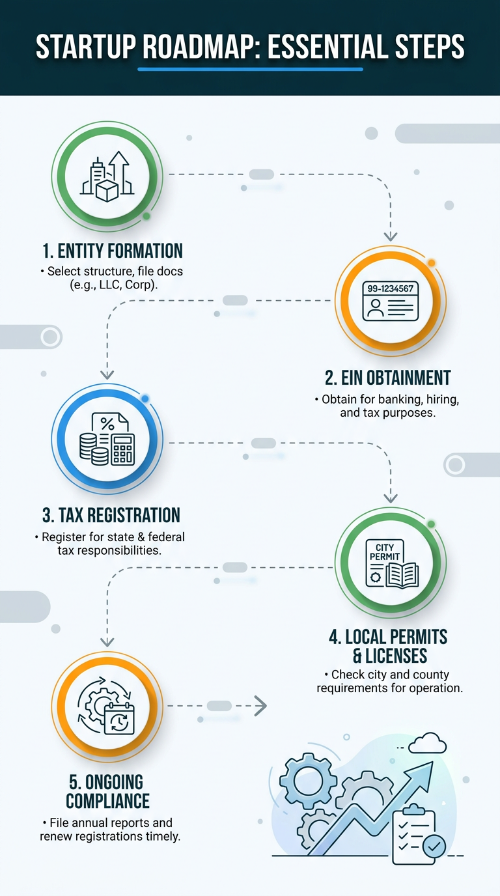
The smarter move: stop hunting for one form and start treating licensing as one layer in a larger setup: entity first, tax registrations next, local permits after. That sequence matters because each step feeds the next, and because the same entity and EIN your local permit office will ask for are also the building blocks of an S Corp election when you're ready to reduce your self-employment tax bill. Lettuce helps businesses-of-one build that whole system from day one, not just one piece of it.

Curious if an S Corp is right for you?
Try the Lettuce Tax Calculator to see how much more you can take home each year.
See your savingsStart With What Illinois Actually Licenses
No single Illinois business license application covers every business. What you need depends on what you do, where you operate, and how the state categorizes your work. Sorting that out early saves a lot of backtracking.
There Is No One-Size-Fits-All License
The Illinois Secretary of State handles entity formation, registering your LLC or corporation, but that is not a business license. The Illinois Department of Revenue handles tax account registrations. Neither office issues a universal permit that says your business is cleared to operate.
Your Industry Shapes What the State Requires
If your work is regulated, think accounting, real estate, healthcare, or financial advising, the Illinois Department of Financial and Professional Regulation is where your state-level license lives. Consultants and service-based freelancers in unregulated fields often have no profession-specific state license requirement at all, which surprises many first-time business owners.
Think in Three Buckets, Not One Form
The clearest way to figure out what applies to you: sort requirements into state-level tax registrations, profession-specific licenses through IDFPR if your field is regulated, and local city or county permits. Most unregulated service businesses: consultants, freelancers, and fractional workers never touch the middle category at all. There's no state license to chase. That actually shrinks the to-do list significantly. But local permits are where solo owners most often get caught flat-footed, which is why they deserve their own look first.
Check Local Permits Before You Print Business Cards
Before you search for a statewide form, check what your city or county requires first. For many Illinois solopreneurs, local business permits are the first real compliance gate, especially if you work from home, occasionally meet clients on-site, or plan to put your business name anywhere visible.
A smart local check covers four things:
-
City business license rules: Many municipalities require a general business license just to operate legally within city limits. Unincorporated Cook County, for example, requires a General Business License for businesses in unincorporated areas, with a two-year fee of $40 and a $40 late penalty if you miss the window.
-
Home occupation permits: If your office is your spare bedroom, your city may have something to say about it. Chicago requires a dedicated Home-Based Business license with a $1,000 application fee, plus rules on signage, client visits, and deliveries.
- Zoning restrictions: Your home or office address may sit in a zone that limits or prohibits certain business activity. A quick check with your local zoning office before you launch prevents a compliance problem later.
- Assumed name (DBA) registration: If your business name is anything other than your legal name or registered entity name, Illinois requires you to file it. The Illinois Secretary of State provides filing instructions for LLCs and corporations operating under an assumed name.
Starting with local permits gives you a clean record from day one. The next step is making sure those permits rest on a solid legal and tax foundation.
Build Licensing on Top of Entity and Tax Setup
When you apply for a local business license or register with a state agency, the paperwork almost always asks for your exact legal business name, your EIN, and proof that your entity is in good standing. That means Illinois LLC registration and tax registrations are not parallel steps you can handle in any order; they are the foundation that licensing decisions sit on. Getting them in place first saves you from resubmitting applications or explaining a mismatch between your DBA and your registered entity name.
|
Setup Task
|
Who Usually Needs It
|
Why It Matters Before Licensing
|
What a Business-of-One Should Confirm
|
|
LLC Formation
|
Any solo operator who wants liability protection and a formal business name
|
Local licensing offices and state agencies will ask for your registered entity name, registered agent, and Articles of Organization
|
File with the Illinois Secretary of State; retain your confirmation documents before applying for anything else. LLC formation through Lettuce costs nothing upfront
|
|
EIN (Employer Identification Number)
|
Every business with a separate legal entity or bank account
|
Required by the IRS, most banks, and many licensing agencies to identify your business separately from your personal SSN
|
Apply directly through the IRS after your LLC is confirmed; the EIN must match your registered business name
|
|
Illinois Department of Revenue Registration
|
Any business that collects sales tax, has employees, or owes Illinois income tax
|
IDOR registration through MyTax Illinois typically processes in 1–2 business days and issues your registration certificate electronically
|
Confirm which tax types apply to your business before registering; service-only businesses may have a narrower filing obligation than product sellers |
|
Sales Tax Registration
|
Businesses selling taxable goods or certain taxable services in Illinois
|
Operating without a sales tax registration when one is required creates back liability that can surface during a licensing review
|
Review your service or product category against Illinois sales tax rules before assuming you're exempt
|
|
Payroll-Related Registrations (UI)
|
Only if you hire W-2 employees (not applicable to a true solo with no staff)
|
Illinois IDES requires UI registration within 30 days of hiring; failure to register on time creates penalty exposure
|
Solo S Corp owners running their own payroll do not trigger this requirement unless they bring on additional employees
|
For a one-person service business with an eye on the future, completing these steps in order does more than satisfy a checklist. It also makes the path to an S Corp election cleaner, because the entity, EIN, and tax registrations that licensing requires are the same foundation an S Corp structure builds on.
Illinois Business License: Frequently Asked Questions (FAQs)
Illinois compliance rules vary by industry, city, and structure, so the same question often has different answers depending on who's asking. Here's what solo business owners run into most.
Do you need a state business license in Illinois for a solo business?
Not in the way most solo owners expect. Illinois has no single, universal business license; the permit everyone's searching for simply doesn't exist at the state level. What the state does require depends on your industry and whether you sell taxable goods or services. For most unregulated service businesses, such as consultants, freelancers, and fractional workers, the answer is tax registration, not a general license. That's a much shorter to-do list than most people expect.
What counts as state-level registration for an Illinois solopreneur?
If you conduct business in Illinois or serve Illinois customers, you likely need to register with the Illinois Department of Revenue through MyTax Illinois. Selling taxable goods or certain services adds a sales tax permit to that list.
What local business permits and city licenses might Illinois solopreneurs need?
Local requirements vary widely. In Chicago, for example, zoning review is mandatory before a business license is even processed. Home-based consultants and freelancers should check home occupation rules, signage restrictions, and whether a DBA filing is needed if they operate under a name different from their legal entity name.
What should a one-person business check before applying for an Illinois business license?
Start with your legal foundation. Agencies and local offices often ask for your exact registered business name and EIN to process any permit application. Confirming your S Corp fees by state before you apply keeps everything consistent and avoids delays from mismatched records.
Does forming an LLC in Illinois also cover your business license requirements?
No. LLC formation and business licensing are separate steps. Forming an LLC establishes your legal entity, but it does not automatically satisfy local permit rules, professional licensing requirements, or state tax registration. Think of your LLC as the foundation. Licensing is what you build on top of it.
Set Up the Whole System, Not Just One Form
Chasing a single Illinois business license form is the wrong starting point. The smarter move is to treat your Illinois business license checklist as a full setup sequence: file with the Secretary of State, complete IDOR tax registration, verify local permit requirements, and store every document in one place from day one. That order matters because each step feeds the next.
Here's what most guides leave out: the entity, EIN, and tax registrations you build for compliance are the same foundation an S Corp runs on. The work isn't overhead; it's the infrastructure that lets your business structure earn its keep. Lettuce helps businesses-of-one complete that setup, then handles payroll, bookkeeping, and tax filings so the whole system stays current, not just the day you launch. And if the tax savings don't exceed what you pay, the Lettuce-Back Guarantee covers you.