 Ran Harpaz
1 min read

Nearly 9 in 10 solopreneurs are using or planning to use AI, and established six-figure solos treat it like a small in-house team for the work that keeps their business running.
AI has gone from an experiment to an everyday tool for businesses of one. In Lettuce’s 2026 Solopreneur Perspective survey of 603 solopreneurs, 89% said they’re already using AI or plan to start, and that interest holds steady from Gen Z all the way to Baby Boomers.
The bigger story is how they use it. Some solopreneurs lean on AI for a task or two, while others have folded it into nearly every corner of their business. This guide looks at where AI is showing up in solo work, what sets advanced users apart, and where your own judgment still matters most.
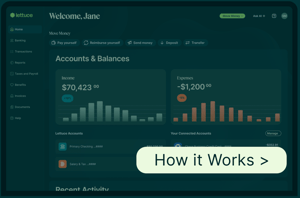
Lettuce applies the same AI efficiency to your finances, automating bookkeeping, payroll, and monthly tax payments on a single platform.

Is Lettuce right for you?
See if Lettuce can help you keep more of what you earn with our short quiz.
Take QuizWhere Solopreneurs Are Putting AI to Work
Solopreneurs mostly hand AI the tasks that pile up between client projects. Here’s where it shows up most often, according to our 2026 survey:
- 61%: content creation and writing. Blog posts, proposals, newsletters, and client emails are typical examples.
- 47%: marketing strategy and execution. Planning campaigns and keeping a steady presence gets easier with a second set of hands.
- 45%: administrative tasks. Scheduling, inbox cleanup, and follow-ups are prime candidates for automation.
The pattern makes sense. When you’re the only person in the business, an hour spent on a first draft or a messy inbox is an hour away from billable work. AI gives solopreneurs a way to keep those tasks moving without hiring help.
The Three Levels of AI Use and Who Gets the Most From It
Our survey groups solopreneurs by how many business functions they use AI for. The wider AI reaches across your business, the more it starts to feel like support staff.
|
AI User Type
|
How Widely They Use AI
|
What It Can Look Like
|
|
Basic
|
1 to 2 business functions
|
Drafting social posts or polishing client emails
|
|
Operational
|
3 to 4 business functions
|
Adding marketing plans, admin work, and research to the mix
|
|
Advanced
|
5 or more business functions
|
Leaning on AI across content, admin, analytics, design, and website updates
|
Established six-figure solos, the ones earning more than $150K a year after five or more years in business, tend to treat AI like an in-house team. They use it for admin work at a higher rate than the average solopreneur (58% vs. 44%), and the same holds for marketing execution (55% vs. 46%).
We’ll look at more of the habits behind that success in our guide to what successful solos do differently.
Where AI Creates the Most Leverage for a Business of One
AI earns its keep when it takes something off your plate for good. For solopreneurs, the biggest gains tend to fall into a few areas.
Reclaim Hours From Repetitive Work
Admin tasks rarely take long on their own. Added together, inbox triage, scheduling, invoice follow-ups, and expense sorting can quietly crowd out the work clients pay you for. Handing that layer to AI frees up attention for higher-value projects.
Cut Down on Manual Errors
Retyping numbers and copying details between tools is where small mistakes creep in. Automation handles those handoffs consistently, which matters most in areas like bookkeeping, where a miscategorized expense can follow you all the way to tax time. With Lettuce’s AI-powered bookkeeping, transactions are categorized automatically, which means fewer manual handoffs where mistakes can slip in.
Make Better-Informed Decisions
AI can summarize data, surface trends in your numbers, and help you pressure-test a plan before you commit to it. For a solopreneur without a finance team or business partner, that kind of sounding board can make big calls feel a lot less like guesswork.
Where Your Own Judgment Still Leads
Solopreneurs are enthusiastic about AI, and they’re also clear-eyed about its limits. Nearly 3 in 10 (29%) cite concerns about quality and accuracy, while another 30% say they have no concerns at all. That split is a useful reminder that AI output is a starting point, and someone still needs to check it.
Decisions with tax or legal weight raise the stakes. Choosing a business structure, setting a reasonable salary for your S Corp, and planning a tax strategy all depend on rules that change and details specific to your situation. Those are areas where expert input and a trustworthy system make a real difference.
That’s the thinking behind Lettuce. The platform automates routine financial work, from bookkeeping to monthly tax payments through payroll, and pairs it with access to real CPAs when you want human expertise. And with the Lettuce-Back Guarantee, if Lettuce doesn’t save you more in taxes than your Lettuce Pro subscription costs, your fees are refunded.
4 Ways to Get More Value From AI This Year
Moving from basic to advanced AI use doesn’t have to happen overnight. A few steady habits can help you get there:
- Start with your biggest time drain. Look at where your week goes outside client work, and test AI on the task you put off most.
- Expand one function at a time. Add a new area once the first one feels reliable, so each step builds on something that already works.
- Build a quick review habit. Give AI drafts, summaries, and numbers a final look before they reach a client or your books.
- Choose tools built for how you work. General AI assistants cover a lot of ground, and platforms designed for businesses of one can take on bigger jobs like bookkeeping and payroll with less setup.
Momentum like this is part of why solopreneurs feel good about the road ahead. We’ll explore that outlook in our upcoming guide on solopreneur optimism.
Frequently Asked Questions About AI for Solopreneurs
AI is changing fast, and so are the questions solopreneurs have about it. Here are answers to a few common ones, with more guides available in our resources hub.
Do most freelancers and solopreneurs use AI?
Yes. In our 2026 survey, 89% of solopreneurs said they’re using AI or plan to, and adoption looks nearly identical across Gen Z, Millennials, and Gen X. Baby Boomers aren’t far behind at 84%.
What are the best AI tools for solopreneurs?
The best tools are the ones that take on the tasks costing you the most time. Many solopreneurs start with general AI assistants for writing and research, then add specialized tools for areas like scheduling, design, or bookkeeping. On the financial side, platforms like Lettuce build AI directly into bookkeeping, payroll, and tax workflows.
Can AI do my bookkeeping?
AI can handle a large share of it, including categorizing transactions, matching receipts, and keeping reports current. Lettuce’s AI-powered bookkeeping categorizes transactions automatically, so your books stay current without manual data entry. You’ll still review and confirm everything during the year-end True Up before your returns are filed.
Do higher-earning solopreneurs use AI differently?
They tend to use it more broadly. Among high earners in our survey, 34% are advanced AI users, compared with 26% of lower earners. Advanced users apply AI across five or more business functions.
Is AI accurate enough to trust with business tasks?
It depends on the task. About 29% of the solopreneurs we surveyed cite quality and accuracy as a concern, so it helps to treat AI output as a draft that still needs a human review, especially for anything involving taxes, contracts, or client deliverables.
FREE CALCULATOR
What are you paying for?
Most existing S Corp owners are still paying for tools — and losing billable hours — to run the admin by hand. See your real number in 20 seconds.
Show savingsSee How Your AI Use Compares
AI is already part of how most solopreneurs work, and established six-figure solos tend to let it carry more of the routine load. Pairing that efficiency with sound judgment on the decisions that matter can give a business of one the kind of support usually reserved for much larger teams.
Our full Solopreneur Perspective 2026 report goes deeper into how AI use shifts by income, experience, and generation, plus how solopreneurs are approaching growth, finances, and healthcare. Download the full report to see how your AI habits stack up against more than 600 other solopreneurs.
See Lettuce’s AI-powered bookkeeping in action and spend more of your time on the work only you can do.