 Diane Kennedy, CPA
1 min read

Businesses-of-one operate on a completely different model than traditional small businesses, which means they need a different set of tools to run smoothly. This guide breaks down the essential operating system, from formation and banking to bookkeeping, taxes, and payroll, and shows how one platform can bring it all together.
Over the first two parts of this guide, we've established what a business-of-one actually is and why the self-employment tax burden hits solopreneurs harder than most realize. Now it's time to get practical. This final installment lays out the operating system every business-of-one needs to run profitably: the specific tools and systems, such as formation, banking, bookkeeping, taxes, payroll, and benefits, that replace what a traditional company's back office would handle, and how a platform like Lettuce brings them together into one place.

Curious if an S Corp is right for you?
Try the Lettuce Tax Calculator to see how much more you can take home each year.
See your savingsBusiness-of-One vs. Traditional Small Business: What’s Actually Different
Let’s challenge an assumption that has quietly shaped how most financial and business advice is constructed: the idea that a business-of-one is simply a small business in an early stage — a startup waiting to grow into something “real.” It isn’t. And treating it as one is costing solo operators time, money, and strategic clarity.
A business-of-one is not a smaller version of a traditional small business. It is a fundamentally different model, with a different structure, a different tax profile, a different growth strategy, and a different set of financial needs. The distinction matters because the tools, advice, and systems built for one don’t work well for the other.
Structure: A traditional small business employs people. It has HR obligations, a payroll system for multiple employees, workers’ compensation insurance, and a management layer between the owner and the delivery of work. A business-of-one has a single owner who is the business. There is no separation between the operator and the operation, which changes everything about how income flows, how taxes work, and how financial risk is managed. Understanding how your business is organized is the foundation of every financial decision you’ll make.
Growth model: Traditional small businesses scale by adding headcount. Growth means hiring, training, managing, and carrying the overhead that comes with a growing team. Businesses-of-one scale by adding leverage: higher-value clients, productized services, automation, better tools. The ceiling isn’t defined by how many people you can hire. It’s defined by how efficiently you can deliver exceptional value and how intelligently you’ve structured your finances to keep more of what you earn.
Tax exposure: This is where the difference becomes most financially consequential. Small businesses with employees primarily manage corporate income tax and multi-employee payroll compliance. Businesses-of-one face the unique self-employment tax burden: the full 15.3% that has no employer match to soften it. According to ADP’s analysis of solopreneur structures, the distinction between solopreneur and traditional entrepreneur isn’t just semantic. It carries fundamentally different tax and compliance profiles that require different expertise.
Financial risk profile: Traditional businesses carry fixed overhead, such as rent, salaries, and benefits for employees. That overhead creates predictable costs but also demands consistent revenue to support it. Businesses-of-one have variable costs and irregular income, which makes cash flow management and proactive tax planning critical in ways that simply don’t apply to a business with fixed expenses and a salary-funded payroll.
The tools built for them: Most accounting software, tax strategies, and financial frameworks were engineered for businesses with employees. They assume organizational structures, overhead models, and tax profiles that don’t map to the business-of-one reality. Using these tools as a solopreneur is a bit like using a commercial kitchen recipe to cook a meal for one: the ratios are wrong, the portions are off, and you end up with something that technically works but wasn’t designed for your situation. Tax-efficient structures for solo operators require solo-specific thinking.
The mindset shift that changes everything: A business-of-one isn’t a “small” business waiting to grow into a “real” one. It is a fully legitimate, strategically chosen, economically powerful model, one that can generate $100,000, $300,000, or more with zero employees. The professionals who thrive in this model are the ones who stop measuring success by headcount and start measuring it by what they earn, what they keep, and how efficiently their business runs.
Knowing what makes this model distinct is the foundation. Building it to run smoothly and profitably is the work, and that work starts with the right infrastructure.
The Business-of-One Operating System: Tools and Systems You Need
Think of running a business-of-one like running a small but sophisticated machine. When every component is tuned correctly, the whole thing operates with remarkable efficiency: generating revenue, managing taxes proactively, and freeing you to focus on the high-value work only you can do. When even one component is missing or broken, the inefficiency radiates outward and costs you in ways that aren’t always obvious until they are.
The following is the core operating system every business-of-one needs — the set of tools and systems that replace what a traditional company’s back-office team would handle.

1. Business Formation & Entity Structure
Your legal and tax foundation. If you’re earning between $60,000 and $100,000 in net profit, operating as a sole proprietor without considering an LLC or S Corp election is a structural gap with real financial consequences. Getting this right from the start or correcting it as your income grows is the highest-leverage financial decision a business-of-one can make. The S Corp formation checklist is a practical place to start if you’re evaluating this step.
2. Business Banking
Separating personal and business finances is non-negotiable. It’s the foundation of clean bookkeeping, IRS compliance, and legal liability protection. A dedicated business account creates a clear, auditable record of business income and expenses, eliminating the nightmare of reconstructing your finances come tax season.
3. Bookkeeping & Expense Tracking
Every dollar in and out of your business needs to be categorized correctly, in real time. Missed deductions are money left on the table. Miscategorized expenses create tax filing errors. Automated bookkeeping, where transactions are categorized as they happen, is the modern standard. The best bookkeeping software for small businesses now handles this with minimal manual input.
4. Tax Management: Predictive, Not Reactive
The difference between a solopreneur who dreads tax season and one who sails through it is almost entirely systems-based. Real-time tax liability visibility, automated quarterly estimated tax calculations, and year-end preparation that starts in January, not March: this is what proactive tax management looks like. AI-powered tax tools are making this level of sophistication accessible to solo operators for the first time.
5. Payroll, If You’re an S Corp
If you’ve elected S Corp status, you are technically an employee of your own company — and you need payroll. That means calculating your reasonable salary, withholding the appropriate taxes, making payroll tax deposits, and filing your W-2 at year-end. Done correctly, this is the mechanism through which your tax savings are realized. Done incorrectly or inconsistently, it creates IRS compliance risk.
6. Health Insurance & Retirement
A real business-of-one has a benefits strategy. Health insurance at group rates, a Solo 401(k) or SEP IRA with meaningful contribution limits, and disability coverage are not luxuries. They are the financial infrastructure that makes independent work sustainable over the long term. Lettuce Healthcare provides access to benefits that solopreneurs typically can’t obtain on their own.
7. Invoicing & Cash Flow Management
Getting paid on time, managing the variability of irregular income, and automatically setting aside tax reserves: these are the cash flow fundamentals that make the difference between a business that feels financially solid and one that feels perpetually uncertain.
Want a real-world view? You can see how other solopreneurs run their back office, including a real estate agent who runs payroll, tax withholding, and vendor 1099s through one platform.
“Banking. Bookkeeping. Taxes. Payroll. Healthcare. One platform, built for the way you actually work.”
This is exactly what Lettuce delivers: a single, integrated financial platform that replaces the fragmented collection of tools most solopreneurs cobble together, and does it in a system designed from the ground up for the business-of-one model. The result, according to Lettuce’s own data: an average of $10,000 saved per year and 10+ hours returned per month.
Why Lettuce Financial Is Built for the Business-of-One
Most financial tools were built for someone else and adapted for solopreneurs. Lettuce was built for you first: for the specific tax structure, entity needs, cash flow patterns, and financial challenges of a single owner-operator who earns real income and deserves to keep more of it.

Here is what makes Lettuce fundamentally different from every other financial platform in the market:
- The only fully automated S Corp solution. Formation, IRS election, payroll setup, compliance management, and year-end filings, all handled automatically. No assembly required.
- Predictive tax management. Real-time visibility into your tax liability throughout the year, so you always know what you owe, not just when April arrives. No more surprises. No more scrambling.
- AI-powered salary optimization. Lettuce calculates your “reasonable salary” based on your industry, role, and profit level, keeping you IRS-compliant while maximizing distributions that aren’t subject to self-employment tax.
- Automated bookkeeping. Every transaction categorized, every deductible expense captured, every receipt accounted for, without you manually managing any of it.
- The Lettuce Guarantee. If you don’t save money on taxes with Lettuce, your fees are refunded. That’s how confident the platform is in its core value proposition.
- Healthcare and retirement access. Group-rate health insurance and retirement account options that solopreneurs can’t typically access independently.
The cumulative result of these features isn’t just convenience, it’s financial transformation. $10,000 on average saved annually. 10+ hours reclaimed each month. One platform instead of four.
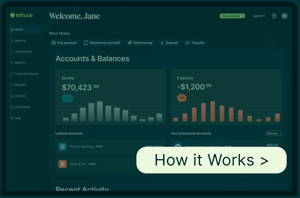
See exactly how Lettuce works or, if you have a tax question right now, ask LettuceHead, Lettuce’s AI tax assistant, for a free answer in minutes. For readers who are ready to look at pricing, explore the Lettuce plans and see what getting started looks like.
The model you’ve built is real. The income you’re generating is real. The financial opportunity and the financial risk that come with it are real. Lettuce is the platform that was built to help you capture one and manage the other. And it starts for free, with no credit card required.
The Road Ahead: Owning the Business-of-One Model
We’ve covered significant ground in this guide, and the picture that has emerged is both clear and compelling: the business-of-one is not a transitional phase or a compromise. It is a deliberate, powerful, and increasingly mainstream professional choice backed by nearly 30 million Americans, $1.7 trillion in economic output, and a growing body of tools, strategies, and financial infrastructure built specifically to support it.
Here’s what this three-part guide has established:
A business-of-one is a real business with real financial responsibilities and real financial opportunities. The definition is simple: a single owner-operator running all functions of their business without full-time employees. But the implications of that definition are profound, and they touch every dimension of how you earn, how you’re taxed, and how you grow.
Most businesses-of-one earning $100,000 or more are operating with the wrong tax structure. The self-employment tax burden that comes with sole proprietorship or single-member LLC status is significant, and the S Corp election that can dramatically reduce it is underutilized, primarily because the mechanics of it are complex without the right system. That’s a solvable problem. The solution exists, and it’s more accessible than ever.
The professionals who thrive in the solo economy are the ones who build the right systems early. The operating infrastructure: formation, banking, bookkeeping, tax management, payroll, and benefits, isn’t glamorous. But it is the foundation on which a durable, high-income, low-stress business-of-one is built. Get these systems right, and your business runs. Get them wrong, and your business costs you: in taxes, in time, and in opportunities you never had the bandwidth to pursue.
The solo economy is growing. The tools available to it are improving rapidly. And the financial advantage available to businesses-of-one who structure themselves intelligently has never been more significant or more accessible.
The first step? Find out what you’re leaving on the table.
Frequently Asked Questions About the Business-of-One
How is a business-of-one different from a traditional small business?
The fundamental difference is structure and scale model. A traditional small business employs people and scales by adding headcount. A business-of-one has a single owner who is the business, and it scales through leverage: better tools, higher-value clients, productized services, and automation. The tax profiles are different, the financial risk models are different, and the tools required to run them efficiently are different. Generic small-business advice and software often misses the mark for solopreneurs precisely because it was built assuming a fundamentally different organizational model.
What tools does a business-of-one need to run efficiently?
The core operating system of a business-of-one includes: business formation and entity structure, a dedicated business bank account, automated bookkeeping and expense tracking, proactive tax management and quarterly estimated tax calculations, payroll (if operating as an S Corp), health insurance and retirement access, and invoicing and cash flow tools. Lettuce consolidates all of these functions into a single platform built specifically for the business-of-one model.
Do I need an LLC before I can elect S Corp status?
No. You can elect S Corp tax status as a sole proprietor or as an LLC — it's a tax election with the IRS, not a separate legal entity type. That said, pairing an LLC with the S Corp election gives you liability protection on top of the tax savings, which is why most business-of-one owners do both. Lettuce handles the formation and the election together, so you don't have to coordinate separate filings.
How much do I actually need to be earning before payroll and S Corp status make sense?
Most CPAs point to $60,000 to $100,000 in net profit as the range where the tax savings start to outweigh the added complexity of running payroll. Below that, the cost of setting up and maintaining payroll can eat into the self-employment tax you'd save. Above it, the math shifts quickly in your favor, especially with a platform that automates the payroll and compliance side.
What happens if I miss a quarterly estimated tax payment?
The IRS can charge an underpayment penalty, calculated based on how much you owe and how late the payment is, even if you pay the full balance by the annual filing deadline. This is one of the most common ways solopreneurs lose money without realizing it, since irregular income makes it easy to misjudge what you owe each quarter. Predictive tax tools that track your liability in real time are built specifically to prevent this.
Is Lettuce right for me?
Lettuce is built for businesses-of-one earning $60,000 or more in annual net profit who want to minimize their tax burden, automate their financial back-office, and spend more time on the work that generates their income. If you’re a freelancer, consultant, independent contractor, or self-employed professional who wants to stop overpaying taxes and start running your business on a solid financial foundation, Lettuce was designed specifically for you.
Take the Next Step
Find out how much you’re overpaying — in 60 seconds.
Use the Lettuce Tax Savings Calculator to see your personalized estimate. No credit card. No commitment. Just clarity.
Calculate Your Savings →
Not sure if Lettuce is right for you? Take the quiz and find out in 2 minutes.
Take the Quiz →
Want to go deeper? Explore how Lettuce works or ask LettuceHead, our AI tax assistant, your first question for free.
See How It Works | Ask LettuceHead
Ready to stop cobbling together your back office and start running your business-of-one on one integrated system? Lettuce brings formation, banking, bookkeeping, taxes, payroll, and benefits together in a single platform built specifically for solo operators. Try Lettuce and get started today!
This article is Part 3 of the Business-of-One Definitive Guide Series, featuring in-depth, practical guidance from Diane Kennedy, CPA—bestselling author, strategic tax consultant, and founder of USTaxAid and KennedyTax.tax. Also ready Part 1: What Is a Business-of-One? The Definitive Guide for Solo Entrepreneurs, Freelancers & Independent Contractors and Part 2: The $10,000 Tax Problem: Why Solopreneurs Overpay (and the S Corp Fix).
Explore all of Diane’s tax strategy advice and insights here.
Related Articles:
- Sole Proprietorship vs LLC: Which Structure Sets You Up for Success?
- Best Self-Employed Accounting Software for 2026: Level Up Your Solo Business
- Best Payroll Software For Solopreneurs: Unlock More Take-Home Pay With Less Hassle
- 9 Best Tax Compliance Software for Small Businesses: 2026's Top Picks for Solopreneurs