
 Alex Zelaya
1 min read

Automated tax compliance software takes the guesswork out of payroll, filings, and payments for solopreneurs. The best tax compliance software for small businesses ranges from all-in-one platforms like Lettuce to specialized tools like Gusto, each designed to reduce costly mistakes and keep more money in your pocket through proactive, hands-off tax management.
Solopreneurs spend an average of 40 hours annually managing tax compliance across federal and state requirements. The best tax compliance software (state and federal) for small businesses changes that equation completely. Here's what changes the game: instead of quarterly guesswork and last-minute scrambles, the right platform pays your taxes as you earn and handles S-corp filings automatically.
You'll discover nine platforms that tie payroll to tax payments, generate year-end forms like 1120-S and W-2s, and remove compliance bottlenecks from your monthly routine. Whether you're running S-corp payroll or exploring S-corp tax strategies, these tools free up hours every month while keeping you compliant.
Ready to automate your tax compliance? Start with Lettuce today.

Is Lettuce right for you?
See if Lettuce can help you keep more of what you earn with our short quiz.
Take QuizHow State and Federal Tax Automation Works for Solopreneurs
State and federal tax automation connects your income stream directly to compliance workflows, letting you stay focused on your business while the system handles the details. When revenue hits your business account, the platform automatically calculates payroll taxes, sets aside withholdings, and schedules employment tax deposits according to IRS timing rules. No more manual transfers or quarterly estimate guesswork. Your S-corp salary gets processed monthly with federal and state taxes withheld automatically, turning compliance from a quarterly scramble into a set-it-and-forget-it routine.
Beyond daily operations, the best platforms generate every form your S-corporation needs at year-end: Form 1120-S, Schedule K-1, W-2s, and 1099s for contractors. They also track state-specific requirements like franchise taxes, annual reports, and filing deadlines that vary dramatically by location. California's $800 minimum franchise tax, Texas franchise reporting, and New York's corporate minimums all get flagged before deadlines hit. This prevents the costly penalties that come from missed state fees and keeps your compliance airtight across jurisdictions.
1. Lettuce: S-Corp Tax Compliance Software Built for Businesses-of-One
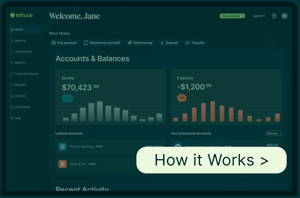
Lettuce automates the entire S-corp tax workflow from income allocation to year-end filings. When money hits your account, the platform splits it automatically: setting aside funds for payroll taxes while keeping the rest available for expenses or distributions. Monthly payroll runs on the 10th, with federal and state taxes withheld and deposited according to IRS requirements. At year-end, Lettuce prepares your Form 1120-S, Schedule K-1, W-2s, and 1099s, plus handles state-specific fees that vary by location.
The reasonable salary engine calculates your W-2 wages using IRS guidelines, factoring in your income, role, industry, and hours worked to minimize self-employment taxes while staying compliant. This systematic approach connects directly to your live dashboard, which shows exactly what's allocated for taxes, what's your salary, and what's yours to keep as distributions. No more quarterly estimate guesswork or wondering if you're setting aside enough. The 10-minute setup handles LLC formation, S-corp election, and business banking, so you can focus on growing your business instead of managing compliance.
See how Lettuce compliance keeps your federal filings on schedule and flags state deadlines before they hit.
2. Gusto: Best Payroll Integration for Solopreneurs
Gusto works best when you've already got your bookkeeping system humming and need bulletproof payroll compliance to plug into it. This is the best payroll integration for solopreneurs who want automated payroll tax filings without rebuilding their entire financial stack. If you're running QuickBooks or similar tools effectively, Gusto handles the payroll complexity while your existing workflow stays intact.
- Automates federal and state payroll tax deposits following IRS deadlines so you never miss monthly or semiweekly requirements
- Generates W-2s and handles year-end filings automatically, removing the January scramble that trips up many solo business owners
- Syncs seamlessly with QuickBooks, Xero, and FreshBooks to eliminate double-entry and keep your books accurate without manual reconciliation
- Handles standard payroll calculations, though S-corp owners should verify reasonable salary amounts align with IRS guidelines for their specific situation
- Costs $49/month plus $6 per employee, making it predictable for lean operations compared to percentage-based pricing models.
- Provides audit support and accuracy guarantees, giving you confidence that filings meet federal and state requirements
Keep in mind: Gusto focuses on payroll compliance, so you'll need separate tools for business formation, comprehensive tax strategy, bookkeeping, or integrated banking.
3. QuickBooks Online + TurboTax Business: Bookkeeping and Tax Prep Platform That Syncs Your Data
QuickBooks Online handles your day-to-day bookkeeping while TurboTax Business (Windows version) prepares your 1120-S and most state returns. This bookkeeping and tax prep platform combination keeps your books organized year-round, then imports that clean data directly into your business tax return. You get reliable transaction categorization, expense tracking, and profit-and-loss reports from QBO, plus guided S-corp tax preparation that covers depreciation schedules, entity elections, and state tax adjustments. The workflow connects your financial records to your tax filings without manual data entry.
This setup works best for data-minded owners who enjoy granular control over their books and feel comfortable reviewing entity-level tax decisions. You'll want comfort with reasonable salary calculations, quarterly estimated payments, and state compliance requirements on your own. While this approach gives you complete visibility into every transaction and deduction, it requires consistent bookkeeping discipline and tax knowledge that many solopreneurs find time-consuming. The tradeoff is lower monthly costs in exchange for more hands-on management of your compliance workflow.
4. TaxAct Business: Affordable Tax Software for Solo Business Owners Filing 1120-S
TaxAct Business gives you professional-grade tax filing capabilities at a price that makes sense for lean operations. This affordable tax software for solo business owners handles your S-corp tax return requirements with step-by-step guidance that prevents costly mistakes. You get the compliance coverage you need without paying CPA rates or expensive software fees.
Here's what makes TaxAct Business a smart choice for cost-conscious owners:
- Keeps 1120-S filing costs low. Typically costs 60-70% less than TurboTax Business while covering all required federal forms and most state returns
- Guided questions prevent common mistakes. Interview-style prompts walk you through reasonable salary decisions, shareholder distributions, and business deductions specific to your structure
- State return coverage included. Prepares state filings for most states, eliminating the need for separate software or additional fees that can add $50-100 to your total cost
- Accuracy guarantee with audit support. TaxAct provides calculation accuracy guarantees and audit assistance, giving you confidence without the high-cost alternatives
- Works best with organized books. Shines when your financial records are clean and categorized, but requires more manual data entry compared to integrated platforms
- Filing-focused approach. Concentrates on tax return creation rather than ongoing payroll or monthly compliance, so you'll need separate solutions for year-round S-corp management
TaxAct Business hits the sweet spot when you want professional filing capabilities without breaking the budget, especially if you're comfortable handling your own data entry and have solid bookkeeping habits throughout the year.
5. H&R Block Premium & Business: Easy Quarterly Tax Estimate Software Companion
H&R Block bridges the gap when you're not quite ready for full S-corp payroll automation but need reliable guidance on estimated payments and year-end filings. Their desktop software guides you through the calculations without leaving you guessing about compliance requirements.
- Clear estimate worksheets help calculate payments based on your projected income, with built-in safeguards to avoid underpayment penalties per IRS Form 1040-ES guidelines
- Desktop 1120-S preparation covers federal S-corp returns plus most state filings, with interview-style questions that catch common entity-level mistakes
- In-person support available at local offices when you hit complex scenarios like mid-year S-corp elections or multi-state income allocation
- Affordable annual licensing typically runs $55-85 for business returns, making it budget-friendly during your transition year
- Integrates with popular bookkeeping tools to import your financial data without manual entry, though you'll still handle tax installments separately
This approach works well as easy quarterly tax estimate software while you're building toward full automation. The manual calculation and payment process, however, means you're still doing the heavy lifting every few months. Once your income stabilizes and you're ready for automated payroll withholding, platforms like Lettuce eliminate the guesswork entirely: paying taxes monthly as you earn instead of scrambling to catch up four times a year.
6. Yearli by Greatland: 1099 and W-2 Filing Solutions You Can Trust
When your business grows beyond just paying yourself, you need reliable filing for 1099s and W-2s for contractors and employees. Yearli delivers comprehensive 1099 and W-2 filing solutions with built-in safeguards that prevent filing errors and keep you compliant.
- Pre-filing TIN verification through the IRS system catches mismatched contractor information before you submit, reducing rejections and late filing penalties
- Automated delivery to recipients handles both contractor copies and employee W-2s, so you meet January 31 deadlines without manual mailing or follow-up
- State filing included for most jurisdictions, eliminating the need to research and file separate state information returns
- Bulk processing lets you upload contractor lists and payment data from spreadsheets, then generates all required 1099-NECs in one batch
- Year-round platform access means you can add contractors throughout the year and file corrections when needed, not just during tax season
Choose Yearli when you have multiple contractor relationships that your main payroll platform doesn't handle well, or when you need specialized state filing support. It works particularly well as a complement to S-Corp payroll platforms that excel at employee withholding but weren't designed for contractor information returns. If your business model relies heavily on 1099 relationships, this focused approach gives you more control than trying to force a general payroll tool to handle specialized filing requirements.
7. OnPay: Automated Tax Filing for Small Business Payroll
OnPay specializes in automated tax filing for small business payroll, handling tax calculations and filing deadlines that run automatically in the background. The platform processes payroll with federal and state withholdings, new-hire reporting, and year-end W-2 generation, all included. You set up your payroll schedule once, and OnPay takes care of the quarterly filings and tax deadlines without requiring your attention each month.
The pricing structure stays transparent and predictable, making it easier to budget for lean operations. At $40 per month plus $6 per employee, consultants and freelancers get straightforward payroll compliance without paying for features they won't use. OnPay works well when you want reliable payroll processing and automatic tax filings, but don't need the integrated bookkeeping or S-corp optimization that more comprehensive platforms provide.
8. Keeper: Deduction Tracking for Freelancers With Accountant Review Options
Keeper helps freelancers capture write-offs they'd otherwise miss, using smart categorization to turn everyday spending into legitimate tax savings. This mobile-focused platform excels at expense tracking for freelancers who want professional oversight without the complexity of full S-corp compliance.
- Smart categorization captures overlooked write-offs. The AI reviews your spending patterns and flags business expenses like software subscriptions, coworking spaces, and client meals that busy freelancers commonly miss
- Accountant review options improve accuracy. Connect with tax professionals through the platform to verify expenses and ensure your recordkeeping meets IRS standards before filing
- Maximum value before S-corp election. When filing Schedule C, every captured write-off directly reduces your self-employment tax burden, making the tracking investment immediately worthwhile
- Receipt capture prevents audit issues. The mobile app stores digital copies and maintains the documentation trail the IRS requires to substantiate your expenses
- Integrates with S-corp platforms as you grow. Keeper's expense data transfers cleanly to payroll-focused platforms, so you keep your deduction history when transitioning to more sophisticated tax strategies
This approach works best for freelancers earning $40K to $80K who want to maximize freelance deductions while building toward S-corp status. The platform bridges the gap between basic expense apps and comprehensive tax compliance, giving you professional-grade write-off capture without overwhelming your current workflow.
9. Collective: All-In-One Tax Compliance Tools for S-Corp Solopreneurs
Collective offers all-in-one tax compliance tools that bundle bookkeeping, payroll, and business tax preparation into one coordinated experience, with dedicated team members guiding each step. Rather than self-service dashboards, their specialists handle your monthly books, run payroll with proper, reasonable compensation calculations, and prepare your 1120-S and personal returns. You get regular check-ins and proactive tax planning with premium pricing to match.
This approach appeals to business owners who prefer human coordination over automated workflows, especially when navigating complex S-corp compliance requirements. The white-glove service includes quarterly business reviews, tax strategy sessions, and year-end planning calls. While more expensive than DIY solutions, Collective works well if you value having a dedicated team manage your entire financial back-office rather than learning multiple platforms yourself.
Still weighing your options? You can compare Lettuce to other platforms like Gusto and QuickBooks side by side.
Tax Compliance Software: Frequently Asked Questions (FAQs)
You want straight answers about tax compliance software without the runaround. Smart solopreneurs ask these questions before committing to any platform. Here's what you need to know to make confident decisions, plus more detailed answers for deeper dives.
Do I still need quarterly estimated taxes if I'm running S-corp payroll?
Unlikely, when you run a compliant S-corp payroll with tax withholding. The IRS requires estimated payments only if you expect to owe $1,000+ and don't have sufficient withholding. Monthly payroll taxes through platforms like Lettuce replace quarterly estimates entirely.
What forms should my S-Corp file at year-end (federal and state)?
Your S-corp files Form 1120-S federally, plus Schedule K-1 for owners and W-2s for employees. State requirements vary: some mirror federal filings, others add franchise taxes or annual reports. The right platform generates these automatically and flags state-specific deadlines.
Can I switch to an S-Corp mid-year and still keep filings accurate?
Yes, you can elect S-corp status mid-year using Form 2553. The IRS allows retroactive elections within specific timeframes. Platforms that handle entity transitions import your year-to-date activity and adjust payroll accordingly for accurate filings.
What's the difference between W-2 payroll and 1099 contractor payments for taxes?
W-2 payroll includes tax withholding and employer contributions to Social Security and Medicare. 1099 payments have no withholding; contractors handle their own taxes. For S-corp owners, salary vs distributions determines your W-2 wages versus tax-free distributions.
How do I pick between all-in-one tools and separate best-in-class apps?
Choose an all-in-one for seamless automation and fewer integration headaches. The data flows cleanly from income to payroll to tax filings without manual transfers or reconciliation. Separate tools only make sense if you have complex needs that require specialized features.
Which deductions do solopreneurs most often miss without tracking tools?
Business use of home, vehicle expenses, and health insurance premiums top the list. Most solopreneurs also miss smaller recurring costs like software subscriptions, professional development, and office supplies. Automated categorization catches these patterns that manual tracking often overlooks.
Keep More of What You Earn, And Do It Calmly
The right tax compliance platform removes your biggest bottleneck: whether that's payroll taxes, 1120-S filing, or tracking deductions. Tax automation for solopreneurs pays taxes as you earn instead of scrambling with quarterly estimates, keeping you compliant while you grow your business.
This approach stops you from leaving money on the table with manual processes that miss deductions and create compliance gaps. The IRS requires S-corp owners to receive reasonable wages with proper withholding; automation handles this seamlessly during year-end filing while you concentrate on what matters most. Your business deserves a financial system that works as hard as you do.
Ready to automate your taxes and keep more of what you earn? Lettuce handles S-corp payroll, federal and state filings, and year-end forms so you can focus on what you do best.
