
 Diane Kennedy, CPA

Choosing among S-Corp formation services matters more than the filing itself. DIY IRS filing, online legal sites, registered agents, and all-in-one platforms all promise a quick setup, but ongoing payroll and quarterly tax support is where solopreneurs actually win or lose their S-Corp savings.
Electing S-Corp status can meaningfully cut the self-employment tax a profitable solopreneur pays. But the tax savings were never the hard part; the hard part is choosing who helps you do it. DIY IRS filing, generic legal sites, registered agent companies, and all-in-one automated platforms all claim to “set up your S-Corp in minutes.” They are not the same, and the gap shows up after you file, not before.
This is an answer-first, criteria-based comparison for a business-of-one, not a 50-employee corporation. New to the concept? Start with what an S-Corp actually is.
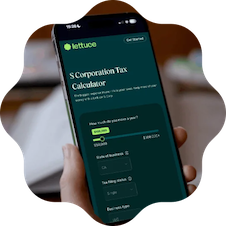
FREE CALCULATOR
S Corp Tax
The biggest expense in your life is your taxes. Use this calculator to see what you could save with an S Corp.
CalculateAt a Glance: Comparing S-Corp Formation Services
|
Category
|
Best For
|
Typical Cost
|
Ongoing Tax/Payroll Support
|
|
All-in-one automated platforms (e.g., Lettuce)
|
Solopreneurs who want formation + payroll + bookkeeping + quarterly taxes in one system
|
Subscription
|
Yes, built in
|
|
Online legal/formation services
|
Simple entity formation, no ongoing tax need yet
|
One-time fee + state costs
|
Rarely
|
|
Registered agent / compliance-only
|
Owners who’ve already formed their entity
|
Low annual fee
|
No
|
|
Bookkeeping-first platforms with S-Corp add-ons
|
Owners attached to an existing bookkeeping tool
|
Subscription + add-on fee
|
Varies, usually shallow
|
|
DIY filing with the IRS
|
Simple, well-researched situations with time to spare
|
Free (+ state fees)
|
None
|
Formation is step one. The real value and risk live in what happens after Form 2553 is accepted: payroll, reasonable salary, and quarterly taxes. We won’t quote a generic savings number here; Lettuce’s S-Corp Tax Calculator models your actual numbers.
How We Evaluated These Services
S-Corp election is a tax status layered on an LLC or corporation, not a business type, so judging it with generic “best LLC service” criteria misses the point. We scored each category on: IRS compliance accuracy, automation depth, ongoing tax support (payroll, reasonable salary, quarterly estimates), transparent total first-year cost, and solopreneur-specific fit.
Eligibility rules are sourced directly from the IRS’s “About Form 2553” page and the IRS Instructions for Form 2553. For state-by-state cost detail, see Lettuce’s S-Corp Fees by State guide.
What Actually Matters (Beyond the Paperwork)
“Filing the paperwork is the easy part. Running payroll correctly for the rest of the year is where S-Corp savings are actually won or lost.”
- Full lifecycle automation — formation, EIN, Form 2553, payroll, bookkeeping, quarterly taxes, annual Form 1120-S. A service that only automates the first three hasn’t solved your problem.
- Reasonable salary guidance — the most audit-sensitive piece, and the one generic services almost never touch. See S-Corp self-employment tax savings.
- The profit threshold — many solopreneurs cite ~$80K+ net profit as the point where S-Corp math starts favoring election, though it’s situational. Model your own number rather than trusting a rule of thumb.
- Total cost of ownership — state fees + registered agent + payroll software + bookkeeping software + a preparer for the annual return adds up fast when purchased piecemeal.
More detail: The Complete S-Corp Formation Checklist for Businesses-of-One.
Why Not Just DIY or Use a Generic Service?
DIY is genuinely possible. Form 2553 can be mailed or faxed directly to the IRS at no cost beyond state fees. But solopreneurs commonly trip on: missing the election window, missing shareholder consent, the wrong effective date, or EIN mismatches. An incorrect filing can delay S-Corp treatment a full tax year; costly if you timed your election around a profit threshold. The IRS does offer relief for late elections in qualifying cases.
Generic formation services are built for any LLC or corporation; S-Corp election is often a checkbox, not a core competency. Want the manual process in full? See Lettuce’s Form 2553 step-by-step guide.
Election Mechanics: Form 2553, Deadlines, Eligibility
Per IRS Form 2553 instructions, your business must generally be a domestic corporation/LLC, have no more than 100 shareholders, one class of stock, and shareholders who are individuals (not partnerships/corporations) and U.S. citizens or residents.
The deadline: generally no more than 2 months and 15 days after the start of the tax year the election should take effect (or from formation, for new entities). Miss it, and treatment typically doesn’t start until the following year, unless you qualify for late-election relief.
Important: S-Corp election is a tax status, not a new entity; your LLC stays legally the same. Some states require separate state-level recognition or franchise taxes, which is why total costs vary (see state-by-state nuance).
Why Solopreneurs Choose Lettuce
Lettuce bundles LLC formation, S-Corp election, banking, bookkeeping, payroll, and quarterly taxes into one system. It's built to be predictive (surfacing reasonable salary guidance and savings visibility year-round) rather than reactive every April. It’s a digital product powered by AI and automation, not a human preparer. This is exactly why it can offer this continuously, affordably. See your own numbers with the S-Corp Tax Calculator or explore the formation page.
FAQ
How much does S-Corp formation cost? State filing fee + optional formation service fee + any ongoing subscription. See fees by state.
What’s the Form 2553 deadline? 2 months and 15 days after the relevant tax year begins, per IRS instructions.
Do I need a lawyer? No, not legally required, though complex ownership structures may warrant advice.
Can I elect mid-year or after a missed deadline? Often yes, via IRS reasonable-cause relief. See mid-year election.
How much profit before S-Corp makes sense? Roughly $80K+ net profit is a common rule-of-thumb threshold; see S-Corp tax savings.
Is S-Corp a business type or a tax status? A tax election on an existing LLC/corporation, not a new entity.
The Bottom Line
Choosing a formation service is really choosing a tax partner; one still showing up in month eight when payroll and quarterly taxes are due, not just on filing day. Get started with Lettuce or calculate your savings first; no pressure, just your numbers.

FREE CALCULATOR
Late S Corp Election
Should you backdate your S-Corp election? See how much that could save you compared to starting today, and whether you still qualify.
Calculate