

1 min read

Starting a private practice takes more than passion; it takes the right setup. From choosing your niche to forming an LLC and opening a business bank account, the early steps matter most. Electing S-corp status at the right time can also save you thousands in taxes, so you keep more of what you earn from day one.
Most professionals think learning how to start private practice means taking a massive leap into the unknown. Here's what actually works: you're building an operating system for your expertise. A private practice is a solo professional business built around your services, and an S-Corp election is a tax election that typically saves eligible solopreneurs thousands compared to sole proprietorship.
The winning move sets up your legal, financial, and tax foundation early so your business can grow without messy rebuilds later. You can elect S-Corp status even mid-year to capture immediate tax savings while maintaining the flexibility to scale.
Ready to build a practice that operates like a real business from day one? Lettuce automates your formation, S-Corp election, and monthly tax payments so you can focus on what you do best.

Is Lettuce right for you?
See if Lettuce can help you keep more of what you earn with our short quiz.
Take QuizHow To Start A Private Practice From Scratch Without Overbuilding
Starting a private practice from scratch requires fewer moving parts than most guides suggest. Skip the 47-step checklists and focus on what actually moves the needle. Your practice needs a solid foundation, not a perfect one.
Start With Eight Essentials, Not Fifty
The SBA's business launch guide confirms what successful solopreneurs already know: you need eight core elements to start serving clients. Pick your business location. Choose your business entity structure with smart tax planning in mind. Choose your business name. Register your business. Get federal and state tax ID numbers. Apply for licenses and permits. Set up clean business finances with proper separation from personal accounts by opening a business account. Get business insurance. Everything else can wait until you have paying customers and real cash flow to support additional tools.
Match Your Setup To How You Actually Work
A therapist doesn't need the same business infrastructure as a software consultant. A fractional executive doesn't need what a health coach requires. The SBA's 10-step checklist gives you the regulatory baseline, but your actual workflow determines the right level of complexity. Choose systems that support how you deliver services, not what impresses other business owners.
Stop Overthinking Every Tool Choice
Most solopreneurs can complete their core setup in 2-4 weeks when they stop treating every software choice like a permanent decision. You can change your invoicing platform later. You can upgrade your website after you understand what clients actually want. Focus on organizing your business finances early since clean money management affects everything else, but don't let tool paralysis delay your first client conversation.
Your Private Practice Setup Checklist, In The Right Order
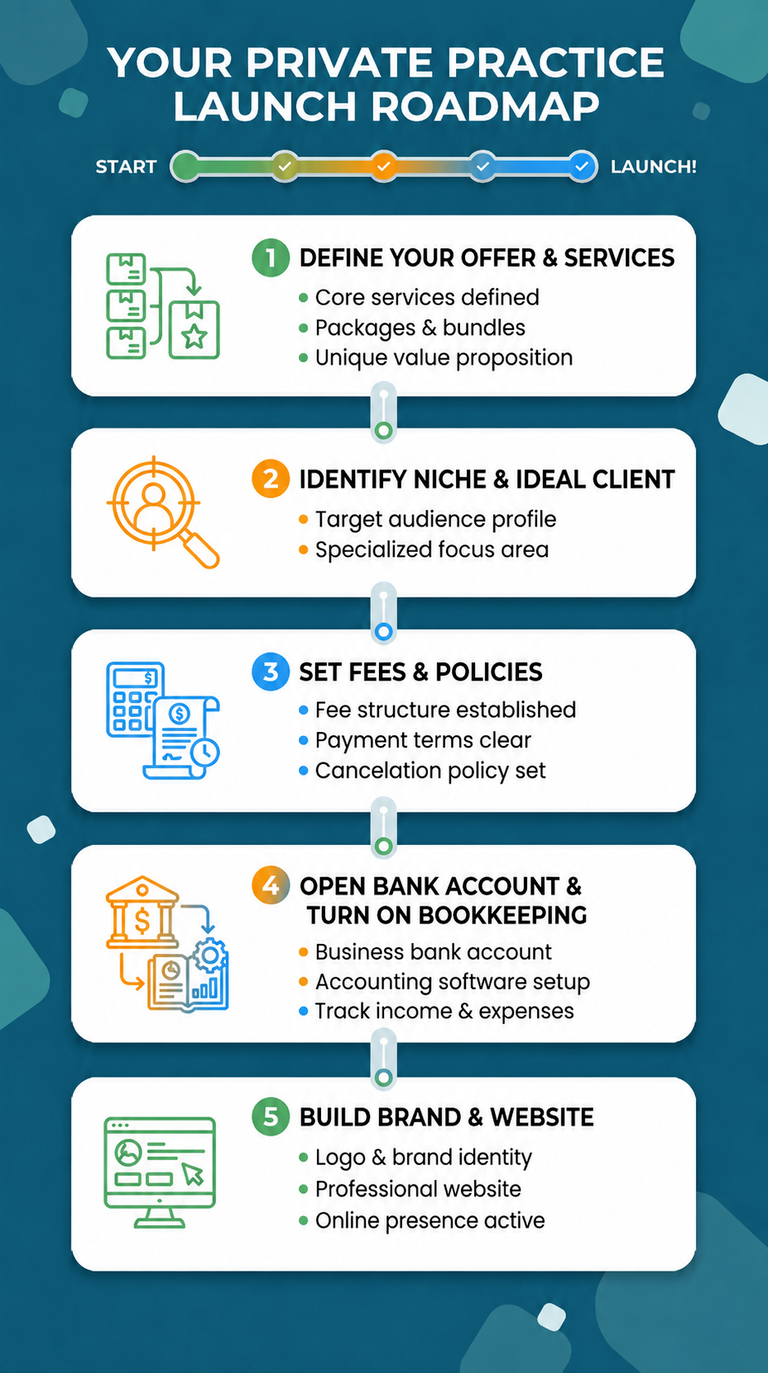
You're ready to turn your expertise into a real business. How do you start a private practice as a solopreneur without getting overwhelmed by endless decisions? Focus on these nine steps in the right order, and you'll have a solid foundation that grows with you.
| Step | Why It Matters | What To Decide | Fastest Way To Complete It |
|---|---|---|---|
| Choose Your Niche & Offer (Must Do First) | Everything else flows from this decision | Pick one specific problem you solve for one type of client | List 3 client problems you love solving, choose the most profitable one |
| Pick Business Name & DBA (Must Do First) | You'll need this for all legal paperwork | Use your name (simple) or create a business name (more marketing flexibility) | Search your state's business database, reserve the name if available |
| Form an LLC (Must Do First) | Protects your personal assets and unlocks business banking | Choose your home state or business-friendly state like Delaware | Let Lettuce handle formation automatically or file directly with your state |
| Get an EIN (Must Do First) | Banks won't open business accounts without this federal tax ID | Apply immediately after LLC approval | Apply free with the IRS or let Lettuce get it for you |
| Open Business Bank Account (Must Do First) | Separates your money from business money for cleaner taxes | Pick a bank with low fees and good online tools | Bring your LLC docs and EIN letter, or use Lettuce's integrated banking |
| Set Up Bookkeeping (Must Do First) | Track every dollar from day one to maximize tax deductions | Manual tracking, software, or automated platform | Connect your bank account to your bookkeeping system before your first payment |
| Choose Payment & Invoicing (Before First Client) | Get paid faster and look more professional | Decide on ACH, credit cards, or both for client payments | Set up invoicing software with payment processing built in |
| Secure Insurance & Licenses (Can Wait) | Meets legal requirements and protects your business | Professional liability coverage and any state-specific licenses | Research your state requirements, get quotes from 3 providers |
| Create Basic Website (Can Wait) | Builds credibility and helps clients find you | Simple landing page with your services and contact information | Use a template builder, launch with basic content, improve over time |
The SBA recommends completing the "Must Do First" steps before anything else since they build on each other. Your website and marketing can wait until you have paying clients and steady cash flow coming in.
How To Set Up A Private Practice As An S-Corporation And Keep More Of What You Earn
Once your practice generates steady income, an S-corp becomes your smartest tax move. You ditch the quarterly payment chaos and start running real payroll with predictable distributions.
How do you set up a private practice as an S-corporation? Here's how it works:
- File your S-corp election within 75 days of forming your LLC or by March 15 for current-year treatment
- Set up a monthly payroll to pay yourself reasonable compensation based on your role and industry standards (Tip: the Freelance Rate Calculator can help you determine your hourly rate.)
- Take distributions from remaining profits without additional self-employment taxes on the distribution portion
- Automate tax payments through payroll instead of scrambling with quarterly estimated payments
- Maintain separate business banking to clearly track salary, distributions, and business expenses
Once payroll is running, your solo practice can also get group-rate health, dental, and vision coverage through Lettuce’s PEO.
Frequently Asked Questions About Starting Private Practice
Smart solopreneurs ask the right questions before they launch. These frequently asked questions about how to start private practice focus on the financial and operational decisions that actually impact your take-home pay and compliance from day one.
How much money do you need to start a private practice?
Most service-based private practices launch with $2,000-$5,000 in startup costs. This covers business formation, initial insurance, basic technology, and 3-6 months of operating expenses. Your biggest ongoing costs are typically professional liability insurance and any required licensing fees, not fancy equipment.
When should you switch your private practice to an S-Corp?
The sweet spot for S-corp election is around $80,000 in annual profit. At this level, the payroll tax savings typically outweigh the added compliance costs. You can elect S-corp status mid-year if your income grows faster than expected.
What systems should you set up before your first client pays you?
Start with the business formation basics: LLC registration, EIN, business bank account, and basic bookkeeping. Add professional liability insurance and any required state licenses.
Can you claim a home office deduction for your private practice?
Yes, if you use part of your home regularly and exclusively for business. The home office deduction typically saves $5,000-$10,000 annually. You can claim it whether you rent or own your home.
Do you need separate business and personal bank accounts from the start?
Absolutely. Mixing personal and business finances creates tax headaches and weakens your legal protections. Open a business checking account as soon as you get your EIN. This simple step makes bookkeeping cleaner and shows the IRS you're running a legitimate business, not a hobby.
Build A Private Practice That Pays You Like A Real Business
The best private practices aren't patched together after revenue arrives. They start with proper entity structure and automated financial systems that support better decisions from day one. When you know how to start a private practice and keep more of what you earn, you build systems that scale with your success.
That's where smart structure makes the difference. Your expertise deserves a business structure that matches your ambitions. The right S-corp payroll setup, automated bookkeeping, and S-corp election create steadier cash flow and stronger take-home pay. With the Lettuce-Back Guarantee, you can build confidently knowing your financial system will deliver measurable tax savings.
Ready to run your practice like the sophisticated business it is? Lettuce handles S-corp formation, automated payroll, and complete compliance so you can focus on what you do best.
